
Strategic Domain Investments: Unpacking Recent End-User Acquisitions on Sedo
In the dynamic world of digital branding and online presence, a premium domain name is more than just an address; it’s a foundational asset for any business aiming for sustained success. Recent reports from Sedo, a global leader in domain name trading, highlight a continued trend of end-users making strategic investments in domain acquisitions. These purchases, ranging from significant brand upgrades to insightful market entries, underscore the growing understanding among businesses of all sizes that a memorable, relevant, and concise domain name is crucial for visibility, credibility, and long-term growth. From a vacation rental company securing a geographically targeted domain to a venture capital firm expanding its digital footprint, these transactions offer a fascinating glimpse into the evolving strategies of businesses navigating the competitive online landscape.
The latest wave of end-user domain acquisitions through Sedo showcases a clear commitment to enhancing brand identity, optimizing for search engines, and securing intellectual property in the digital realm. These companies recognize that a strong domain can significantly impact customer recall, marketing efforts, and ultimately, market share. As the digital economy continues to expand, the value of a perfectly matched domain name becomes increasingly apparent, driving businesses to invest proactively in their online foundations. Let’s delve into some of the most notable domain purchases from the past week, exploring the motivations behind these strategic moves and what they signify for the acquiring companies.
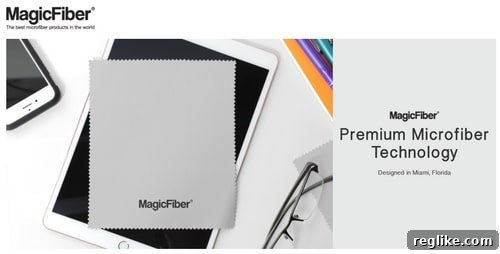
The top reported sale on Sedo, MagicFiber.com for $28,000, perfectly illustrates the undeniable power of brand simplification and direct navigation. The buyer, a company renowned for its high-quality microfiber cloths, previously operated under TheMagicFiber.com. This upgrade echoes a prevalent trend among established brands, where dropping the definite article “The” from their domain name is a strategic move to create a more streamlined, memorable, and user-friendly online identity. Similar to Facebook’s evolution from TheFacebook.com, Magic Fiber’s investment signifies a desire for directness, ease of recall, and a stronger, more concise brand presence that resonates immediately with consumers. This transition isn’t just about a shorter URL; it’s about cementing a premium brand image and ensuring effortless accessibility for their customer base.
Key Strategic Domain Acquisitions: Deep Dive into End-User Purchases
Beyond the flagship MagicFiber.com sale, numerous other end-users engaged in significant domain acquisitions, demonstrating diverse strategic objectives. These purchases span various industries and geographic locations, often involving country-code Top-Level Domains (ccTLDs) to target specific markets or generic domains to establish broader brand authority. Each acquisition reflects a calculated decision to either fortify an existing brand, expand into new territories, or preemptively secure vital digital real estate.
-
Traum.at (€8,000): This acquisition by Traum-Ferienwohnungen GmbH, a prominent European vacation rental company, highlights the critical importance of ccTLDs for targeted market penetration. By securing Traum.at, which translates to “dream” in German and is the ccTLD for Austria, the company strategically strengthens its presence in the German-speaking market, specifically appealing to Austrian customers. This domain choice not only improves local SEO but also builds trust and relevance with potential clients in the region, signaling a direct commitment to that market segment.
-
VivoLife.com ($8,000): Vivo Life, an established seller of food supplements, currently operates its primary business through VivoLife.co.uk. The acquisition of the .com counterpart is a classic example of a brand looking to consolidate its global presence and future-proof its digital assets. Owning VivoLife.com positions the company for broader international expansion, removes any potential confusion, and prevents competitors or cybersquatters from capitalizing on its brand name in the crucial global .com space. It’s a strategic move towards universal brand recognition and market dominance.
-
Wix.cm ($5,000): The popular website builder Wix’s purchase of Wix.cm is a clear defensive registration strategy. While .cm is the ccTLD for Cameroon, it is also notoriously known for being a common typo for .com (missing the ‘o’). By acquiring this domain, Wix proactively safeguards its brand reputation and directs potential mistyped traffic back to its main platform, mitigating risks of phishing, brand dilution, or lost customers. This demonstrates a sophisticated approach to online brand protection.
-
UltimateMD.com ($5,000): Ultimate M.D., LLC, a concierge healthcare provider, currently uses UltMD.com. The upgrade to UltimateMD.com signifies a move towards a more complete and professional brand identity. While shorter domains can be memorable, incorporating the full brand name enhances clarity, trustworthiness, and search engine visibility. This acquisition helps establish Ultimate M.D. as an authoritative and easily recognizable name in the competitive healthcare sector, providing a clearer path for patients seeking their specialized services.
-
NYSEM.com ($4,950): This domain was acquired by The Collective, a well-known music training school based in New York. While the exact meaning of “SEM” in this context is not immediately clear – it could refer to “School of Electronic Music,” “Sound Engineering & Music,” or perhaps even a future academic or industry initiative – its acquisition suggests a strategic expansion or a new venture under The Collective’s umbrella. It highlights the importance of securing acronyms or keywords that could define future aspects of a brand’s offerings.
-
WebTraffix.com ($4,250): For WebTraffix, LLC, an SEO company, acquiring WebTraffix.com is an astute branding move. Having a domain name that directly reflects their core service – web traffic optimization – immediately communicates their expertise and value proposition to potential clients. This domain serves as a powerful, self-explanatory identifier in the highly competitive digital marketing industry, reinforcing their brand authority and making their services easy to understand and remember.
-
Fabiola.com (€4,000): Fabiola B.V. in Amsterdam made a strong move by securing Fabiola.com. A direct, short, and brandable .com domain is invaluable. Whether Fabiola is a personal brand, a product line, or the company name itself, owning the exact match .com provides unmatched brand equity, global reach, and immediate recognition. It signifies confidence in their brand and a commitment to establishing a strong online presence for their ventures.
-
Launch.vc ($4,000): Launch Ventures, a firm focused on incubators, innovation labs, and investment funds, acquiring Launch.vc is a highly strategic and industry-specific move. The .vc ccTLD is widely recognized within the venture capital community, making Launch.vc an ideal, targeted, and authoritative domain for their operations. This domain choice not only communicates their core business instantly but also positions them as a key player within the venture capital ecosystem, attracting relevant partners and startups.
-
Enterprises.co.uk (€3,999): Car rental giant Enterprise’s acquisition of Enterprises.co.uk is a classic example of defensive registration and market-specific branding. While Enterprise likely owns Enterprise.co.uk, securing the plural form helps prevent cybersquatting, protects their brand from potential confusion, and allows for future expansion into various “enterprise” related services within the UK market. It’s a proactive measure to control their digital narrative.
-
Optor.com ($3,500): Elko Group, an IT products distributor, purchased Optor.com. While there’s no immediate mention of an “Optor” product or service on their existing website, this acquisition could be a forward-thinking investment for a future product line, a subsidiary brand, or even a strategic keyword-rich domain for a specific technological niche. Companies often acquire domains speculatively to secure valuable short, brandable assets for potential future use, ensuring they have digital real estate ready for innovation.
-
UlrichMedical.fr (€3,000): German company Ulrich GmbH & Co. KG, which operates with UlrichMedical.com, acquired UlrichMedical.fr. This mirrors the strategy seen with Traum.at. By securing the French ccTLD, UlrichMedical is clearly aiming to bolster its presence in the French market. This localized domain can improve search engine rankings within France, instill trust with French customers, and facilitate targeted marketing campaigns, demonstrating a commitment to international expansion through localized branding.
-
FishPharm.com ($2,900): Despite the buyer using Whois privacy, the clear intent to set up a Shopify store suggests a new venture focused on aquatic health or pharmacy products. FishPharm.com is a highly descriptive and memorable domain for this niche, offering immediate clarity on the nature of the business. For a new e-commerce venture, a strong, keyword-rich domain like this is invaluable for direct navigation and organic search visibility, making it easier for customers to find and trust the brand from its inception.
-
Cryptod.com ($2,895): Similarly, the purchase of Cryptod.com by an entity planning a cryptocurrency forum, while also utilizing Whois privacy, highlights the burgeoning interest in the crypto space. “Cryptod” is a concise and brandable name that strongly hints at its connection to cryptocurrencies. For a community-driven platform like a forum, a relevant and easy-to-type domain is critical for attracting and retaining users, establishing authority, and fostering growth in a rapidly expanding sector.
-
BuildingCure.com ($2,888): Seattle Children’s Hospital acquired BuildingCure.com, which is the exact name of their expanded research facility. This is an excellent example of aligning physical assets with digital branding. The domain provides a dedicated, memorable online hub for information about the research institute, allowing for focused marketing, fundraising, and communication efforts related to this specific, vital project. It enhances the hospital’s reputation as a leader in medical research and innovation.
-
CarsKC.com ($2,688): Kansas City car dealer Cars-KC realized the benefits of dropping a hyphen from their domain name. Originally using a hyphenated domain, the switch to CarsKC.com represents an upgrade that improves usability, memorability, and SEO. Hyphens can be easily forgotten or mistyped, leading to lost traffic. This acquisition ensures a cleaner, more direct path for customers searching for a car dealer in Kansas City, reflecting a common trend among businesses to simplify their URLs for better user experience.
-
TrueMessage.com ($2,588): True Message, a company promising “The Evolution of B2C Communications,” secured TrueMessage.com. This domain perfectly encapsulates their brand’s core offering and aspirational vision. A strong, descriptive domain like this helps them to immediately convey their value proposition, build trust, and position themselves as an innovative player in the evolving landscape of business-to-consumer interactions. It’s a powerful statement of their mission.
-
Ckbk.com ($2,588): This intriguing four-letter acronym domain, Ckbk.com, was likely acquired by 1000Cookbooks.com. It is a highly strategic move for a brand seeking a shorter, more memorable, and potentially more versatile online identity. “Ckbk” is a common abbreviation for “Cookbook,” making it intuitive for their target audience. Such short domains are also valuable for marketing campaigns, social media handles, and potentially as a URL shortener, providing significant branding flexibility and efficiency.
-
Aymira.com (€2,400): Aym Technologies LLC in North Carolina purchased Aymira.com. This acquisition likely serves as a core brand domain for their technology ventures. “Aymira” appears to be a unique and brandable name, and securing the .com version is fundamental for any technology company aiming for a distinct global presence. It allows them to build a strong, recognizable identity free from confusion with other entities, which is crucial in the crowded tech sector.
-
LeakProof.com ($2,250): Products company Aydya, known for its Ion8 Leak Proof Water Bottles, acquired LeakProof.com. This is an exemplary case of product-specific branding. Owning a domain that directly describes a key feature of their product (leak-proof) provides an incredibly powerful marketing tool. It instantly communicates a primary benefit to consumers, enhances search engine relevance for related queries, and can serve as a dedicated microsite or landing page for campaigns centered around this unique selling proposition.
-
CMLconnect.org ($2,000): Coles, a major Australian supermarket chain, acquired CMLconnect.org. This particular purchase presents an interesting puzzle. With Coles being a commercial entity, the .org extension is typically associated with non-profit organizations. While the .com for “CMLconnect” is owned by another entity and the .com.au is unregistered, this acquisition might signal a community initiative, a charitable arm, or perhaps a unique internal communications platform that warranted a .org identity. It highlights the diverse and sometimes unexpected reasons behind corporate domain investments, even beyond obvious commercial uses.
The patterns emerging from Sedo’s recent domain sales underscore the multifaceted value of strategic domain acquisition for businesses in the digital age. These end-user purchases are not merely transactions; they are deliberate investments in brand identity, market expansion, enhanced online visibility, and robust intellectual property protection. Whether it’s simplifying a brand name, targeting specific geographic markets with ccTLDs, or securing keyword-rich domains for new ventures, companies are increasingly recognizing that their domain name is a cornerstone of their digital strategy.
From multinational corporations to nimble startups, the insights from these acquisitions are clear: a well-chosen domain name contributes significantly to SEO performance, fosters customer trust, and acts as a memorable gateway to a business’s online presence. As the digital landscape continues to evolve, the strategic management and acquisition of premium domain names will remain a critical differentiator for businesses striving for success and enduring relevance in an increasingly competitive global marketplace. These investments demonstrate a forward-thinking approach, ensuring that these brands are not only present online but are positioned optimally for future growth and innovation.