
Optimizing NameJet’s Future: Strategic Pathways for Revival in the Domain Marketplace
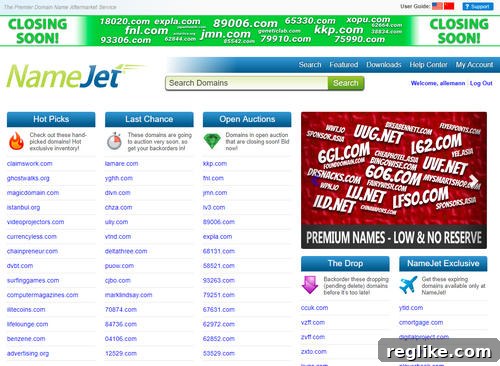
NameJet, a long-standing and once prominent player in the competitive domain aftermarket, has endured a particularly challenging period over the past year. As a key platform for domain investors seeking valuable expired domain names, its recent trajectory has raised concerns across the industry. A confluence of factors, ranging from significant operational setbacks to breaches of market integrity, has directly impacted its standing, revenue, and overall competitiveness. This detailed analysis aims to dissect the core challenges confronting NameJet and propose a suite of practical, actionable strategies designed not only to staunch the current decline but to fundamentally revitalize its operations, restore essential user trust, and secure a prosperous future within the ever-evolving domain industry.
The Shifting Tides: Analyzing NameJet’s Recent Decline and Market Challenges
The recent history of NameJet is marked by a series of events that have collectively undermined its position in the dynamic domain marketplace. A thorough understanding of these underlying issues is essential for formulating an effective turnaround strategy.
A Cascade of Setbacks: Significant Inventory Losses
One of the most profound impacts on NameJet’s operational capability and market share has been the substantial loss of critical expired domain name inventory. A pivotal moment was when the platform saw its valuable Tucows expired inventory migrate to its primary rival, GoDaddy Auctions. This move was particularly telling, considering Tucows holds a significant ownership stake in NameJet itself. Such a strategic shift from a partial owner speaks volumes about the perceived value and performance discrepancies between the two platforms. The situation was further compounded by the subsequent loss of Name.com inventory and, more recently, Namecheap’s decision to send its expired domains to GoDaddy Auctions. These registrars previously represented a vital and substantial portion of NameJet’s daily incoming domain streams, providing the fresh, high-quality supply that is paramount for attracting and retaining active domain investors. The direct consequence has been a noticeable reduction in both the quantity and frequently the quality of available domains, inevitably impacting bidder interest and overall auction volume. Without a consistent influx of appealing and diverse inventory, any domain marketplace will struggle to maintain its relevance and attract a broad spectrum of buyers, leading to diminished market activity and reduced sales.
The Scar of Shill Bidding and Eroding Trust
Beyond the challenges of inventory, NameJet was severely impacted by a significant blow to its reputation and market integrity following the shill bidding scandal. This incident, which unfolded last summer, sent ripples of mistrust and dissatisfaction throughout the global domain investing community. Shill bidding, a deceptive practice where a seller or their associates place bids to artificially inflate a domain’s price, fundamentally undermines the principles of fairness and transparency that are absolutely critical for the credibility of any auction platform. When bidders perceive that the system is manipulated, or that they are not competing on a level playing field, their confidence erodes rapidly and significantly. Rebuilding trust after such a profound breach is an arduous and time-consuming task, as trust forms the bedrock upon which all successful and sustainable marketplaces are built. Domain investors, particularly those accustomed to transacting high-value assets, demand absolute assurance that auctions are legitimate, that competition is fair, and that their substantial investments are secure. The lingering shadow of this scandal undoubtedly continues to deter potential buyers and dampen overall bidding activity on the platform, contributing to lower sales volumes and reduced engagement.
Financial Indicators: A Steep Decline in Sales
The cumulative effect of these formidable challenges is starkly reflected in NameJet’s recent financial performance, revealing a worrying trend in sales figures. For instance, last month, NameJet recorded approximately $259,000 in sales for domains that exceeded the $2,000 mark. This figure represents a dramatic contrast to the $744,000 generated in the same month in the previous year – a substantial decrease that cannot be attributed to any single isolated factor. While the previous year’s figures might have been an outlier, perhaps benefiting from an unusually high volume of desirable “three-letter” domains, a broader year-over-year analysis of sales for the past five months reveals a consistent and concerning downward trajectory. Only the month of August remained essentially flat, indicating a systemic issue rather than a one-off fluctuation. This sustained reduction in revenue is a critical concern, signaling a significant drop in high-value transactions and overall market engagement. Furthermore, the global slowdown in the once-booming Chinese domain market, which historically provided substantial demand and inflated prices for certain domain types, has also contributed to NameJet’s precarious financial position. This scenario creates a difficult conundrum: the platform is in urgent need of strategic reinvestment in its infrastructure, technology, and marketing efforts, yet declining revenues make it challenging to present a compelling business case for such investment to its owners. If left unaddressed, this situation risks devolving into a “death spiral,” where reduced investment leads to a poorer, less competitive product, further diminishing revenue and making future, much-needed investment even less likely.
The Imperative for Change: Why NameJet Must Act Now
The current state of affairs at NameJet is not merely a transient rough patch; it represents a critical juncture demanding decisive and strategic action. The health of the domain industry thrives on robust competition, and the presence of at least two strong, viable competitors for direct-transfer expired domains is essential for maintaining a healthy, innovative, and dynamic ecosystem. A weakened NameJet ultimately benefits no one in the long run, as it could potentially lead to monopolistic tendencies from other market players, thereby stifling innovation, limiting choice, and potentially increasing costs for domain investors across the board. Therefore, the imperative for NameJet’s owners to invest strategically in its future is not solely about ensuring the company’s survival and profitability; it is also about contributing to the overall health, diversity, and competitive balance of the broader domain aftermarket. Targeted, strategic investment in key operational areas can effectively reverse the current downward trend, meticulously rebuild market confidence, and pave the way for NameJet to reclaim its former prominence as a leading force in the industry.
Charting a New Course: Actionable Strategies for NameJet’s Resurgence
Despite the significant challenges, many of the necessary improvements for NameJet are not prohibitively expensive or overly complex. By focusing on core enhancements to the user experience, reinforcing platform integrity, and actively improving market engagement, NameJet can achieve substantial positive results. Here are three critical areas where NameJet can implement immediate and impactful changes:
1. Revolutionizing the User Experience: A Modernized Mobile App
In today’s hyper-connected, fast-paced digital landscape, a fully functional, intuitive, and highly responsive mobile application is no longer a luxury but an absolute necessity, especially for active domain investors who operate on tight deadlines. While NameJet may have been an early entrant with its mobile app, its current iteration falls significantly short of modern user expectations and the sophisticated offerings from its competitors. A pervasive issue reported by users is the unreliability of auction alerts, which are absolutely critical for timely and competitive bidding. For a vast number of investors, myself included, dependable, real-time push notifications from platforms like GoDaddy are the only practical way to stay abreast of expiring auctions and to avoid missing prime opportunities. Without these crucial, dependable alerts, the considerable effort involved in researching potential domains on NameJet for backorder often feels futile, as the crucial window to bid competitively might easily be missed. This directly translates into lost revenue for NameJet and its various partners. For example, during one recent week, I had a dozen auctions on NameJet that I was keenly interested in. I estimate I would have confidently bid higher than the closing price on at least four of these, had I received timely and accurate alerts. Even if I hadn’t won every single auction, the increased bidding activity would have undoubtedly driven final prices higher and significantly boosted NameJet’s overall bottom line. A modernized app must prioritize the following key features:
- Reliable Push Notifications: Guaranteeing that bidders receive instant, timely, and accurate alerts about upcoming and ending auctions for domains they are actively watching or have already placed bids on.
- Intuitive Navigation and Filtering: Implementing a logical, consistent, and user-friendly ordering of domains, allowing users to effortlessly find, filter, and track their interests without the app unexpectedly reordering content or displaying inconsistencies.
- Seamless Bidding Experience: Streamlining and simplifying the entire process of placing bids, comprehensively reviewing auction details, and efficiently managing watchlists directly from any mobile device.
- Personalization Features: Offering advanced features that allow users to extensively customize their alerts, viewing preferences, and search parameters, making the app feel uniquely tailored to their individual investment strategy and specific needs.
Investing in a robust, highly responsive, and truly user-friendly mobile app is a relatively inexpensive yet profoundly impactful way to re-engage active bidders, significantly enhance convenience, and directly boost auction participation, ultimately leading to higher final sale prices and increased platform revenue.
2. Revitalizing Brand Image: A Contemporary Design Philosophy
The aesthetic appeal and the overall user interface (UI) of any digital platform play an incredibly crucial role in shaping user perception, fostering essential trust, and driving sustained engagement. As the astute activist investor J. Carlo Cannell once eloquently articulated in his critique of NameJet’s former co-owner Rightside, the interfaces at both eNom and NameJet have frequently felt “clumsy and stale,” often resembling “time capsules” from a bygone era, perhaps half a decade ago or more. While a comprehensive overhaul of the underlying backend infrastructure might represent a larger, more complex undertaking, significant and impactful improvements to the front-end design and visual branding can have an immediate and profound effect. The graphics that NameJet currently employs to promote its auctions, for instance, often lack a sense of modern professionalism and do not instill the elevated level of confidence that one would expect from a premium domain marketplace. In an era where a strong visual identity is absolutely paramount, particularly within highly competitive online environments, outdated aesthetics can inadvertently signal a lack of innovation, attention to detail, or even overall investment in the platform.
A straightforward, yet highly effective solution could involve leveraging modern graphic design tools and services. For example, a subscription to a service like Snappa would empower NameJet to quickly and easily create high-quality, professional-looking promotional graphics suitable for social media campaigns and for integration directly onto its platform. Such refreshed visuals would project a far more contemporary, trustworthy, and appealing image to its user base. Beyond just promotional materials, a thoughtful and strategic refresh of the platform’s overall UI, with a keen focus on clarity, modern typography, a clean layout, and intuitive navigation, would dramatically enhance the entire user experience. This isn’t merely about chasing fleeting design trends; it’s about adopting a clean, intuitive, and professional visual identity that accurately reflects the inherent value of the assets being traded and consistently reassures users of the platform’s unwavering commitment to excellence, innovation, and security. A modern and refreshed design would not only attract new users to the platform but also signal to existing users that NameJet is actively committed to evolving, improving, and reinvesting in its future, thereby rebuilding crucial confidence and fostering greater loyalty.
3. Reimagining the Private Seller System: Fostering Fair Play and Fresh Inventory
The integrity and efficiency of any marketplace are defined not only by the transparency of its primary auctions but also by the perceived fairness and seamlessness of its private seller mechanisms. NameJet’s current private seller system, however, presents several significant friction points that have demonstrably deterred active domain investors. A common and persistent complaint among seasoned domain investors is the repetitive listing of the exact same domains, often burdened with unrealistically high or unattainable reserve prices, month after month. This practice generates considerable “inventory noise,” forcing investors to spend valuable time and effort filtering out a large number of irrelevant or perpetually unsold domains. This significantly diminishes the overall user experience and makes it considerably harder to discover genuinely valuable and fresh opportunities. Indeed, many experienced investors have developed habits of automatically filtering out private seller domains with reserves specifically because of this pervasive and frustrating issue.
To comprehensively address these critical issues, NameJet should implement a more dynamic, equitable, and efficient private seller policy. This would include:
- Strict Limit on Re-listings: Introducing a stringent limit on the number of times a seller can list the exact same domain with a reserve within a specified period (e.g., two or three times within a year). This policy would actively encourage sellers to price their domains more realistically and competitively from the very outset, rather than perpetually testing the market with aspirational prices.
- Mandatory Reserve Price Adjustments: If a seller wishes to re-list a domain after having reached their established re-listing limit, NameJet should mandate a substantial and meaningful reduction in the reserve price. This policy would powerfully incentivize sellers to either accept current market value for their domains or to remove stale inventory from the platform, thereby making crucial room for fresh and more appealing opportunities.
- Enhanced Vetting for Private Listings: While not explicitly detailed in the original text, reinforcing and refining the vetting process for private listings could play a vital role in preventing the listing of low-quality, spammy, or potentially problematic domains that further clutter the marketplace and detract from its overall appeal.
These proposed changes would not only refresh and diversify the available inventory, making it significantly more appealing to serious investors, but also directly contribute to meticulously rebuilding confidence in the marketplace’s integrity, especially in the wake of past bidding scandals. A fair, transparent, and efficient private seller system explicitly demonstrates NameJet’s unwavering commitment to all its participants, fostering an environment where valuable domains are far more likely to find willing buyers at market-driven prices, thereby substantially increasing overall sales volume, improving user satisfaction, and reinforcing critical market trust.
Conclusion: A Clear Path Towards Revival and Renewed Leadership
NameJet currently stands at an undeniable pivotal moment. The cumulative challenges it faces—ranging from significant losses of crucial inventory and the enduring impact of the infamous shill bidding scandal to a noticeable and sustained decline in sales—are formidable indeed. However, the path to a robust revival is clear, achievable, and within reach. By deliberately focusing on targeted, user-centric improvements, NameJet can strategically begin to reverse its fortunes. Revolutionizing its mobile application to consistently deliver reliable alerts and an unparalleled user experience will be instrumental in re-engaging critical segments of its investor base. Modernizing its overall design and branding will be vital in meticulously rebuilding credibility and projecting a professional, trustworthy image consistent with a leading domain marketplace. Furthermore, comprehensively reforming the private seller system will ensure a fairer, more dynamic, and ultimately more efficient inventory flow, actively fostering renewed trust among its dedicated user base. These proposed changes are not merely cosmetic; they represent strategic, foundational investments in the core functionality, perceived value, and long-term viability of the platform. By proactively embracing and implementing these crucial changes, NameJet can not only halt its current decline but also actively regain significant market share, attract valuable new partners, and decisively reassert its rightful position as a vital, competitive, and leading force within the expansive and dynamic expired domain industry. The entire industry, along with its many enthusiastic participants, stands to profoundly benefit from a strong, revitalized, and innovative NameJet.