
Sedo’s Pivotal Response to Google’s New Demands for Domain Parking Monetization
The landscape of domain parking is continually shifting, driven primarily by the evolving requirements of major search engines like Google. As the internet matures, so does the scrutiny on how domains are monetized, particularly those that are “parked” rather than fully developed. A significant development in this ongoing evolution came earlier this year, building upon an announcement from March, regarding Sedo’s implementation of new Google mandates. This article delves into the specifics of these changes, their implications for domain owners and the parking industry, and Sedo’s strategic adaptation to ensure continued monetization viability.
Understanding Google’s Mandate for Quality in Domain Parking
In March, the domain industry was abuzz with reports from outlets like Domain Name Wire, indicating that Sedo, a prominent player in the domain parking and brokerage market, was actively testing the integration of organic search results directly onto its domain parking pages. This initiative wasn’t merely a strategic choice by Sedo; it was a direct requirement from Google (NASDAQ: GOOG). Google’s long-standing commitment to improving user experience and combatting low-quality content extends deeply into the domain parking sector. The company’s rationale behind such requirements typically centers on enhancing relevance, reducing user frustration from unproductive clicks, and ensuring a higher quality advertising ecosystem.
For years, parked pages, often characterized by a high density of paid advertisements, have been a subject of debate regarding their value proposition to users. Google’s move signals a clearer push towards making these pages more valuable, even if they serve as temporary placeholders. By mandating the inclusion of organic search results, Google aims to provide users with more relevant information and alternative navigation options beyond just commercial links, thereby aligning parked pages more closely with the expectations of a typical search results page. This strategic shift underscores Google’s influence over monetization models across the web, forcing platforms like Sedo to innovate and adapt rapidly.
Sedo’s Rollout: Integrating Organic Search Results
Following a period of testing and refinement, Sedo officially began rolling out these new requirements across its extensive network of domains. According to Sedo’s official communications, this phased implementation commenced recently, impacting a vast number of parked pages globally. This transition represents a significant operational undertaking for Sedo, ensuring compliance across diverse domain portfolios while maintaining seamless service for its users and domain owners.
Targeted Placement: Search Feed vs. Content Network Pages
A crucial detail in Google’s requirement is the specific placement of these organic search results. They are exclusively displayed on Google’s *search feed pages*, not on *content network pages*. Understanding this distinction is vital for domain owners to grasp the full impact of the change. When a user initially lands on a Sedo-parked page, they are typically encountering a page that functions as part of Google’s content network. These pages are primarily designed to display contextual advertisements based on the domain’s keywords or inferred user intent. The initial experience is often streamlined, focusing on sponsored links and related categories.
However, the user journey evolves if they engage further. Should a user decide to click on a “related link” presented on the initial parked page, or if they choose to perform a specific search query directly from that page, they are then redirected to a Google *search network page*. It is on these subsequent pages that the newly mandated organic search results come into play. This two-step process means that organic results are not immediately visible upon the initial landing but rather appear once a user has demonstrated a more active intent to find information, moving beyond the initial ad-centric interface.
This design choice by Google and Sedo is strategic. It allows the initial content network page to retain its primary focus on direct monetization through contextual advertising, while simultaneously fulfilling Google’s quality mandate by offering comprehensive search results on subsequent interactions. This balanced approach seeks to integrate improved user experience without completely overhauling the immediate revenue generation model of the first point of contact.
Analyzing the Potential Impact on Domain Parking Revenue
The most pressing question for domain owners and investors revolves around the financial implications of these changes. Will the introduction of organic search results significantly erode parking revenue? Based on the detailed placement strategy, it is anticipated that these new requirements will not have a *major* negative affect on parking revenue, although a positive impact is certainly not expected either. This assessment hinges primarily on the positioning of the organic results.
As illustrated in relevant industry graphics (and as described below), the organic search results are strategically placed at the bottom of the page. This positioning is critical; they appear only after approximately ten paid search results have already been displayed prominently. This order of presentation ensures that the primary monetization opportunities—the paid advertisements—retain their advantageous visibility. Users typically scan from top to bottom, meaning they will encounter a substantial array of sponsored links before reaching the organic listings. This hierarchy suggests that clicks on paid ads, which directly generate revenue for domain owners via Sedo, will likely remain robust.
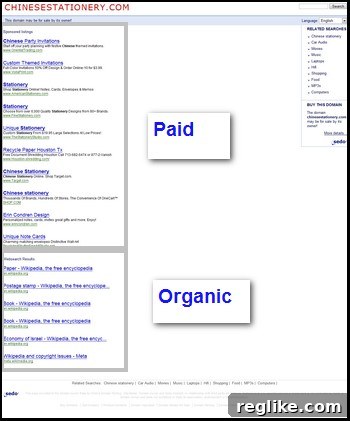
Nevertheless, the presence of organic results, even at the bottom, introduces a new element of competition for user attention. While direct ad revenue might not suffer dramatically, some users who might have previously clicked on lower-positioned paid ads could now opt for the organic results, potentially leading to a marginal shift in click-through rates. This subtle shift could manifest as a slight decrease in overall revenue per parked page over time. Furthermore, the very existence of non-monetized links on pages historically dominated by advertisements might subtly alter user expectations and interaction patterns. Domain owners accustomed to maximizing every pixel for ad display will need to monitor these trends closely. The long-term viability of high-volume, low-traffic parked domains relying solely on advertising may face continued pressure as search engines prioritize content quality and user intent above all else.
The “Same Window” Click Requirement: Enhancing User Experience
Beyond the integration of organic search results, Sedo also announced another crucial change mandated by Google: all parking clicks must now open within the *same browser window* rather than launching a new one. This seemingly minor technical adjustment carries significant implications for user experience and engagement.
Historically, it was common practice for ad clicks on parked pages, and indeed across many websites, to open in a new tab or window. The intention behind this was often to keep the user on the original page, hoping they would return or continue browsing there after exploring the new link. However, modern web design principles and user preferences have largely shifted away from this approach. Opening new windows can be disorienting, clutter the user’s browser, and can sometimes be perceived as intrusive or even manipulative. Google’s requirement aligns with contemporary best practices for web navigation, prioritizing a seamless and predictable user journey.
For domain owners and advertisers, this means that every click will now take the user away from the parked page. While this might lead to a slight decrease in return visits to the parked page within a single browsing session, it generally fosters a more positive user experience. Users appreciate control over their browsing environment, and the ability to use their browser’s back button to navigate effortlessly is a fundamental expectation. This change contributes to a perception of transparency and user respect, which can ultimately lead to a more trusting relationship between users and the platforms they interact with. From Google’s perspective, this ensures a more controlled and less disruptive flow through its advertising network, enhancing the overall quality signal of its partnerships.
Broader Industry Implications and Future Outlook for Domain Parking
These recent changes implemented by Sedo, driven by Google’s requirements, are not isolated events but rather indicative of a broader trend within the domain parking industry. Domain parking has faced increasing challenges over the years, from diminishing revenue yields to heightened scrutiny over quality and user value. Google’s continuous refinement of its algorithms and ad policies consistently pushes the industry towards higher standards.
Domain owners relying on parking revenue must understand that passive monetization is becoming increasingly complex. The era of simply registering a domain and expecting substantial returns from generic parked pages is largely over. These changes serve as a stark reminder that adaptation is key to survival. Strategies for domain owners might include more proactive development of their domains, even if it’s just a simple informational website or a niche blog, to provide genuine value. Alternatively, focusing on premium domains with high direct navigation traffic, where user intent is clearer and less reliant on search engine interpretation, might become more lucrative.
Furthermore, this move by Google reinforces the importance of search engine optimization (SEO) principles even for parked pages. While they may not be optimized for ranking, the inclusion of organic results means that the relevance and quality of the parked page’s underlying theme still play a role in what a user ultimately finds. The continuous evolution of these policies suggests that future iterations might involve even more stringent requirements for content relevance, user engagement, and transparency.
Conclusion: Navigating the Evolving Domain Monetization Landscape
Sedo’s swift and compliant response to Google’s new requirements for parked pages—integrating organic search results and enforcing same-window clicks—marks a significant moment in the domain parking industry. While the immediate financial impact on domain owners is projected to be manageable due to the strategic placement of organic results, these changes underscore Google’s unwavering commitment to enhancing user experience and upholding content quality across all aspects of the web, including parked domains.
For domain owners, the message is clear: adaptability and an acute awareness of search engine policies are paramount. The days of set-it-and-forget-it domain parking are drawing to a close, replaced by an environment that demands more value, more transparency, and a more user-centric approach. As Google continues to refine its ecosystem, platforms like Sedo will continue to serve as vital conduits for domain monetization, constantly evolving to meet the highest standards of relevance and utility for users worldwide.