
The Zooming Trend: Domain Name Registrations and Cybersecurity Concerns
The rise of videoconferencing platforms, particularly Zoom, has witnessed an unprecedented surge in popularity, driven by the global shift towards remote work and online learning. As millions transition to working from home and children attend classes virtually, Zoom has become an indispensable tool for communication and collaboration. However, this increased reliance on Zoom has also led to a significant spike in domain name registrations containing the word “zoom,” raising concerns about potential trademark infringements and cybersecurity risks.
The Zoom Phenomenon: From Videoconferencing to a Household Name
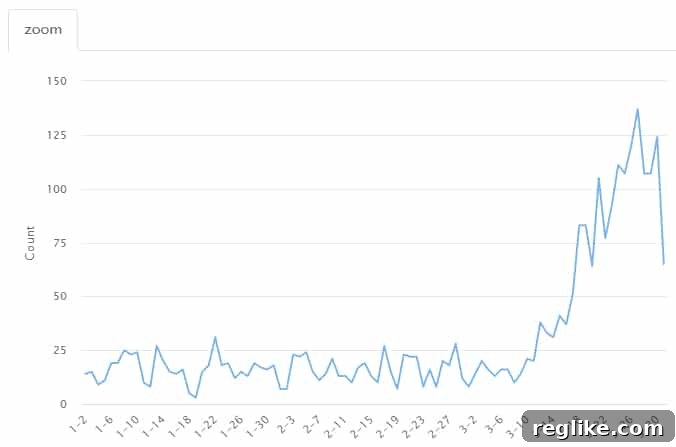
Zoom’s transformation into a ubiquitous verb, akin to “google it” for searching, underscores its pervasive influence on modern communication. This rapid adoption has fueled a corresponding increase in domain name registrations incorporating the term “zoom.” As illustrated in the chart above, sourced from Verisign’s DomainScope tool, a significant upward trend in registrations within the .com and .net domains has been observed over the past 90 days.
While legitimate reasons exist for registering domains with “zoom,” such as unrelated business ventures or personal projects, the recent surge is undeniably linked to the videoconferencing platform’s exponential growth. The company’s name has become synonymous with online video calls, and this association has created opportunities for both legitimate and malicious actors in the digital space.
Navigating the Domain Landscape: Legitimate Uses and Trademark Considerations
It’s important to acknowledge that not all domain registrations containing “zoom” are inherently malicious. Many individuals and businesses may have legitimate reasons for incorporating the term into their domain names. For instance, someone might register a domain for online meditation sessions, using a name like OnlineZoomMediations(.)com. Another example is ZoomwithLila(.)com, which redirects to a personal Zoom meeting link, offering an easy and memorable way for others to connect.
However, even seemingly legitimate uses can potentially infringe upon trademark rights. Zoom, as a registered trademark, is protected against unauthorized use that could cause confusion among consumers. While using “zoom” in a domain name for a purpose unrelated to videoconferencing may not always constitute infringement, it’s crucial to consider the potential for confusion and seek legal advice if necessary.
Cybersecurity Risks: Nefarious Actors and Malicious Intent
Unfortunately, the surge in Zoom-related domain registrations has also attracted cybercriminals seeking to exploit the platform’s popularity for malicious purposes. Check Point Software reports that a significant percentage (4%) of these registrations exhibit suspicious characteristics, indicating potential phishing scams, malware distribution, or other cyber threats. These nefarious actors often create fake websites that mimic the legitimate Zoom platform, luring unsuspecting users into providing sensitive information or downloading malicious software.
Users should exercise caution when encountering unfamiliar domain names containing “zoom” and avoid clicking on suspicious links or downloading files from untrusted sources. It’s essential to verify the legitimacy of any website before entering personal information or engaging in any transactions. Staying informed about common phishing tactics and practicing safe online habits can significantly reduce the risk of falling victim to these cyber threats.
The .US Domain Advantage: Zoom’s Strategic Domain Choice
Zoom’s domain strategy also highlights the significance of choosing the right top-level domain (TLD). While the company acquired Zoom.com in 2018 for a reported $2 million, it continues to use Zoom.us as its primary website. This decision may be influenced by factors such as brand recognition, target audience, and regulatory compliance. The .US domain, specifically designated for entities operating within the United States, can provide a sense of locality and trustworthiness for American users.
The surge in Zoom’s popularity could indirectly benefit the .US domain by increasing its visibility and attracting more businesses and individuals seeking to establish a presence in the American market. As online activity continues to grow, the choice of domain name and TLD remains a crucial aspect of building a successful and secure online presence.
Conclusion: Navigating the Zoom Landscape Responsibly
The Zoom phenomenon has transformed the way we communicate and collaborate, but it has also brought about new challenges in terms of trademark protection and cybersecurity. As domain name registrations containing “zoom” continue to rise, it’s essential to exercise caution, practice safe online habits, and remain vigilant against potential threats. By understanding the risks and taking appropriate measures, we can navigate the Zoom landscape responsibly and ensure a secure and productive online experience.
The rise of video conferencing is here to stay, and as the digital world continues to evolve, so will the need for robust security measures and a discerning approach to online interactions. Staying informed, being proactive, and choosing strong passwords are crucial to safeguarding against cyber threats. Only through these efforts can we truly harness the power of online communication while mitigating its inherent risks.
Whether you’re attending a virtual meeting, participating in an online class, or simply connecting with friends and family, remember to prioritize your online safety and be mindful of the digital environment you’re navigating. By doing so, you can contribute to a more secure and trustworthy online community for everyone.