
Unlocking Domain Value: Understanding Search Volume and User Intent
Search volume, while a useful indicator, doesn’t directly translate to actual end-user demand for a specific domain name. It’s crucial to understand the nuances behind the numbers to make informed decisions about domain valuation, renewal, and pricing strategies.
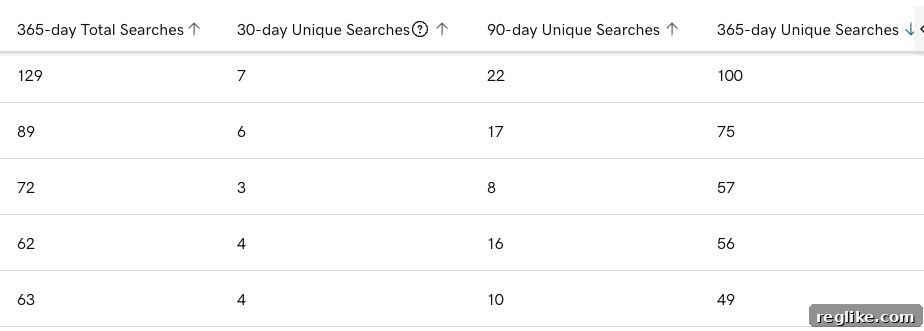
Platforms like Afternic, particularly for users with a Discount Domain Club Domain Pro membership, now provide search counts for domain names. This data, mirroring what GoDaddy has offered within its account manager (free of charge) for domains registered there, offers insights into how often a specific domain (including its top-level domain extension) has been searched for on the GoDaddy platform over periods of 30, 90, and 365 days.
This search data can be a valuable tool in a domain investor’s arsenal. For example, I often leverage this information when making critical decisions about whether to renew a domain name. A domain with consistently low search volume might be a candidate for deletion or sale, while a domain with high search volume warrants further investigation.
The correlation between search counts and domain pricing is a complex one. The initial assumption is often that a higher search volume equates to a more valuable domain. This holds true to some extent. A domain that people are actively searching for generally possesses greater inherent value than one that is largely ignored.
However, the data can also reveal more subtle insights. Consider this scenario: you own a domain with a moderate price tag that consistently attracts a high volume of searches, yet it remains unsold. This raises the question: is the domain priced too high? It’s possible that potential buyers are interested in the domain concept but are deterred by the asking price. In such cases, a strategic price reduction might be necessary to convert interest into a sale.
Another factor to consider is the nature of the search terms themselves. For “hot terms” like “AI” (artificial intelligence), it’s highly probable that a significant portion of the searches are being conducted by domain investors looking to register new domains related to the topic. This “investor noise” can inflate the search numbers and may not accurately reflect genuine end-user demand for existing domain names. Therefore, it’s crucial to distinguish between investor-driven searches and searches originating from potential end-users.
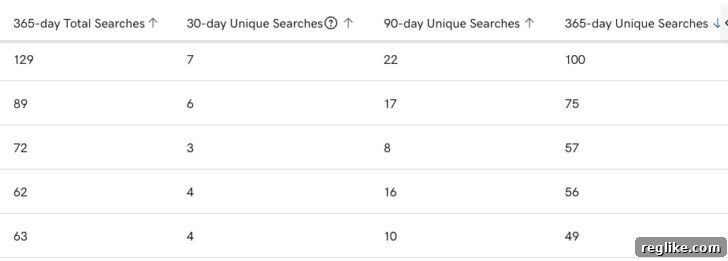
To illustrate these points, let’s examine five domains from my own portfolio that have generated the highest number of unique searches over the past 365 days, along with my analysis of each:
Domain Name Analysis: Search Volume and Context
- swizzle.com – 100 Searches: The high search volume for this domain aligns with my expectations. “Swizzle” is a memorable and versatile word, making it a desirable domain name for various potential applications. Its broad appeal likely contributes to the consistent search activity.
- mybizcard.com – 75 Searches: This one is more perplexing. While the concept is straightforward (a domain related to business cards), the relatively high search volume is somewhat surprising. It could indicate a continued interest in online business card solutions or perhaps a desire for a more memorable and branded digital business card. Further investigation might be warranted to understand the specific intent behind these searches.
- ennui.com – 57 Searches: As a single-word domain, “ennui.com” naturally attracts a certain level of interest. The word itself, meaning boredom or listlessness, is relatively uncommon, which might pique the curiosity of potential buyers. The search volume seems reasonable for a niche domain like this.
- clusterai.com – 56 Searches: Given the current buzz surrounding artificial intelligence, it’s highly probable that a substantial portion of the searches for “clusterai.com” are from domain investors seeking to capitalize on the AI trend. While there might be some genuine end-user interest, the numbers likely reflect a significant degree of investor-driven activity. It’s important to be cautious when interpreting search data for domains related to trending topics.
- election2028.com – 49 Searches: This domain’s search volume is particularly interesting. As the 2028 election draws closer, I anticipate a gradual increase in search activity. This domain’s value lies in its potential relevance to political campaigns, news outlets, or organizations involved in the electoral process. Monitoring the search volume over time will provide valuable insights into its potential value.
In conclusion, interpreting domain search volume requires a holistic approach. While it’s a useful indicator of potential demand, it’s crucial to consider factors such as the nature of the search terms, the presence of investor-driven activity, and the overall context of the domain name. By carefully analyzing these elements, domain investors can make more informed decisions about pricing, renewal, and overall domain portfolio management.
Furthermore, consider these additional strategies to enhance your understanding of domain value:
- Keyword Research: Use keyword research tools (like Google Keyword Planner, SEMrush, or Ahrefs) to analyze the search volume and competition for keywords related to your domain names. This will provide a broader understanding of the market demand for the concepts associated with your domains.
- Competition Analysis: Research similar domain names that have been sold recently. This will give you a benchmark for pricing your domains competitively. Platforms like NameBio can provide valuable data on domain sales.
- End-User Outreach: If you believe your domain name has potential value for a specific business or organization, consider reaching out to them directly. This can be a proactive way to generate interest and potentially secure a sale.
- Monitor Trends: Stay informed about emerging trends and technologies. This will help you identify domain names that are likely to increase in value over time. Consider domains related to areas like blockchain, metaverse, and renewable energy.
- Utilize Domain Appraisal Tools: While not always accurate, domain appraisal tools can provide a general estimate of your domain’s value. Use these tools as a starting point for your own research and analysis.
By combining search volume data with other research and analysis techniques, you can develop a more comprehensive understanding of your domain’s true value and make more informed decisions about your domain investment strategy. Remember, domain investing is a long-term game, and patience and diligence are key to success.
Ultimately, the most valuable domain names are those that solve a problem, address a need, or capture a compelling idea. Focus on acquiring and developing domains that offer genuine value to potential end-users, and you’ll be well-positioned to succeed in the dynamic world of domain investing.