
Unlock Domain Traffic Secrets: Google Keyword Tool Revolutionizes Domaining
Domainers, rejoice! Google has just unveiled a game-changing update to its Keyword Tool, injecting a fresh dose of accuracy and insight into the realm of domain traffic forecasting. This enhancement is poised to become an indispensable asset for domain investors, offering a more granular understanding of potential domain performance.
For years, domainers have relied on tools like the now-defunct Overture inventory tool to gauge the popularity of specific keywords and domains. Overture provided a window into search behavior, revealing the number of times a particular term or domain name was searched within a given timeframe. This information was crucial for estimating type-in traffic, a key factor in determining the value and potential return on investment for domain acquisitions.
Previously, the Google Keyword Tool offered a limited view, presenting estimated traffic data through bar graphs and projections for ad clicks in the top search result positions. While helpful, this lacked the precise search volume data that domainers craved.
The new feature directly addresses this need by providing concrete search volume numbers for targeted keywords. This empowers domainers to make more informed decisions, backed by tangible data rather than mere estimations. The ability to see the specific number of searches for a keyword or domain name in a given period is a significant leap forward in domain traffic analysis.
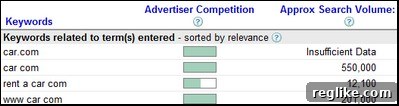
While the new feature is a welcome addition, it’s not without its quirks. As you explore the tool, you might encounter instances where seemingly obvious domain names, like “car.com,” display “insufficient data” for search volume. However, a slight variation, such as “car com,” could reveal a substantial search volume, perhaps exceeding 500,000 searches. This discrepancy highlights the importance of experimenting with different keyword variations and understanding that broad keyword phrases may encompass a wider range of related searches, including the exact domain name. It is crucial to consider close variations of domains during the research phase.
Despite these nuances, the potential benefits for domainers are undeniable. This enhanced Keyword Tool promises to be a valuable resource, empowering domain investors to identify high-potential domain names and make data-driven investment decisions. The reliance on less accurate, third-party keyword estimation tools may diminish as domainers embrace the power and precision of Google’s updated tool.
Beyond keyword analysis, Google appears to be venturing into the website traffic analysis arena, potentially challenging established players like Alexa.com and Compete.com with its “Trends for web sites” tool. This suggests Google’s commitment to providing comprehensive data and insights for website owners and domain investors alike.
As a final note, the Overture Score tool, once a staple in the domaining community, has officially been laid to rest. After sporadic reappearances, the URL now redirects to the Yahoo Small Business page, marking the end of an era. May it rest in peace.
Deep Dive: Maximizing the Google Keyword Tool for Domaining Success
The updated Google Keyword Tool is more than just a facelift; it represents a fundamental shift in how domainers approach traffic estimation and valuation. To fully leverage its potential, let’s explore key strategies and best practices for optimizing your domaining workflow:
1. Understanding Search Volume Nuances:
As mentioned earlier, variations in keyword phrasing can significantly impact reported search volumes. Don’t solely rely on exact match queries. Experiment with different combinations, including singular and plural forms, hyphenated versions, and common misspellings. This broader perspective will provide a more accurate representation of the potential traffic associated with a domain name. For example, consider searching for “blue widget,” “blue widgets,” “blue-widget,” and even common typos to capture the full spectrum of relevant searches.
2. Geo-Targeting for Localized Demand:
The Google Keyword Tool allows you to specify geographical targets for your keyword research. This is particularly valuable for domain names targeting specific regions or demographics. By focusing your search on relevant geographic areas, you can gain insights into localized demand and tailor your domain investments accordingly. For instance, if you’re considering a domain name related to tourism in Italy, targeting your search to Italian-speaking regions will yield more relevant and actionable data.
3. Competitive Analysis: Identifying Niche Opportunities:
Beyond individual keyword searches, the Google Keyword Tool can be used for competitive analysis. By analyzing the keywords used by successful websites in your target niche, you can identify potential domain name opportunities that align with established market demand. This approach helps you discover untapped niches and capitalize on emerging trends. Explore the keywords that drive traffic to your competitors and consider domain names that address similar needs or interests.
4. Combining Keyword Data with Domain Valuation Metrics:
While search volume is a crucial indicator of potential traffic, it’s essential to consider other factors when determining the value of a domain name. Brandability, memorability, domain extension (e.g., .com vs. .net), and the overall domain age all contribute to its value. Use the search volume data from the Google Keyword Tool as one input in a comprehensive domain valuation process. A high search volume domain with a generic extension might be worth less than a branded, memorable domain with a lower but more targeted search volume.
5. Monitoring Trends and Adapting Strategies:
The online landscape is constantly evolving, and search trends can shift rapidly. Regularly monitor your target keywords and domain names to track changes in search volume and adapt your domaining strategies accordingly. Utilize the Google Trends tool to identify emerging trends and capitalize on new opportunities. Staying informed and agile is crucial for long-term success in the dynamic world of domain investing.
6. Utilizing the “Trends for web sites” Tool:
Keep a close eye on Google’s “Trends for web sites” tool as it develops. If it matures into a reliable source of website traffic data, it could become an invaluable asset for assessing the overall popularity and growth potential of websites associated with your domain names. This information can further refine your domain valuation and investment decisions.
The Future of Domaining: Data-Driven Decisions
The enhancement to the Google Keyword Tool marks a significant step towards a more data-driven approach to domaining. By providing domainers with access to precise search volume data, Google is empowering them to make more informed decisions and maximize their investment potential. Embrace this new tool, experiment with different strategies, and stay ahead of the curve to thrive in the evolving world of domain investing. The era of guesswork is fading, and the future of domaining is being shaped by data, analysis, and strategic foresight.