
Decoding the Digital Playbook: Analyzing Trump’s Facebook Ad Strategies
In the ever-evolving landscape of digital marketing, political campaigns have become adept at leveraging online platforms to connect with voters and solicit donations. A prime example of this is the Facebook advertising strategy employed during Donald Trump’s campaigns. Examining these ads reveals a sophisticated understanding of internet marketing principles, offering valuable insights for anyone looking to improve their own Facebook advertising efforts. This analysis delves into the specific tactics used, highlighting how they tap into psychological triggers to drive engagement and conversions.
The Power of Persuasion: Dissecting Key Facebook Ad Techniques
Trump’s Facebook ad campaigns frequently employ several tried-and-true internet marketing strategies. These tactics, when implemented effectively, can significantly boost ad performance and achieve desired outcomes. Let’s explore some of the most prominent techniques observed in these campaigns.
1. Scarcity and Exclusivity: The Urgency to Act Now
One of the most effective strategies used in Trump’s Facebook ads is the creation of a sense of urgency and exclusivity. This often involves imposing a time constraint on an offer, compelling viewers to take immediate action. The psychological principle at play here is the fear of missing out (FOMO). When people believe an opportunity is limited, they are more likely to act quickly to avoid regret.
Furthermore, these ads often attempt to create a feeling of exclusivity, suggesting that by participating, the individual will become part of a select group. This appeals to the desire for belonging and recognition. For instance, some ads implied that Donald Trump himself would personally review the list of donors, adding a personal touch and enhancing the feeling of exclusivity.

While the advertised deadline might sometimes be flexible in reality, the perception of a limited-time offer can be a powerful motivator. The key is to create a compelling reason for viewers to act now, rather than postponing their decision.
2. The Low-Commitment Entry: Nurturing Customers Through Small Purchases
A common tactic in marketing is to ease potential customers into a relationship by first offering a low-commitment entry point. This principle is effectively used in Trump’s Facebook ads through donation requests. Asking for a small donation, such as $5, serves as a gateway to further engagement.
Once a person makes a small donation, they are more likely to contribute again in the future. This is because they have already invested in the campaign, and they are now “on the list.” Furthermore, the campaign gains access to their credit card information, streamlining future donation processes. This approach reduces friction and increases the likelihood of repeat transactions.
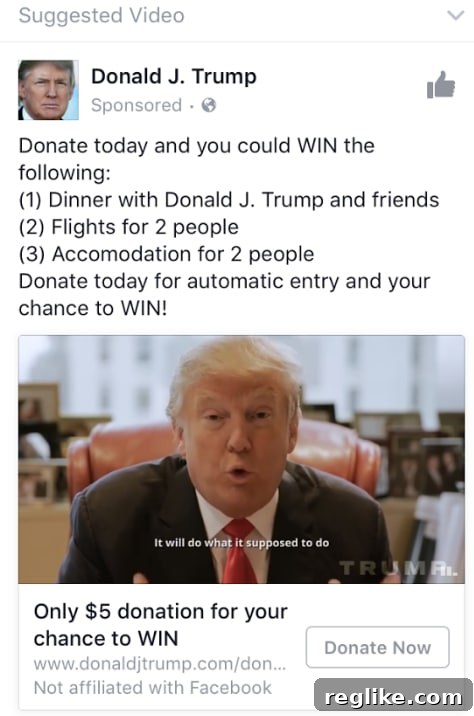
It’s important to note the legal considerations surrounding sweepstakes and entry fees. While offering a sweepstakes with a mandatory entry fee might be problematic for businesses, political campaigns often operate under different regulations, allowing them to utilize this strategy effectively.
3. The Allure of Deep Discounts: Creating Perceived Value
Another recurring theme in Trump’s Facebook ads is the use of significant discounts to entice potential buyers. This is particularly evident in promotions for items like the Trump Gold Card. These ads often highlight a substantial discount, sometimes as high as 75%, compared to a perceived “original price.”
The effectiveness of this tactic lies in the creation of perceived value. By showcasing a large discount, the ad makes the offer seem incredibly appealing. However, it’s crucial to examine the accuracy of the claimed “original price.” In some instances, the advertised original price may be inflated to exaggerate the discount’s impact.
For example, reports have indicated that the “original price” of the Trump Gold Card has varied over time, suggesting that it is a flexible number used to create a sense of urgency and value. Despite the fluctuating prices and purported time constraints, the offer often remains available, demonstrating the use of artificial scarcity as a marketing tool.
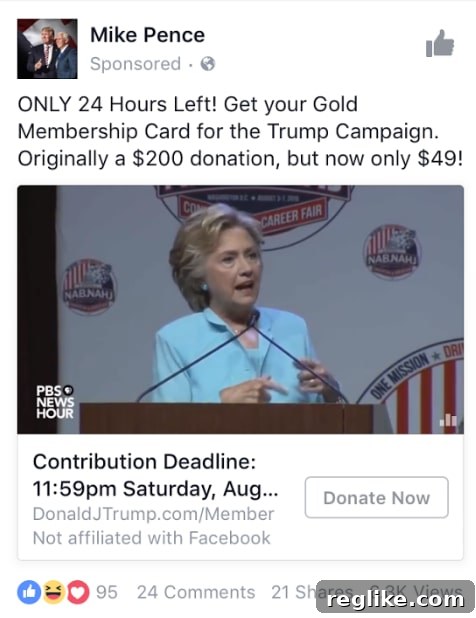
Despite the potentially misleading tactics, the underlying principle of offering a perceived discount remains a powerful driver of consumer behavior. The key is to strike a balance between creating excitement and maintaining transparency.
Key Takeaways for Effective Facebook Advertising
Analyzing Trump’s Facebook ad campaigns provides valuable lessons for anyone seeking to improve their own online advertising strategies. Here are some key takeaways:
- Create Urgency: Implement time constraints and limited-time offers to encourage immediate action.
- Foster Exclusivity: Make viewers feel like they are part of a select group by participating.
- Offer Low-Commitment Entry Points: Start with small requests to build trust and encourage further engagement.
- Highlight Perceived Value: Use discounts and promotions to make your offer seem irresistible.
- A/B Test Your Ads: Continuously experiment with different ad copy, visuals, and targeting parameters to optimize performance.
- Targeting is Key: Ensure your ads are reaching the right audience by leveraging Facebook’s granular targeting options.
- Monitor and Analyze Results: Track your ad performance metrics and make adjustments as needed to maximize your return on investment.
- Stay Compliant: Adhere to all relevant advertising regulations and guidelines.
The Ethics of Political Advertising
While this analysis focuses on the marketing tactics used in Trump’s Facebook ads, it’s important to acknowledge the ethical considerations surrounding political advertising. The use of persuasive techniques, especially when combined with potentially misleading information, raises questions about the responsibility of political campaigns to be truthful and transparent.
The impact of political advertising on voter behavior is a subject of ongoing debate. Some argue that these ads can manipulate voters and distort the political discourse, while others maintain that they provide valuable information and help people make informed decisions. Regardless of one’s perspective, it’s crucial to be aware of the potential influence of political advertising and to critically evaluate the messages being conveyed.
Conclusion: Mastering the Art of Facebook Advertising
Donald Trump’s Facebook ad campaigns offer a compelling case study in the application of internet marketing principles. By understanding the tactics used, such as creating urgency, fostering exclusivity, and offering perceived value, marketers can gain valuable insights into how to improve their own Facebook advertising efforts. However, it’s crucial to implement these strategies ethically and responsibly, ensuring that advertising practices are transparent and truthful.
The world of Facebook advertising is constantly evolving, so it’s essential to stay informed about the latest trends and best practices. By continuously learning and adapting, marketers can harness the power of Facebook to achieve their desired outcomes and connect with their target audience effectively.