
Google’s Domain Registration Widget: A Patent Analysis
Google has recently filed a patent application with the United States Patent and Trademark Office (USPTO) detailing a “Method and Device for Domain Web Page Registration.” This patent application, readily available for review, outlines a system designed to streamline the domain registration process, particularly for users of website builder platforms. But what does this patent entail, and what are its potential ramifications for the domain name industry?
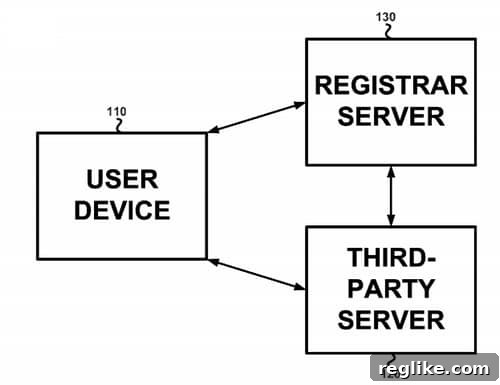
The core concept behind this patent application revolves around the need for third-party website builder services to seamlessly integrate domain name registration into their user experience. Many website builders already offer domain registration through reseller systems, allowing their users to acquire a domain name directly within the platform they use to create their website. However, Google’s patent application suggests a specific implementation that aims to enhance this process.
It is believed that this patent is closely tied to a widget developed by Google to facilitate domain name sales to users of the Blogger platform. This widget presents users with a convenient interface for searching and registering domain names directly within the Blogger environment. The patent specifically highlights the following feature:
“According to some implementations, the list may include one or more available domain names having a top-level domain selected to be emphasized by the third-party website. For example, if the third-party website provides services for bloggers, the top-level domain “.blog” may be selected to be emphasized.”
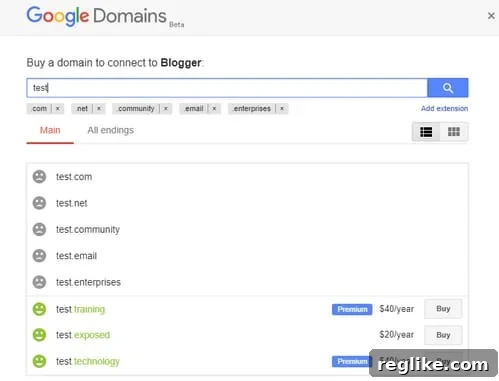
This statement suggests that the widget is designed to prioritize specific top-level domains (TLDs) based on the context of the website builder being used. For instance, if a user is creating a blog on Blogger, the widget might emphasize the “.blog” TLD, making it more prominent and encouraging users to consider it for their domain name.
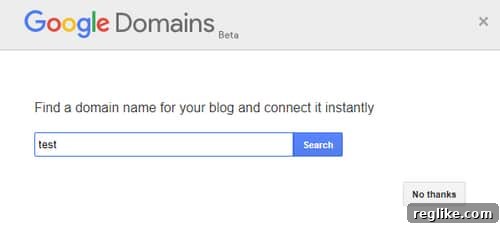
Currently, when a user creates a blog on the Blogger platform, they are presented with a pop-up dialog box prompting them to register a domain name. This dialog box serves as a gateway to the domain registration process, allowing users to search for available domain names and select one that suits their needs.
Upon searching for a domain name, users are presented with a list of available options directly within the same dialog box. This seamless integration of domain search and registration streamlines the process, making it more convenient for Blogger users to acquire a domain name for their blog.
While this widget implementation represents a variation of existing domain reselling systems, domain resellers should carefully consider the specific claims made by Google in the patent application. The emphasis on highlighting specific TLDs based on the context of the website builder could potentially influence user behavior and drive adoption of those TLDs.
The patent application itself was initially filed in 2016 and was only recently published. This lengthy period between filing and publication suggests a thorough review process by the USPTO. The publication of this patent application raises important questions about the future of domain registration and the role of website builders in shaping user choices.
Implications for the Domain Industry
Google’s patent application for a domain registration widget has several potential implications for the domain industry. Firstly, it highlights the growing importance of seamless integration between website builders and domain registrars. As more and more individuals and businesses turn to website builders to create their online presence, the ability to acquire a domain name directly within the platform becomes increasingly crucial.
Secondly, the emphasis on highlighting specific TLDs based on the context of the website builder could lead to a shift in domain name preferences. If website builders actively promote certain TLDs, users may be more inclined to choose those options, potentially impacting the market share of different TLDs.
Thirdly, the patent application underscores the ongoing innovation in the domain name industry. While the core concept of domain registration remains the same, companies are constantly seeking new and improved ways to streamline the process and enhance the user experience.
Key Takeaways
In conclusion, Google’s patent application for a domain registration widget represents an interesting development in the domain name industry. While the specific implementation may not be entirely novel, it highlights the importance of seamless integration between website builders and domain registrars, as well as the potential impact of TLD promotion on user preferences.
Domain resellers should carefully analyze the claims made in the patent application and consider how they might adapt their strategies to remain competitive in an evolving market. The domain industry is constantly changing, and staying informed about new innovations and trends is essential for success.
This patent application serves as a reminder that the domain name landscape is dynamic and that companies must continuously innovate to meet the evolving needs of their customers. The integration of domain registration into website builders is likely to become even more prevalent in the future, and those who can provide a seamless and user-friendly experience will be best positioned to succeed.
The filing date of 2016 and the recent publication date also highlight the often lengthy process involved in obtaining a patent. This underscores the importance of protecting intellectual property and staying ahead of the curve in a competitive market.
Ultimately, Google’s domain registration widget patent application represents a small but significant step in the ongoing evolution of the domain name industry. It highlights the importance of user experience, the power of TLD promotion, and the need for continuous innovation. As the domain name landscape continues to evolve, companies must remain adaptable and responsive to the changing needs of their customers to thrive in this dynamic market.
The future of domain registration is likely to be characterized by greater integration with website builders, more personalized recommendations, and a continued focus on user experience. Companies that can successfully navigate these trends will be well-positioned to capitalize on the growing demand for domain names in the years to come.