
Navigating Tax Changes: 1099-NEC Forms, Charitable Deductions, and PPP Loan Implications
The year 2020 brought unprecedented challenges and changes, impacting various aspects of our lives, including tax regulations. As we approach tax season, it’s crucial to stay informed about key updates that may affect your filings. This article provides a comprehensive overview of the changes to 1099 forms, charitable deductions, and the tax implications of Paycheck Protection Program (PPP) loans, specifically tailored for domain investors and small business owners.
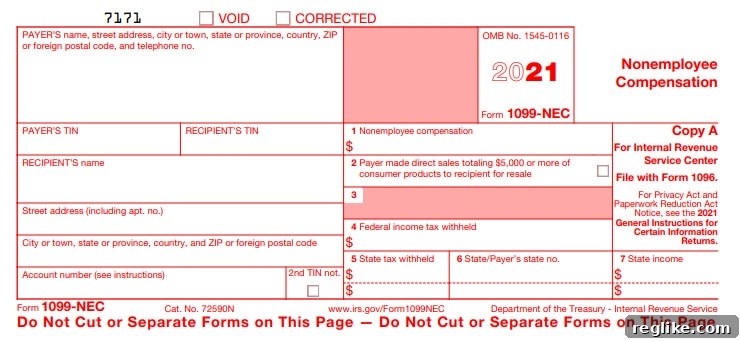
Many domain investors will encounter the new 1099-NEC form in their mailboxes this January.
Understanding the Shift to Form 1099-NEC
A significant change for the 2020 tax year is the introduction of Form 1099-NEC for reporting nonemployee compensation. Previously, this type of income was reported on Form 1099-MISC. This change affects anyone who hires freelancers, contractors, or other nonemployees for their business.
In the past, companies used Form 1099-MISC to report payments made to individuals who weren’t employees, such as web developers, freelance writers, and other independent contractors. Domain investors often received these forms from parking companies, affiliate networks, and other entities that paid them for their services. Now, these payments will be reported on Form 1099-NEC.
While the 1099-NEC form itself isn’t overly complicated, it’s important to be aware of the change and ensure you’re using the correct form when reporting nonemployee compensation. The deadline for issuing these forms is in January, so it’s crucial to prepare accordingly.
To streamline the process of issuing 1099-NEC forms, consider using online services like Track1099. These platforms can simplify the form creation and filing process, saving you time and effort.
It’s also worth noting that 1099-NEC forms are not required for payments made to corporations. If your business is structured as an S-Corp, you can avoid the hassle of receiving numerous 1099s each year. While this shouldn’t be the primary reason for electing S-Corp status, it’s a beneficial side effect to consider.
The Enhanced Charitable Deduction for Non-Itemizers
Recent tax law changes, including an increased standard deduction and limitations on State and Local Tax (SALT) and mortgage interest deductions, have led more taxpayers to opt for the standard deduction instead of itemizing. While this simplifies tax filing for many, it has negatively impacted charitable giving, as donations are only tax-deductible for those who itemize.
Recognizing the importance of charitable contributions, especially during the COVID-19 pandemic, the U.S. government introduced a temporary provision for the 2020 tax year. Taxpayers who take the standard deduction can now deduct up to $300 in cash charitable contributions. While this amount may seem modest, it can still make a difference for both donors and charitable organizations.
Consider supporting organizations that align with your values and contribute to the well-being of others. For domain investors, organizations like Water School, which focuses on providing clean water solutions, are a worthy cause. Additionally, consider donating to non-profits that maintain essential online resources like the Wayback Machine and Wikipedia. These organizations rely on donations to provide valuable services to the online community.
Strategic Charitable Giving: Donor-Advised Funds
If you typically take the standard deduction, consider a tax strategy called “bunching” your charitable donations into a single year. This involves making a larger donation in one year to exceed the standard deduction, allowing you to itemize and claim a tax deduction. In subsequent years, you can revert to taking the standard deduction.
A donor-advised fund can facilitate this strategy. You can make a large donation to the fund in a single year and then distribute the funds to various charities over time. This allows you to maximize your tax deduction while supporting your favorite causes.
Another tax-efficient strategy is to donate appreciated stock to a donor-advised fund. By donating stock that has increased in value, you can deduct the stock’s fair market value and avoid paying capital gains taxes on the appreciation. This can result in significant tax savings.
PPP Loan Forgiveness and Tax Implications
Many domain investors and small business owners received Paycheck Protection Program (PPP) loans in 2020 to help mitigate the economic impact of the pandemic. While these loans provided much-needed financial relief, it’s important to understand their tax implications.
Under current law, if your PPP loan is forgiven, the expenses you used the loan to cover are not deductible. This means that the amount of the forgiven loan effectively becomes taxable income. For example, if you received a $25,000 PPP loan that is forgiven, you will likely have to pay taxes on $25,000 because the expenses covered by the loan will not be deductible.
However, there is ongoing discussion in Congress about changing this rule. Lawmakers are considering legislation that would allow businesses to deduct expenses paid with PPP loan proceeds, even if the loan is forgiven. It’s crucial to stay informed about these developments, as they could significantly impact your tax liability.
Consult with your tax advisor to discuss the potential tax implications of your PPP loan and develop a plan to minimize your tax burden. The situation is constantly evolving, so it’s essential to stay updated on the latest guidance from Congress and the IRS.
Key Takeaways for Domain Investors and Small Business Owners
As you prepare for tax season, keep the following key takeaways in mind:
- Familiarize yourself with Form 1099-NEC: Ensure you’re using the correct form for reporting nonemployee compensation.
- Take advantage of the enhanced charitable deduction: If you take the standard deduction, you can deduct up to $300 in cash charitable contributions.
- Consider strategic charitable giving: Explore options like donor-advised funds to maximize your tax deductions.
- Understand the tax implications of PPP loans: Stay informed about potential changes to the rules regarding expense deductibility.
- Seek professional tax advice: Consult with a qualified tax advisor to navigate these complex tax changes and develop a personalized tax strategy.
By staying informed and proactively planning, you can navigate these tax changes effectively and minimize your tax liability. Remember to consult with a qualified tax professional for personalized advice tailored to your specific circumstances.
The information provided in this article is for general guidance only and does not constitute professional tax advice. Always consult with a qualified tax advisor for personalized advice based on your specific situation.