
Gab.com’s Domain Dilemma: Payment Plans, Controversy, and the Future of a Domain Name
The domain name Gab.com, associated with a self-proclaimed ‘free speech’ social network, finds itself at the center of a complex situation involving payment plans, controversial usage, and potential long-term implications for its value. The story highlights the often-overlooked intricacies of domain ownership, usage agreements, and the evolving landscape of online content moderation.
The Payment Plan Puzzle: Gab.com and Escrow.com
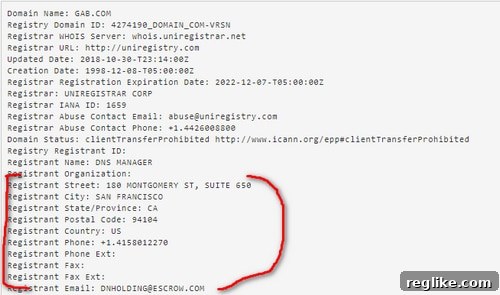
A notable detail has emerged regarding the ownership structure of Gab.com: the domain name appears to be on a payment plan facilitated by Escrow.com. This revelation adds another layer to the already intricate narrative surrounding the domain. Typically, such payment plans are used for high-value domain acquisitions, allowing buyers to spread the cost over a period of time rather than paying the full amount upfront. The address and email details publicly visible on the Whois record point directly to Escrow.com, suggesting a structured payment arrangement.
The implication is that the reported sale of Gab.com on Flippa for $220,000 may not have been a complete, cash-upfront transaction. Instead, the new owners likely opted for a payment plan, agreeing to a schedule of installments to cover the total purchase price. This arrangement is common in the domain industry, especially for premium domain names commanding significant price tags.
This payment structure introduces potential risks. If Gab.com were to cease making payments on the domain, Escrow.com, acting on behalf of the original seller, could reclaim ownership. Given the controversies surrounding the social network and the subsequent actions taken by payment processors and hosting providers, the possibility of payment default cannot be dismissed.
Controversy and Damaged Domain Reputation
The Gab.com domain name has become inextricably linked with controversy. The social network operating on the domain gained notoriety as a platform for individuals espousing extreme viewpoints and hate speech. The association with the Pittsburgh synagogue shooter, who allegedly used the platform to disseminate his radical ideology, has further tarnished the domain’s reputation.
This association carries significant consequences for the domain’s long-term value and marketability. Many potential buyers will be wary of acquiring a domain with such a controversial history. The negative publicity and potential backlash associated with owning Gab.com could deter individuals and organizations from considering it as an investment.
The reputational damage inflicted on Gab.com serves as a cautionary tale for domain investors. While premium domain names often represent valuable assets, their value can be significantly eroded by association with controversial content or activities. Thorough due diligence and careful consideration of potential risks are essential before investing in any domain name.
GoDaddy’s Exit and Uniregistry’s Entry
The series of events surrounding Gab.com’s domain registration further illustrates the challenges associated with managing a controversial online presence. After facing public pressure, GoDaddy instructed Gab.com to transfer its domain name to another registrar. This decision highlights the growing willingness of domain registrars to take a stand against platforms that promote hate speech or incite violence.
Subsequently, Gab.com transferred its domain name to Uniregistry, a domain registrar based in the Cayman Islands and owned by Frank Schilling. The transfer necessitated the removal of GoDaddy’s proxy service, revealing the address and email associated with Escrow.com on the public Whois record. This chain of events underscores the interconnectedness of the domain ecosystem and the challenges of maintaining anonymity when dealing with domain ownership and transfers.
Frank Schilling and Uniregistry’s decision to accept the Gab.com domain demonstrates a different approach to content moderation and free speech. While some registrars may shy away from controversial clients, others may be more willing to provide services based on principles of open access and limited censorship. This diversity in registrar policies reflects the ongoing debate about the role of internet infrastructure providers in regulating online content.
The Importance of Domain Usage Agreements
The Gab.com situation underscores the critical importance of well-defined domain usage agreements, particularly when leasing a domain or selling it on a payment plan. These agreements should clearly outline acceptable and unacceptable uses of the domain, providing recourse for the owner in case of misuse.
While standard clauses typically prohibit spamming and the distribution of adult content, the Gab.com case suggests the need for more comprehensive provisions. Domain owners may want to consider including clauses that address hate speech, incitement to violence, or the promotion of harmful ideologies. Such clauses can provide legal protection and allow the owner to terminate the agreement if the domain is used in a manner that violates the terms.
Crafting effective domain usage agreements requires careful consideration of potential risks and liabilities. Consulting with legal counsel is highly recommended to ensure that the agreement is enforceable and provides adequate protection for the domain owner. The Gab.com case serves as a stark reminder of the potential consequences of failing to address usage restrictions adequately.
Looking Ahead: The Future of Gab.com
The future of the Gab.com domain name remains uncertain. The ongoing controversies, coupled with the payment plan arrangement, create a complex and potentially volatile situation. Whether Gab.com can overcome its reputational challenges and maintain its payment obligations remains to be seen.
The case highlights the growing awareness of domain names as valuable assets that can be impacted by the actions of their users. Domain investors and owners must exercise due diligence, consider potential risks, and implement appropriate safeguards to protect the value and reputation of their domain names. The Gab.com story serves as a powerful lesson about the intersection of domain ownership, online content, and the evolving landscape of internet governance.
Domain Name Investment: A Word of Caution
The Gab.com situation is a cautionary tale for those involved in domain name investment. While the potential for profit is significant, there are also risks involved, particularly concerning brand reputation. A domain name is more than just an address; it’s an online identity, and its perceived value is directly related to the content or activities associated with it.
Investing in domain names requires careful consideration. Due diligence should not only involve checking the domain’s history but also understanding the potential risks associated with its use. It’s also essential to stay abreast of changes in regulations and acceptable use policies. A seemingly valuable domain can quickly become a liability if associated with controversial or illegal activities.
The key takeaway is that domain name investment is not a passive activity. It demands active management, constant monitoring, and a willingness to take swift action to protect the domain’s value. Like any investment, it requires knowledge, foresight, and a degree of risk assessment. In the ever-evolving digital landscape, the Gab.com situation serves as a reminder that even the most valuable assets can be vulnerable to unforeseen circumstances.