Create tax headaches for domain sellers — Afternic’s 1099-Ks
Reissued 1099-Ks, old addresses, and notifications caught in spam lead to frustration.
It’s tax day in the U.S., and many taxpayers are making last-minute filings or deciding if they want to file for an extension.
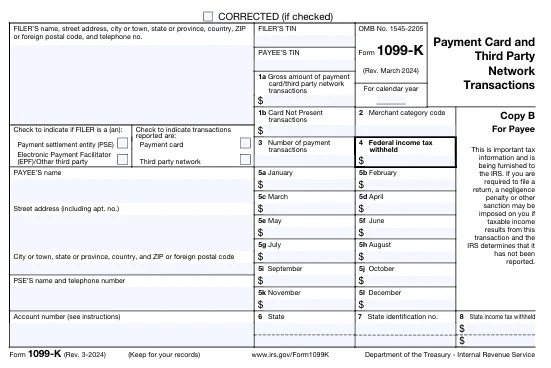
This year marks the first time many U.S. taxpayers are receiving Form 1099-K, a tax form that Third-Party Settlement Organizations (TPSOs) like PayPal, credit card processors, and some marketplaces such as eBay must send. A 1099-K notes payments made to a taxpayer through these platforms.
The IRS has been adjusting the requirements for sending 1099-Ks since they were introduced in 2011. For the 2023 tax year, TPSOs only issued the form if the recipient had at least 200 transactions totaling over $20,000 in the year. But for the 2024 tax year, that threshold dropped dramatically to $5,000 and any number of transactions. This is why many taxpayers are receiving the forms for the first time this year.
Unsurprisingly, the rollout has been messy.
Bumps in Afternic’s 1099-K rollout
GoDaddy’s Afternic marketplace fumbled its 1099-K process this year.
First, it only mailed paper 1099-Ks instead of uploading them to users’ accounts. That posed a problem for many sellers who hadn’t updated their mailing address in years. There has never been a reason to update the address at Afternic as it never sent paper correspondence and payments are handled electronically. Afternic sent the 1099-Ks to the account address, even if they conflicted with the payment address used when setting up payments.
Second, Afternic initially sent incorrect forms. The original 1099-Ks listed the net amount sellers received following Afternic took its commission for some transactions. Still, the IRS requires that marketplaces note the gross amount (the full sales price ahead of commissions and fees). Afternic eventually corrected the mistake and mailed fresh forms.
Unfortunately, it didn’t notify users of the error until March 20, following the March 15 tax deadline for S-Corps and following many individuals had by now filed their returns. Worse, the email notice was sent via a third-party server and landed in many users’ spam folders.
One Afternic seller told me he had to file an amended return to reflect the correct gross amount and deduct the commissions as a business expense. It wasn’t until that reader contacted me this month that I learned Afternic sent a 1099-K to me this year. It was sent to an old address. Unfortunately, I had by now filed my S-Corp return.
The PayPal duplication problem
There’s another wrinkle: sellers who received payouts via PayPal received a 1099-K from PayPal in addition to the one from Afternic.
This results in duplicate reporting, showing roughly twice the payments than the taxpayer received. This could trigger an IRS audit.
There is debate regarding who ought to send a 1099-K when a marketplace issues payments via a third-party processor like PayPal instead of direct bank payments.
My understanding is that only the payment processor (PayPal, in this case) ought to send the 1099-K. Still, ambiguous IRS language has led marketplaces like Afternic to err on the side of caution and issue forms themselves.
That might be the safest move for the firm, but it creates serious complications for sellers.
What domain sellers ought to do with their 1099-Ks
The issue for most domain sellers isn’t that they lie on their taxes. It’s that the 1099-Ks might raise flags at the IRS that will trigger further investigation.
If you typically note your net proceeds as revenue, the updated Afternic 1099-K might show a higher number than you initially noted on your return.
If you receive payments via PayPal, the IRS might think you received twice the payments you received.
People who haven’t filed their taxes yet and have duplicate 1099-Ks from Afternic and PayPal can add a note to their return explaining the discrepancy.
If it turns out that Afternic shouldn’t have issued the 1099-Ks, it could reissue the forms showing $0, which would save sellers some potential issues with the IRS.
It doesn’t sound like that will happen.
A GoDaddy spokesperson told Reglike via email, “We’re reviewing every aspect of 1099-Ks this year and expect improvements in the next round.”
Happy tax day, everyone.