
Spotting Fake News: A Look at Deceptive Websites and Domain Name Importance
In today’s digital age, the internet is a primary source of information for millions worldwide. However, this accessibility comes with a significant challenge: the proliferation of fake news and deceptive websites. These sites often mimic legitimate news sources, making it difficult for the average internet user to distinguish fact from fiction. One of the most crucial elements in identifying these misleading sites is paying close attention to the domain name. This article delves into a specific instance of a fake news website and emphasizes the importance of scrutinizing domain names to protect yourself from online scams and misinformation.
The ease with which anyone can create and publish content online has unfortunately led to an increase in the creation of websites designed to deceive. These sites may promote false information, push dubious products, or spread propaganda. The impact of fake news can be far-reaching, influencing public opinion, swaying elections, and even causing real-world harm. Therefore, it is essential to equip ourselves with the knowledge and tools to identify these deceptive sources.

The Anatomy of a Fake News Website
Recently, while browsing the web, I encountered a particularly convincing example of a fake news website. A new window popped up on my screen, displaying what appeared to be an article from Business Insider. The headline immediately raised suspicion:
Trump Battles the FDA Over Bill Gates’s Breakthrough Discovery! Says “This WILL NOT Be Banned, The American People Have A Right to Have Access to This”
Even for a legitimate news source, this headline seemed sensationalized and outlandish. However, the page itself was remarkably well-crafted. It included a “hot” ticker that continuously increased, indicating high engagement; up-to-the-minute market updates, adding to the site’s credibility; and a comment section filled with Facebook comments, simulating a real and active community.
The overall impression was one of authenticity. Without careful examination, it would be easy to mistake this site for the real Business Insider. However, a closer look revealed the deception.
The Tell-Tale Sign: The Domain Name
While the website design and content were carefully constructed to mimic a legitimate news source, the domain name served as the primary giveaway. The article was promoting a product called Neuro Blast, and the comments section was filled with fabricated testimonials, praising the product as a “true miracle” and claiming amazing results. However, the URL of the site was not businessinsider.com or any variation thereof. Instead, it was a completely different and unrelated domain.
The domain name is often the first clue that a website is not what it seems. Fake news websites frequently use domain names that are similar to well-known news sources but with subtle variations. These variations may include using a different top-level domain (TLD) such as .today instead of .com, misspelling the name of the legitimate source, or adding extra words or characters to the domain.
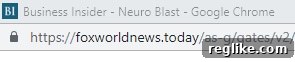
In this particular case, the use of a .today domain was a clear red flag. Legitimate news organizations typically use .com, .org, or other established TLDs. The .today TLD is often associated with less reputable websites, including those that spread fake news or promote scams.
Further investigation revealed that the links throughout the article led to siteupdate(.)services, which then redirected to NeuroBlastToday(.)com. The URL string contained an affiliate ID, suggesting that the website was primarily focused on promoting the Neuro Blast product and earning commissions through affiliate marketing. All three domains were registered at Namecheap and used CloudFlare, common practices for both legitimate and illegitimate websites, but worth noting in the overall context.
Why Domain Names Matter
This incident serves as a crucial reminder of the importance of paying close attention to domain names when evaluating the credibility of a website. In an era where visual design and content can be easily replicated, the domain name remains a fundamental indicator of a website’s authenticity. Here’s why domain names are so important in the fight against fake news:
- First Impression: The domain name is often the first thing a user sees when encountering a website. It provides an immediate clue as to the site’s identity and purpose.
- Brand Recognition: Established news organizations have built strong brands associated with their domain names. Fake news websites attempt to capitalize on this brand recognition by mimicking these domain names.
- Credibility Indicator: The TLD (e.g., .com, .org, .net) can provide valuable information about the website’s nature. While not always indicative of legitimacy, certain TLDs are more commonly associated with reputable organizations.
- Search Engine Optimization (SEO): While Google and other search engines are working to downplay the prominence of domain names and URLs in search results, they still play a role in how websites are ranked and displayed.
Protecting Yourself from Fake News
In light of the increasing sophistication of fake news websites, it is essential to adopt a proactive approach to protecting yourself from misinformation and online scams. Here are some practical tips to help you identify and avoid fake news:
- Check the Domain Name: Always examine the domain name carefully. Look for unusual TLDs, misspellings, or extra words.
- Verify the Source: Cross-reference the information with other reputable news sources. If the same story is not reported by multiple credible outlets, it may be fake.
- Read Beyond the Headline: Don’t rely solely on headlines. Read the entire article and assess the quality of the writing, the evidence presented, and the overall tone.
- Be Wary of Sensationalism: Fake news websites often use sensationalized headlines and emotionally charged language to attract attention.
- Examine the Website Design: Look for inconsistencies in the website design, such as poor grammar, broken links, or unprofessional graphics.
- Check the “About Us” Page: Legitimate news organizations typically have detailed “About Us” pages that provide information about their mission, staff, and editorial policies.
- Use Fact-Checking Websites: Utilize fact-checking websites such as Snopes, PolitiFact, and FactCheck.org to verify the accuracy of information.
- Be Skeptical of Social Media: Social media platforms are often breeding grounds for fake news. Be cautious about sharing information without verifying its accuracy.
- Report Fake News: If you encounter a fake news website, report it to the appropriate authorities, such as the social media platform or search engine where you found it.
The Future of Fake News Detection
The fight against fake news is an ongoing challenge that requires a multi-faceted approach. While domain name scrutiny remains an important tool, technological advancements and increased media literacy are also crucial. Search engines and social media platforms are developing algorithms to identify and flag fake news, but these algorithms are not foolproof. Ultimately, the responsibility lies with each individual to critically evaluate the information they encounter online.
Furthermore, education plays a vital role in equipping individuals with the skills to discern fact from fiction. Media literacy programs should be implemented in schools and communities to teach people how to identify fake news, evaluate sources, and think critically about the information they consume.
Conclusion
The internet has revolutionized the way we access and share information, but it has also created new opportunities for deception and misinformation. Fake news websites pose a significant threat to individuals and society as a whole. By paying close attention to domain names, verifying sources, and developing critical thinking skills, we can protect ourselves from online scams and promote a more informed and trustworthy online environment. Remember, the domain name is often the first line of defense against fake news, so always be vigilant and scrutinize the URL before accepting information as fact.