
Angie’s List Initiates Legal Action Against ServiceMagic Over Controversial Google AdWords Practices
In a significant legal development that underscored the fierce competition in the home services marketplace, Angie’s List (NASDAQ: ANGI), the well-known subscription-based platform connecting consumers with local service professionals, filed a comprehensive lawsuit against rival lead generation firm ServiceMagic. The core of the dispute centered on ServiceMagic’s alleged use of Angie’s List’s protected brand name within Google AdWords (now Google Ads) campaigns, a practice that ignited debates around trademark infringement and fair competition in the digital advertising landscape.
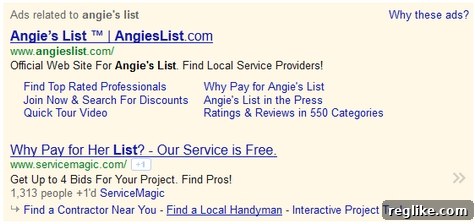
The complaint, lodged by Angie’s List, meticulously detailed how ServiceMagic was actively purchasing Google AdWords placements for the specific search term “Angie’s List.” This strategy aimed to divert search traffic intended for Angie’s List directly to ServiceMagic’s platform. The direct impact of this competitive bidding became evident in search results, where an ad for ServiceMagic would often appear prominently, directly underneath or alongside genuine Angie’s List advertisements.
Consider the following illustration, captured during a live search query. While Angie’s List typically secured the top organic and sponsored spots for its brand name, ServiceMagic managed to position an advertisement directly below it, often with compelling and “witty” ad copy designed to entice users:
The Core of the Allegation: Misleading URLs and Comparison Pages
Beyond simply bidding on the trademarked term, the lawsuit (pdf) presented compelling evidence of more direct and potentially misleading tactics. The complaint specifically highlighted example ads where a variant of “Angie’s List” was incorporated directly into the URL displayed in the advertisement. For instance, URLs such as www.servicemagic.com/vs-Angies_List/ were cited. This particular URL structure was not arbitrary; it directly led users to a dedicated comparison page hosted on ServiceMagic’s website. This page explicitly outlined what ServiceMagic presented as the key differences and advantages it held over Angie’s List, thereby engaging in direct competitive comparison under the guise of an ad triggered by a competitor’s brand name.
This approach raised significant legal questions. While direct comparison advertising can be legitimate, utilizing a competitor’s trademark in the ad’s URL, especially when it directs to a comparative sales pitch, often ventures into a gray area of trademark law and unfair competition. The intent, according to Angie’s List, was clearly to capitalize on its brand recognition and potentially confuse consumers into believing there was an affiliation or a direct comparison endorsed by Angie’s List itself.
Understanding Google’s AdWords Trademark Policy
The legal battle between Angie’s List and ServiceMagic wasn’t an isolated incident but rather one of many lawsuits that have emerged concerning the use of trademarked terms as keywords within Google AdWords. Google’s policy on trademarks in advertising has evolved over time, attempting to strike a balance between brand protection and advertisers’ freedom to promote their products and services, even in comparison to competitors.
Generally, Google allows advertisers to bid on trademarked terms as keywords. This means a competitor can bid on a rival’s brand name to trigger their ads. However, Google’s policy typically prohibits the *use* of the trademarked term itself within the ad copy (headline, description, display URL) unless the advertiser is an authorized reseller, an informational site, or the trademark owner themselves. The critical nuance in the Angie’s List vs. ServiceMagic case was the inclusion of “Angie’s List” within the display URL leading to a direct comparison page, which arguably crosses the line from mere competitive bidding to direct trademark use within the ad’s visible components.
Key Aspects of Google’s Trademark Policy:
- Keyword Bidding: Generally permissible. Competitors can bid on your trademark as a keyword.
- Ad Copy: Generally prohibited if it includes the trademark term itself, unless specific conditions are met (e.g., reseller, informational site, or explicit permission from the trademark owner).
- Display URL: The subject of much contention. While the root domain is usually the advertiser’s, adding a path that contains a trademark (like
/vs-Angies_List/) can be problematic, especially when it implies a direct comparison or affiliation.
The Broader Implications for Digital Marketing and Brand Protection
This lawsuit garnered significant attention from brand owners, digital marketers, and legal professionals alike because it highlighted several critical issues in the ever-evolving landscape of online advertising:
- Brand Protection in the Digital Age: For companies like Angie’s List, their brand name is their most valuable asset. Allowing competitors to use it to siphon off traffic not only impacts revenue but also dilutes brand equity and potentially confuses customers.
- Fair Competition vs. Unfair Practices: Where does legitimate competitive advertising end, and unfair or deceptive practices begin? This case sought to define those boundaries, particularly concerning the intentional use of a competitor’s brand in ad URLs and landing pages designed for comparison.
- The Role of Search Engines: Google, as the dominant search engine and advertising platform, plays a pivotal role in these disputes. Its policies and their enforcement directly influence how businesses can compete online. The outcome of such cases can sometimes pressure Google to refine its policies further.
- Consumer Confusion: One of the primary concerns in trademark law is preventing consumer confusion. If a user searches for “Angie’s List” and clicks on an ad that looks like an official comparison or implies a relationship, they might be misled about the source or endorsement of the services.
The Highly Competitive Lead Generation Industry
The home services lead generation sector, in which both Angie’s List and ServiceMagic operate, is intensely competitive. Companies in this space vie for consumer attention and service professional subscriptions, making online visibility paramount. Platforms like Angie’s List and ServiceMagic (which later rebranded to HomeAdvisor and subsequently merged with Angie’s List to form Angi) serve as critical intermediaries, connecting homeowners with plumbers, electricians, contractors, and other service providers.
In such a high-stakes environment, every click and every lead translates directly into revenue and market share. This fierce competition often pushes companies to explore aggressive marketing strategies, including those that test the boundaries of search engine advertising policies and trademark law. The lawsuit was a stark reminder that digital marketing strategies, while powerful, must also navigate a complex legal and ethical landscape.
Looking Ahead: The Precedent and Potential Outcomes
The resolution of cases like the one between Angie’s List and ServiceMagic can set important precedents for how businesses approach competitive advertising on platforms like Google Ads. Outcomes typically range from out-of-court settlements, where parties agree on terms to cease certain advertising practices and potentially pay damages, to full court rulings that establish legal interpretations of trademark law in the context of digital advertising.
For Angie’s List, a favorable outcome would reaffirm its right to protect its brand name from what it considered to be exploitative advertising practices. For ServiceMagic, it would involve either defending its actions as legitimate competitive advertising or adjusting its strategies to comply with legal mandates. Regardless of the specific resolution, such lawsuits serve as crucial reminders for all businesses: while leveraging digital platforms for growth is essential, doing so within the bounds of legal and ethical standards, particularly concerning intellectual property, is equally vital.
This particular case was undeniably interesting to watch, contributing to the ongoing discourse about trademark rights in the digital age and the responsibilities of advertisers and platform providers alike. It underscores that in the fast-paced world of online marketing, vigilance in protecting one’s brand is not just a best practice, but a legal imperative.