
The Unforgettable World of Fake Top-Level Domains: A Dive into Digital Humor and Reality
The internet, in its vastness, offers endless avenues for creativity, communication, and, perhaps surprisingly, comedy. From viral memes to clever website names, digital spaces often reflect our cultural nuances and sense of humor. One particularly amusing aspect that sometimes surfaces in popular culture is the concept of fake Top-Level Domain (TLD) names. These fictional domains, often conjured up for a laugh, provide a fascinating lens through which to explore both the imaginative limits of language and the strict realities of the internet’s naming conventions.
If you’re in search of a good laugh and appreciate sharp, witty dialogue with a dash of relatable modern-day struggles, the Amazon Original Series Catastrophe is an absolute must-watch. This critically acclaimed show, known for its unflinching honesty and brilliant comedic timing, often finds humor in the most unexpected places. And for those with a keen interest in the digital world, there’s a particularly delightful moment of domain name humor that shines through in the season two finale, offering a perfect illustration of how fictional TLDs can add a layer of comedic brilliance.
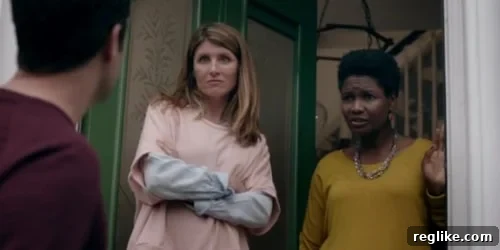
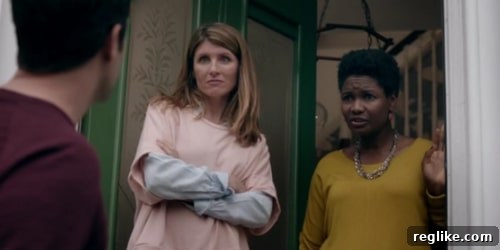
The scene unfolds during a heated argument between the show’s protagonists, Sharon and Rob. Their banter, a hallmark of their tumultuous relationship, often veers into hilariously specific and cutting remarks. As they bicker about making arrangements for their children, Rob attempts to pin down communication methods, leading to this memorable exchange:
Sharon: You can e-mail me.
Rob: OK. Is your e-mail address still Impatient[explicit]@Mean.jerk?
Sharon: Yeah. Yeah, it is. Is yours still FatIdiot@BadBreath.[explicit]?
The humor here is multi-layered. It’s not just the use of highly personalized and comically offensive email prefixes, but the invention of Top-Level Domains like “.jerk” and “[explicit]” that truly makes the moment resonate. These aren’t just random words; they are constructed as if they could be real, adding a layer of authenticity to the absurdity. The characters’ choice of TLDs perfectly encapsulates their frustration and the playful, yet often hostile, dynamic of their relationship. It’s a brilliant comedic device that leverages our familiarity with internet addresses to deliver a punchline that is both specific to their situation and universally amusing.
The scene continues as Rob walks to his car, where his friend Fergal, dealing with his own set of struggles, is waiting. Fergal, upon hearing the tail-end of the exchange, delivers another gem:
Fergal: Dot [explicit]. That’s awesome. Is that an actual domain name? Because if it is, I will buy that.
Fergal’s immediate desire to acquire such a domain name speaks volumes about the perceived value and impact of a highly specific, perhaps even shocking, TLD. It highlights the human fascination with unique identifiers and the power of a memorable, albeit inappropriate, online address. This comedic beat underscores a fundamental truth about domain names: they are not merely technical addresses; they are often extensions of identity, branding, and even personal expression.
The Reality of Top-Level Domains: ICANN’s Role and the Rules of the Road
While the fake TLDs in Catastrophe provide excellent comedic fodder, they also invite us to consider the real-world mechanisms that govern the internet’s naming system. The internet’s address book is meticulously managed by the Internet Corporation for Assigned Names and Numbers, or ICANN. ICANN is a non-profit organization responsible for coordinating the maintenance and procedures of several databases related to the namespaces and numerical spaces of the Internet, ensuring its stable and secure operation. This includes overseeing the registration and management of all Top-Level Domains.
Top-Level Domains are the last segment of a domain name, appearing after the final dot. We’re all familiar with popular gTLDs (generic TLDs) like .com, .org, .net, and country-code TLDs (ccTLDs) such as .uk, .de, or .jp. However, in recent years, the internet’s domain name space has expanded dramatically with the introduction of hundreds of new gTLDs, ranging from .app and .blog to .guru and .xyz. This expansion was a monumental undertaking by ICANN, aimed at fostering innovation, increasing competition, and providing more choice for internet users and businesses.
The process for creating and operating a new TLD is incredibly stringent, complex, and costly. Organizations and companies seeking to launch a new gTLD must submit detailed applications to ICANN, outlining their operational capabilities, financial stability, technical expertise, and a clear vision for the proposed TLD. Crucially, they must also demonstrate how the proposed TLD serves a legitimate public interest and adheres to strict guidelines concerning public policy, security, stability, and consumer protection.
Why Some TLDs, Like Those in Catastrophe, Would Never See the Light of Day
Returning to our humorous examples from Catastrophe, it’s clear why TLDs like “.jerk” or those incorporating derogatory terms would not pass ICANN’s rigorous review process. ICANN’s policies are designed to prevent the proliferation of TLDs that could be used to promote hate speech, obscenity, illegal activities, or those that are misleading, confusing, or detrimental to the internet community.
For instance, the derogatory term that I’ve intentionally blanked out from the original script (a term often used in Britain in an informal or offensive context) would almost certainly fall afoul of ICANN’s morality and public order clauses. ICANN has specific criteria for “String Content,” which addresses the actual text of the TLD. These criteria prohibit strings that are:
- Contrary to generally accepted principles of morality and public order.
- Obscene or indecent.
- Deceptive or misleading.
- Likely to cause material harm or confusion.
A TLD like “.jerk” or similar pejorative terms, even if not explicitly obscene, would likely be rejected on the grounds that it violates generally accepted principles of morality or could lead to confusion or misuse. The goal of new gTLDs is to expand beneficial uses of the internet, not to create platforms for insult or controversy.
The Humorous Appeal and Cultural Impact of Domain Names
Despite the strict rules, the humor derived from fictional domain names, as seen in Catastrophe, highlights our cultural relationship with these digital identifiers. Domain names are more than just addresses; they’re brand names, personal statements, and often a source of creative expression. The absurdity of a TLD like “.jerk” lies in its ability to immediately convey a personality or a situation, tapping into our understanding of how language and identity intertwine in the digital realm.
This comedic effect is similar to how we react to real-world domain name “fails” or exceptionally clever ones. Who hasn’t chuckled at a poorly chosen domain name or admired the ingenuity of a perfectly branded one? The very structure of domain names — often short, memorable, and descriptive — makes them ripe for both serious application and playful subversion.
The expansion of TLDs has also given rise to more specific and sometimes whimsical options. While we won’t see “.idiot” or “.badbreath” approved, we do have TLDs like .ninja, .pizza, or .lol, which cater to niche interests and inject a degree of fun into the domain space. These demonstrate a growing appetite for domain names that are more expressive and less constrained by traditional categories.
The Future: Will ICANN Round 2 See More Creativity, or Just More Rules?
Fergal’s question, “Is that an actual domain name? Because if it is, I will buy that,” playfully nods to the highly anticipated “Round 2” of new gTLD applications. Following the success and challenges of the first round, ICANN is expected to open a second application window for new TLDs sometime in the future.
What might we expect from Round 2? While the core principles of stability, security, and consumer protection will undoubtedly remain paramount, there’s always a discussion about the balance between strict regulation and fostering innovation. It’s plausible that future rounds might see a refinement of application processes, perhaps an emphasis on community-based TLDs, or even greater scrutiny over the proposed strings.
However, it’s highly unlikely that ICANN would relax its rules regarding offensive or inappropriate TLDs. The global nature of the internet means that TLDs must be acceptable across diverse cultures and sensibilities. While the world of fiction, like Catastrophe, can revel in the outrageous and the specific, the real world of internet governance must prioritize a safe, stable, and respectful online environment for everyone.
In conclusion, the hilarious fake TLDs concocted by Sharon and Rob in Catastrophe serve as a brilliant piece of comedy, grounding their exaggerated marital strife in a relatable digital context. They remind us that even the most technical aspects of our digital lives can be sources of humor and insight. But beyond the laughs, these fictional domains also highlight the significant work done by organizations like ICANN to ensure that the actual internet remains a functional, secure, and respectful space, even if that means drawing a firm line against the most amusingly offensive ideas. The internet is a place for fun, but also for order, and the intersection of these two realities often makes for the most interesting stories, both on screen and in our daily online lives.