
Apple Takes a Byte Out of Search: Unpacking the “Domain Based Influence Scoring” Patent
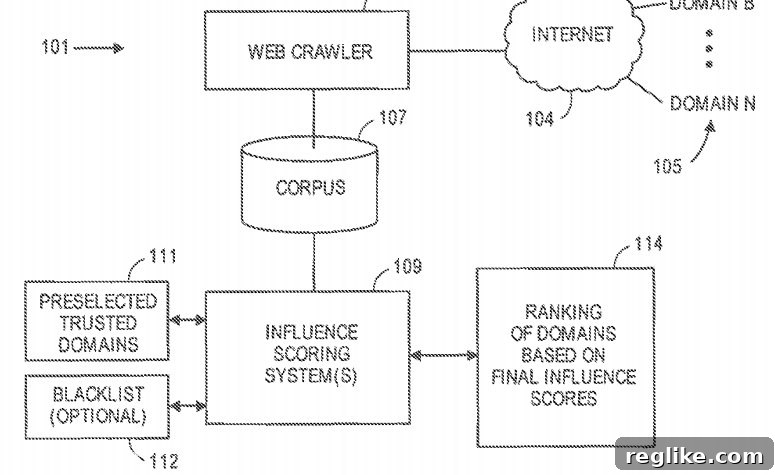
In a significant development that has piqued the interest of the tech and search engine optimization (SEO) communities, Apple Inc. has been granted a patent for a system designed to score website domain names based on their influence. This move signals Apple’s continued, albeit often understated, ventures into the complex world of web ranking and content discovery. The United States Patent and Trademark Office formally issued patent number 1,0872,088, officially titled “Domain based influence scoring,” to the Cupertino giant.
At its core, the patent describes a sophisticated method for evaluating the importance and authority of website domain names. This assessment, crucial for determining how prominent a site should be in search results or content recommendations, is primarily driven by the intricate web of links connecting different domains. For anyone familiar with the history of search algorithms, this concept immediately brings to mind Google’s revolutionary PageRank and the subsequent evolutions in how the search giant calculates the influence of backlinks.
The patent’s timing and implications are particularly noteworthy. As digital content proliferates at an unprecedented rate, the ability to accurately identify and elevate authoritative, high-quality information is paramount. Whether Apple intends to launch a full-fledged search engine or simply enhance its existing content discovery services like Siri, Safari, and Apple News, possessing a robust system for influence scoring positions them strategically in the evolving digital landscape.
Echoes of the Past: Apple’s Patent and the Ghost of PageRank
The immediate reaction from many who delved into the details of Apple’s “Domain based influence scoring” patent was a strong sense of déjà vu. The described mechanism for evaluating domain importance based on inbound and outbound links bears a striking resemblance to Google’s foundational PageRank algorithm. Introduced in the late 1990s, PageRank revolutionized search by treating links as “votes” of confidence from one page to another. A link from an important page was considered a more valuable vote than a link from a less important one, creating a powerful recursive algorithm for measuring web page authority.
Google has, of course, moved far beyond the original PageRank, incorporating countless other signals and machine learning into its ranking algorithms. However, the fundamental principle of link-based authority remains a cornerstone of search engine optimization. Apple’s patent, by focusing on “link juice” (the colloquial term for the authority and value passed through a hyperlink) and domain scores, clearly operates within this established paradigm. The question then arises: what, if anything, makes Apple’s approach distinct, and why would they patent something that appears, at first glance, to be a familiar concept?
This initial skepticism, articulated by early reviewers of the patent, is entirely valid. Patenting fundamental concepts in technology is common, but often new patents introduce novel methods or significant refinements. Let’s explore the specific features outlined in Apple’s patent to understand where its potential innovations, or at least its unique emphasis, might lie.
Unpacking the Patent’s Distinctive Features: A Closer Look at Link Dynamics
While the overall concept may feel familiar, Apple’s patent introduces several intriguing nuances that differentiate its approach from the conventional understanding of link-based scoring. These specific mechanisms offer a glimpse into Apple’s philosophy regarding web authority and content distribution.
One of the most notable features described is a unique interpretation of “link juice” distribution. Traditionally, in SEO, an outbound link from one domain to another is generally seen as passing value *from* the source *to* the destination, typically in an additive manner. The Apple patent, however, suggests a more nuanced and potentially punitive model: “In one embodiment, an outbound link from a domain name actually reduces the importance of the site with the link rather than merely passing on the link juice in an additive fashion.”
This is a significant departure. If implemented, it implies that linking out is not a neutral or purely beneficial act for the source domain. Instead, it could actively diminish the source’s perceived importance or authority. Such a mechanism could fundamentally alter current link-building strategies, encouraging websites to be far more judicious and selective about where they link. It might promote a more insular web environment or, conversely, incentivize only linking to the absolute highest-quality, most authoritative external resources to mitigate the “importance reduction.” It forces content creators to critically evaluate every outbound link, considering its potential cost to their own domain’s score.
Another crucial element of Apple’s patent involves penalizing domains that associate with disreputable sources. The patent suggests “reducing the domain score of domains that link to blacklisted sites.” This mechanism is designed to combat spam, low-quality content, and potentially malicious websites. By actively penalizing domains that link to “blacklisted” entities, Apple aims to create a cleaner, more trustworthy web index. This isn’t entirely new; Google’s algorithms have long included penalties for linking to spammy or low-quality sites, often through updates like Penguin. However, Apple’s explicit patenting of this concept underscores its importance in their proposed system and suggests a strong commitment to filtering out undesirable content at the source of influence.
The Social Layer: Individual Influence on Social Networks
Perhaps the most genuinely novel aspect highlighted in the patent is its consideration of “individual authors/accounts on social network domains as independent entities.” In a world increasingly shaped by personal brands, influencers, and user-generated content, this feature is particularly relevant. Traditionally, a link from, say, Twitter.com would be treated as coming from a single domain. Apple’s patent, however, proposes a system where the influence score of an individual user’s account on a social platform (e.g., a highly reputable journalist’s Twitter account or an industry expert’s LinkedIn profile) could contribute independently to the overall domain influence score.
This approach acknowledges the shifting landscape of content creation and authority. While a major news outlet’s website inherently carries significant domain authority, the individual voices within that domain, especially on social platforms, often wield immense influence themselves. Integrating this individual-level influence into a broader domain scoring system could provide a more granular and accurate assessment of overall web authority. It suggests a future where the credibility of a specific tweet, post, or shared article might be judged not just by the platform it resides on, but by the established authority of the individual account sharing it. This could add a layer of complexity and sophistication, but also significant accuracy, to how content is ranked and discovered.
Apple’s Search Ambitions: Why This Patent Now?
Given the apparent similarities to existing search technologies, the underlying question remains: what truly motivates Apple to secure a patent for “Domain based influence scoring”? While the patent does introduce specific refinements, the broader context of Apple’s strategic moves sheds more light on its significance.
One compelling reason is defensive patenting. In the highly competitive tech industry, companies often patent innovations to protect their intellectual property and prevent rivals from using similar methods. However, given Apple’s vast resources and its increasing focus on services, it’s more likely that this patent serves as a foundational building block for future initiatives.
Apple already possesses several robust content discovery mechanisms. Siri, Apple News, Safari’s intelligent search suggestions, and Spotlight Search all rely on surfacing relevant and authoritative information. By developing its own proprietary system for scoring domain influence, Apple gains greater control over the quality and relevance of the content presented across its ecosystem. This aligns perfectly with Apple’s brand philosophy of privacy, quality, and a curated user experience. Relying less on third-party search engines for core ranking signals allows Apple to maintain its standards and potentially integrate privacy-centric approaches into its ranking methodology.
Furthermore, this patent could be a precursor to Apple expanding its search capabilities. While a full-scale Apple Search Engine to rival Google might seem a distant prospect, the company has been steadily investing in search infrastructure, including hiring search experts and developing its own web crawler, Applebot. A robust domain influence scoring system is an indispensable component of any effective search engine or advanced content recommendation system. This patent could be a crucial piece of the puzzle, laying the groundwork for a more independent and powerful Apple-driven search experience across all its devices and services.
Implications for SEO and the Future of Digital Marketing
Should Apple’s patented system gain widespread adoption or form the backbone of a prominent Apple-driven search or content discovery platform, the implications for SEO professionals and webmasters would be substantial.
The concept of outbound links reducing a domain’s importance could trigger a significant shift in link strategy. Websites might become more hesitant to link out, or conversely, exceptionally selective, only linking to domains whose authority is so undeniable that the “cost” of the outbound link is justified. This could lead to a premium on truly authoritative content and a more cautious approach to resource citation. Content quality and genuine authority would become even more critical, as links would be seen as strategic assets rather than mere navigational tools.
The emphasis on penalizing links to blacklisted sites reinforces the importance of maintaining a clean backlink profile and being highly discerning about partner sites. This means webmasters would need to rigorously audit their outbound links and ensure they are not inadvertently associating with low-quality or harmful domains.
Finally, the recognition of individual influence on social networks could open up new avenues for “social SEO.” Building individual authority and credibility on platforms like X (formerly Twitter), LinkedIn, and others might directly translate into tangible benefits for the domains those individuals are associated with. This would further blur the lines between traditional SEO and digital PR, emphasizing the holistic nature of online influence.
Conclusion: Apple’s Quiet Ascent in the Search Landscape
Apple’s “Domain based influence scoring” patent, filed in November 2017 after a provisional application in January 2017 and recently granted, marks a pivotal moment. While it may echo established principles of link-based ranking, its distinctive features – particularly the nuanced approach to outbound link value and the recognition of individual social influence – signal a refined and potentially impactful direction for content evaluation. This patent solidifies Apple’s ongoing commitment to strengthening its internal content discovery mechanisms and hints at broader ambitions in the search space.
Whether this leads to an “Apple Search” in the traditional sense or a highly sophisticated, integrated content discovery layer across its ecosystem, one thing is clear: Apple is building its own framework for determining what’s important on the web. For digital marketers and content creators, this necessitates a watchful eye and a readiness to adapt strategies to align with Apple’s evolving vision for a more authoritative, curated, and possibly more selective digital world.