
Blackstone Group’s Proactive Approach to Online Reputation: The “Sucks” Domain Strategy
In today’s digital landscape, where online reputation can make or break a company, proactive brand protection is paramount. Blackstone Group, a global leader in private equity, has taken an interesting approach to safeguarding its online image: registering domain names that include the term “sucks” associated with its name, its chairman, and even its subsidiaries. This strategy, known as defensive domain registration, is a tactic employed by many companies to prevent reputational damage and control the narrative surrounding their brand.
Understanding Defensive Domain Registration
Defensive domain registration involves purchasing domain names that are similar to a company’s existing brand name but include potentially negative or critical terms. In Blackstone’s case, this includes domains like blackstonesucks.com, blackstonegroupsucks.com, and domains targeting key executives like Stephen Schwarzman. The purpose is to prevent individuals or organizations with malicious intent from using these domains to spread negative information, launch smear campaigns, or engage in cybersquatting.
By owning these domains, Blackstone can control the content displayed on them, redirect them to the company’s official website, or simply leave them inactive, preventing others from using them for harmful purposes. This strategy allows the company to proactively manage its online presence and mitigate potential reputational risks.
Blackstone’s Specific Domain Registrations
The following domain names were registered by Blackstone Group, showcasing the extent of their defensive domain strategy:
- blackstonesucks.com
- blackstonegroupsucks.com
- theblackstonegroupsucks.com
- schwarzmansucks.com
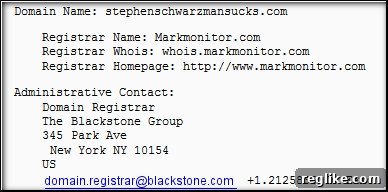
- stephenschwarzmansucks.com
- stevenschwarzmansucks.com
- steveschwarzmansucks.com
- ParkHillSucks.com (referencing its subsidiary, Park Hill Group)
- ParkHillGroupSucks.com
- ByronWienSucks.com (referencing its vice chairman)
- ByronWeinWucks.com (likely a typo, but registered nonetheless)
These registrations clearly demonstrate Blackstone’s commitment to protecting its brand and the reputations of its key personnel. Stephen Schwarzman, co-founder and chairman of Blackstone Group, is a primary target of these registrations, highlighting the importance of protecting leadership figures in corporate reputation management.
The Context: Scrutiny and Public Perception
Blackstone Group, like many private equity firms, has faced increased scrutiny in recent years, particularly since the financial crisis. Concerns about favorable tax treatment for private equity and the impact of their investment practices on various sectors have led to negative attention. This heightened scrutiny makes proactive reputation management even more critical for companies like Blackstone.
The registration of “sucks” domains can be seen as a response to this environment, a preemptive measure to control potential negative narratives and protect the company’s image from online attacks. By anticipating and addressing potential criticism, Blackstone aims to maintain a positive public perception and safeguard its brand value.
Precedent: Bank of America’s Similar Strategy
Blackstone is not alone in employing this defensive domain registration strategy. In 2010, Bank of America took similar action, registering hundreds of “sucks” domains for its executives and board members. This indicates that the practice is relatively common among large corporations seeking to protect their reputations in the digital age.
The fact that multiple major financial institutions have adopted this strategy underscores the importance of online reputation management and the proactive measures companies are willing to take to mitigate potential risks. It highlights the evolving landscape of corporate communication and the need for businesses to be vigilant in monitoring and managing their online presence.
The Importance of Online Reputation Management
Online reputation management (ORM) is the process of monitoring, influencing, and controlling the perception of a brand or individual online. It involves a range of activities, including:
- Monitoring online mentions and sentiment
- Responding to negative reviews and comments
- Creating and promoting positive content
- Managing search engine results
- Protecting against online attacks and misinformation
In today’s interconnected world, ORM is crucial for businesses of all sizes. A negative online reputation can damage a company’s brand, erode customer trust, and impact its bottom line. Conversely, a positive online reputation can attract new customers, enhance brand loyalty, and improve overall business performance.
Benefits of Defensive Domain Registration
Defensive domain registration offers several benefits for companies seeking to protect their online reputation:
- Prevention of negative websites: Prevents others from creating websites with negative or defamatory content targeting the company or its executives.
- Control of the narrative: Allows the company to control the content displayed on these domains, ensuring that accurate and positive information is presented.
- Protection against cybersquatting: Prevents cybersquatters from registering and profiting from domain names related to the company’s brand.
- Enhanced brand protection: Reinforces the company’s commitment to protecting its brand and reputation.
- Mitigation of reputational risks: Helps to mitigate potential reputational risks by proactively addressing potential negative narratives.
Considerations and Best Practices
While defensive domain registration can be an effective strategy, it’s important to consider the following best practices:
- Identify potential threats: Identify potential negative keywords or phrases that could be used in domain names targeting the company.
- Prioritize registrations: Prioritize the registration of domain names that pose the greatest reputational risk.
- Monitor domain names: Monitor the registered domain names to ensure they are not being used for malicious purposes.
- Consider legal options: Consider legal options for addressing domain names that are being used to spread defamatory or infringing content.
- Integrate with overall ORM strategy: Integrate defensive domain registration with an overall online reputation management strategy.
Conclusion: A Proactive Approach to Brand Protection
Blackstone Group’s decision to register “sucks” domains demonstrates a proactive and strategic approach to online reputation management. By anticipating potential negative narratives and taking steps to control them, the company is safeguarding its brand and mitigating potential reputational risks. In an era where online perception is critical, this type of proactive strategy is becoming increasingly important for businesses of all sizes. The defensive domain registration strategy employed by Blackstone and others underscores the importance of vigilance and proactive measures in maintaining a positive online presence and protecting brand value in the digital age. Companies must be prepared to address potential threats and actively manage their online reputation to ensure long-term success.