Gregory Ricks Loses Prized 3-Character Domain BME.com: A UDRP Cautionary Tale for Domainers
In the high-stakes world of domain name ownership, where digital real estate can command significant value, the loss of a rare three-character domain sends a clear message across the industry. Such was the fate of long-time domainer Gregory Ricks, who recently lost control of the highly coveted BME.com domain name in a Uniform Domain-Name Dispute-Resolution Policy (UDRP) proceeding to BMEzine.com, LLC. This landmark decision not only highlights the inherent vulnerability of short, memorable domains but also underscores critical lessons for all domain owners regarding the careful management of parked page content and the intricate implications of domain transfer histories within legal challenges. The panel’s ruling, which notably discounted Ricks’ initial registration date from 2000, has prompted many to re-evaluate their own domain management strategies.
The BME.com dispute serves as a compelling case study, demonstrating how nuanced operational choices can have profound and often unforeseen consequences in a UDRP context. Ricks’ defeat hinged primarily on two pivotal factors: the specific nature of the advertisements displayed on BME.com’s parked pages, which directly related to the complainant’s business, and a series of domain transfers that the UDRP panel interpreted as attempts to conceal ownership. These combined elements ultimately led the panel to conclude that BME.com was registered and used in bad faith, despite Ricks’ long-standing ownership.
The Parties Involved: Gregory Ricks and BMEzine.com, LLC
Gregory Ricks is a well-established and respected figure within the domaining community, known for his extensive portfolio and keen understanding of the domain market. His ownership of BME.com dated back to the year 2000, a fact that would typically provide a strong defense in a domain dispute, often referred to as the “first-in-time” argument. Three-character domains are exceedingly scarce and therefore exceptionally valuable. Their brevity makes them highly desirable for branding, memorable for users, and often fetches premium prices on the secondary market, making them frequent targets for UDRP complaints from entities seeking to consolidate their online presence.
The complainant in this case was BMEzine.com, LLC, the proprietor of a prominent online “ezine” (electronic magazine) dedicated to the extensive field of body modification. This includes a wide array of topics such as body piercing, tattooing, scarification, and other forms of body art. The acronym “BME” is integral to their brand identity, directly signifying their content and the community they serve. BMEzine.com, LLC asserted its rights to the “BME” mark through its established brand presence and relevant service mark filings, arguing that BME.com was confusingly similar to their brand and was being used in a manner that created confusion among consumers and diluted their mark.
Decisive Factors in the UDRP Ruling: Parked Pages and Bad Faith
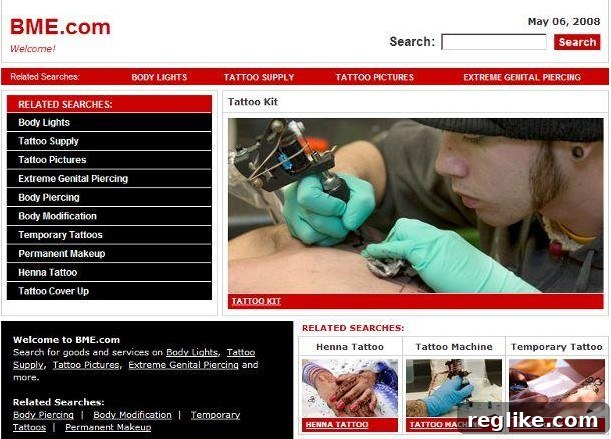
A critical piece of evidence that significantly undermined Gregory Ricks’ position was the content displayed on BME.com’s parked pages. For several years leading up to the UDRP complaint, BME.com featured advertisements directly associated with “Tattoo supplies” and “body piercing.” These were not generic, unrelated ads but rather specific advertisements that precisely mirrored the thematic focus of BMEzine.com’s business operations. In a UDRP proceeding, such targeted advertising is often interpreted as compelling evidence of bad faith registration and use, playing a pivotal role in the panel’s assessment.
The UDRP policy requires a complainant to prove three fundamental elements for a successful challenge:
- The domain name is identical or confusingly similar to a trademark or service mark in which the complainant has rights.
- The registrant (respondent) has no rights or legitimate interests in respect of the domain name.
- The domain name has been registered and is being used in bad faith.
In this instance, the direct correlation between the parked page advertisements and BMEzine.com’s business heavily weighed against Ricks on the second and third elements. The panel likely concluded that by displaying ads for body art-related products and services, Ricks was intentionally trying to benefit from the goodwill and recognition associated with BMEzine.com’s brand, thereby lacking a legitimate interest in the domain and demonstrating bad faith use. Even if Ricks argued that the ads were automatically generated by a third-party parking service, the ultimate responsibility for the content displayed on a domain rests with its owner. This aspect of the ruling serves as a stark reminder for all domainers: continuous and meticulous monitoring of content on parked domains is not merely good practice but a critical defense mechanism against potential UDRP claims. Allowing ads that directly relate to a known trademark or service mark that is confusingly similar to your domain can provide irrefutable evidence of bad faith intent.
The Intricate History of Domain Transfers: A Game Changer
Beyond the parked page content, the UDRP panel’s interpretation of BME.com’s transfer history proved to be an equally, if not more, intriguing and decisive factor. Gregory Ricks originally registered BME.com in 2000, which, under normal circumstances, would establish a powerful “first-in-time” argument, often a strong shield against UDRP complaints, especially if the registration predates the complainant’s trademark rights. However, the panel effectively rendered this initial registration date irrelevant due to a series of subsequent transfers of the domain name between various entities owned by Ricks and different privacy services over the years.
Crucially, the panel focused on a specific transfer between privacy services that occurred *after* BMEzine.com, LLC had already filed a service mark for “BME.” This timing was viewed with significant suspicion by the panel, which concluded that this particular transfer was an attempt by Ricks to “conceal his identity as long as possible.” This finding introduces a critical nuance to UDRP jurisprudence: certain domain transfers, particularly those that appear to obscure ownership or are strategically timed coincidentally with a complainant’s actions, can be highly detrimental to a respondent’s case. Such actions can override the presumptive strength of an early original registration date, casting doubt on the registrant’s overall good faith.
The original article points out a key detail: a footnote in the WIPO decision stated that the panel could not explain the rationale behind Ricks’ earlier transfers of the domain between entities prior to any contact from BMEzine.com, LLC. This observation is highly relevant because if Ricks had a documented and consistent pattern of transferring domains between his various legal entities for legitimate administrative, tax, or portfolio management purposes, this could have provided a plausible, innocent explanation for the later transfer. Such documentation might have helped mitigate the panel’s inference of intentional concealment. This highlights the indispensable need for domain owners to maintain comprehensive records of all domain management actions, especially for high-value assets, as these records can be pivotal in constructing a robust defense against UDRP challenges.
This aspect of the ruling provides a stern warning: while privacy services are legitimate tools for safeguarding personal information, and routine transfers between one’s own legal structures are common practice in domain management, the timing and perceived intent behind such transfers can become a significant liability. Domain owners must be acutely aware that every action related to their domain — from its content to its registration details and transfer history — contributes to a scrutinized narrative in a UDRP proceeding. The panel at the WIPO Arbitration and Mediation Center provides comprehensive details of their reasoning in the official decision, offering valuable insights into these complex considerations.
Lessons Learned: Protecting Prized 3-Character Domains and Beyond
The BME.com case delivers profound and enduring lessons for anyone involved in domain ownership, particularly those holding valuable, short-form domains. Three-character domains are inherently susceptible to UDRP challenges precisely because their brevity means they often coincide with numerous existing trademarks, abbreviations, and acronyms across a wide spectrum of industries. Their scarcity amplifies their desirability and, consequently, the likelihood of such disputes.
Key Takeaways for Domain Owners and Investors:
- Vigilant Management of Parked Pages: This is arguably the most immediate and actionable lesson. Domain owners must regularly review the content and advertisements displayed on their parked domains. If a domain is an acronym, a generic term, or has the potential to be descriptive, it is paramount to ensure that any advertising displayed remains truly generic and does not align with specific industries or known trademarks. Automated parking algorithms, while convenient, can sometimes inadvertently display problematic ads. Implementing regular manual checks or explicitly opting for truly generic ad categories is a crucial preventative measure. The author of the original article astutely observed that had BME.com’s ads been entirely unrelated to body art, Ricks’ outcome might have been dramatically different, potentially allowing him to retain his valuable domain.
- Transparency and Documentation in Domain Transfers: While legitimate privacy services are invaluable for personal data protection, domainers should exercise extreme caution with frequent or unexplained transfers, especially if a potential dispute appears on the horizon. If transfers between entities or changes in privacy providers occur, it is essential to maintain clear and comprehensive records documenting the legitimate rationale behind each move. Demonstrating a consistent, transparent, and legitimate business purpose for any changes in registrant details or ownership structures can be a powerful defense. The panel’s interpretation of Ricks’ transfers as an attempt to “conceal his identity” underscores the critical importance of appearing transparent and acting in verifiable good faith.
- Profound Understanding of UDRP Policy: Domain owners must familiarize themselves with the intricacies of the Uniform Domain-Name Dispute-Resolution Policy. Simply being the first to register a domain name (the “first-in-time” argument) is not an impenetrable shield against UDRP complaints. The policy meticulously evaluates “legitimate interests” and “bad faith registration and use,” both of which can be significantly influenced by subsequent actions such as parked page content and documented domain transfer patterns. Proactive knowledge of these rules can prevent devastating and costly losses.
- Proactive Trademark Monitoring: For owners of high-value generic or acronym domains, consider implementing periodic trademark searches to identify potential conflicts. While this may not be feasible for vast portfolios, for truly premium and irreplaceable digital assets, understanding the evolving trademark landscape can help anticipate and mitigate future disputes before they escalate.
- Strategic Decision-Making for Every Action: Every decision related to a domain name, from its initial acquisition and registration to its ongoing use, monetization, and any changes in ownership or registrar, contributes to its legal history. Owners must critically consider how each action might be perceived by a UDRP panel in the unfortunate event of a dispute. Prudence and foresight are key to safeguarding valuable digital assets.
The BME.com case unequivocally reinforces the principle that domain ownership extends far beyond merely holding a digital address. It demands active, informed management, strategic foresight, and a comprehensive understanding of the legal frameworks governing these valuable online assets. As the digital landscape continues its rapid evolution, the principles highlighted in this case remain timeless and universally applicable. Protecting highly desirable digital real estate, such as three-character domains, necessitates an exceptional level of diligence, transparency, and unwavering adherence to established best practices.
Below, for illustrative purposes, is an example of one of the parked pages from BME.com. This visual evidence undoubtedly played a significant role in the UDRP panel’s assessment of bad faith use and contributed to the decision to transfer the domain.