

Sean Markey examines last month’s SEO-based domain sales at NameJet and SnapNames, offering insights into their impressive valuations.

As another month concludes, the domain aftermarket provides a fascinating window into digital asset valuations. Specifically, the auction results from platforms like NameJet and SnapNames often reveal compelling stories behind their selling prices. While some domains naturally command high figures due to their inherent brandability or keyword appeal, many others achieve substantial valuations primarily for their underlying SEO potential. This analysis delves into the recent sales, scrutinizing the domains acquired for their strategic SEO advantages, rather than just their standalone perceived value. For a comprehensive overview of all sales, the full list of sales can be found here. Our focus, however, remains squarely on the captivating intersection of domain investment and search engine optimization.
Decoding High-Value Domain Acquisitions for SEO
NCHC.org – $106,000: A Masterclass in YMYL Authority
The sale of NCHC.org for a staggering $106,000 immediately grabs attention. While short, four-letter .org domains possess a certain intrinsic value due to their scarcity and memorability, a price exceeding six figures almost invariably signals a deeper strategic acquisition rooted in SEO. This domain, in particular, represents an exceptionally powerful SEO asset. NCHC historically stood for the National Coalition on Health Care, immediately placing it within a crucial and highly regulated sector of the internet.
For those new to the intricacies of search engine optimization, understanding the valuation of such a domain requires grasping two fundamental concepts that dictate the trustworthiness and authority of a backlink profile:
1. Relevance to YMYL (Your Money or Your Life) Niches:
YMYL is a term coined by Google to categorize topics that, if presented inaccurately or misleadingly, could negatively impact a user’s health, financial stability, or safety. This includes areas like financial advice (investing, banking, saving), medical information (treatments, diagnoses, health conditions), safety, and legal matters. Google holds websites operating in YMYL niches to exceptionally high standards, demanding demonstrable Expertise, Authoritativeness, and Trustworthiness (E-A-T, recently expanded to E-E-A-T to include Experience). The search engine giant is meticulously careful about promoting sites that might offer dubious health cures or unsound financial advice. Consequently, ranking for YMYL-related keywords requires a highly credible and thoroughly vetted backlink profile and content strategy. Acquiring a domain like NCHC.org, which has historically been associated with a legitimate health organization, provides an invaluable head start in meeting these stringent E-E-A-T requirements.
2. Age and Establishment of Backlinks:
It is a long-standing theory in the SEO community that the age of a backlink significantly correlates with its value and trustworthiness. Older, well-established backlinks, particularly from reputable institutions or long-standing publications, convey a profound sense of authority and stability to Google’s algorithms. These links are not easily replicated and represent years of accumulated trust and recognition within a specific industry or topic.
Therefore, purchasing NCHC.org is not merely buying a domain; it’s acquiring a legacy of trust. This domain carries a backlink profile cultivated over many years as a reliable source of medical information. This inherent and historical authority instantly transfers to the new owner, granting a significant boost in Google’s trust assessment. This accelerated path to algorithmic trust, particularly in a sensitive YMYL niche, is precisely why NCHC.org commanded a price exceeding $100,000. It offers an almost instant credibility injection for any future health-related content or initiatives, bypassing years of meticulous content creation and link building.
SouthwestJournal.com – $42,001: The Power of Broad Authority and Content Revival
SouthwestJournal.com, selling for $42,001, represents another exemplary SEO acquisition, albeit with a slightly different flavor. This domain comes with a tremendous amount of “broad authority,” evidenced by its impressive backlink profile. With over 3,000 backlinks from highly authoritative sources such as Wikipedia, The New York Times, Yahoo, Inc., and The Huffington Post, this domain possesses a trust factor that few new sites can hope to achieve without decades of effort. These links signal to Google that the domain has historically been a significant and respected entity across a wide range of topics.
The immediate strategy employed by the new owner highlights the immense value of such an acquisition. By restoring the site to its former state and promptly adding fresh content, they leveraged its pre-existing authority for rapid ranking success. A notable example is a recently published article about “which companies are in finance field.” Despite its recent publication, and without the typical incubation period required for new websites, the article quickly achieved a top-10 ranking for a query that garners approximately 50,000 searches per month, according to Ahrefs.com.
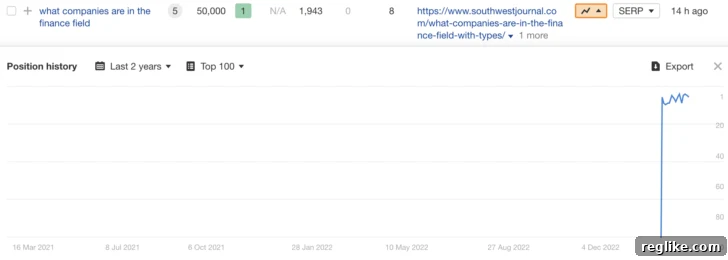
This rapid ascent illustrates the undeniable power of inheriting an established, trustworthy domain in Google’s eyes. It suggests that search engines prioritize the historical authority of a domain when evaluating new content, allowing even recently published articles to compete effectively against more seasoned competitors. Furthermore, the ability to utilize advanced content generation tools, such as AI, on such an authoritative platform can amplify results. The referenced article, for example, might have been AI-generated, and tools like Originality.ai can assess the likelihood of text being AI or human-created. The effectiveness of AI-generated content on a highly authoritative domain showcases a powerful synergy, enabling rapid content scale and immediate impact without sacrificing ranking potential.
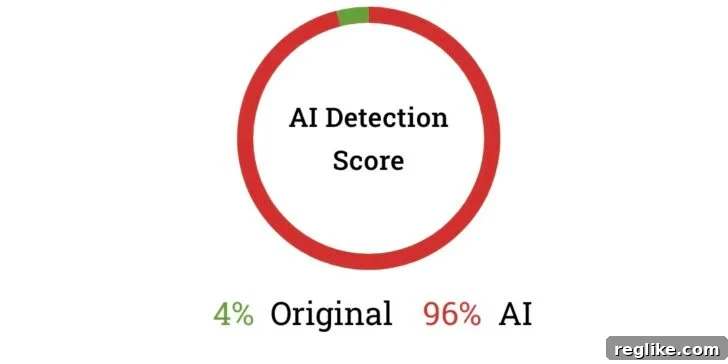
This strategy is not just effective; it’s a testament to the enduring value of domain authority as a foundational element of successful SEO.
Expired Domains and Repurposing Strategies
DMER.org – $25,600: The Risky Yet Lucrative World of Domain Repurposing
The sale of DMER.org for $25,600 narrates a common, albeit often controversial, tale in the domain investment landscape. This particular domain boasted significant authority and a legitimate backlink profile prior to its expiration. Following its auction, it was rapidly transformed into an Indonesian online casino, a niche entirely unrelated to its previous identity. Despite this drastic shift, the new owner successfully leveraged the domain’s inherited authority to rank for a multitude of keywords relevant to its new, illicit (in many regions) gambling purpose.
This tactic, often referred to as “domain churning” or “aggressive repurposing,” hinges on the principle that a domain’s accumulated authority can be transferred and exploited, even when the content context changes entirely. The traffic screenshot below clearly illustrates the immediate and substantial uptick in organic traffic, indicating successful keyword rankings for the new, unrelated content.
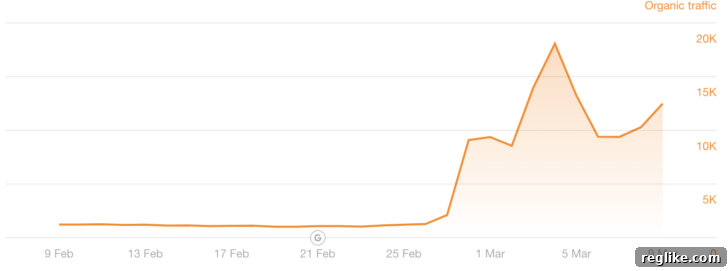
While this approach can be highly profitable in the short term, it comes with inherent risks. Google’s algorithms are constantly evolving to detect and penalize sites that engage in manipulative tactics or present misleading information. However, for a segment of domain investors, the potential for quick returns outweighs these risks, making the acquisition of high-authority expired domains for such purposes a viable, albeit ethically questionable, strategy. It underscores that domain authority, even when detached from its original context, holds substantial ranking power.
Rosser.com – $4,800: Strategic Link Building and Portfolio Boosting
Rosser.com, acquired for $4,800, provides an excellent example of a domain being utilized for strategic link building. Formerly the online presence of an Atlanta-based architect, it now serves as “Rosser Media,” acting primarily as a landing page that links out to a small portfolio of other properties. With a Domain Rating (DR) of 20 and over 200 referring domains, Rosser.com possesses a moderate yet valuable level of authority.
The most probable strategy here is to channel the authority of Rosser.com to boost a network of related sites, likely owned by the same individual or entity. This is a common tactic in SEO, where acquired domains with established backlink profiles are used to pass “link equity” to other websites. By linking strategically from Rosser.com to these target sites, the new owner can enhance their search engine rankings and overall authority. This method can be a cost-effective alternative to traditional link building, which often requires significant outreach and content creation. The relatively modest price point for a domain with decent metrics makes this a smart, tactical acquisition for expanding a digital footprint.
ASPP.com – $4,255: The Perils of Parking and Lost SEO Value
The sale of ASPP.com for $4,255 presents a cautionary tale about preserving SEO value. Once the digital home of the American Society of Picture Professions, this domain boasts a moderate SEO profile with a DR of 41 and nearly 1,500 referring domains, plus rankings for a handful of keywords. Objectively, these metrics suggest a domain with clear SEO potential, especially for related niches.
However, the domain is currently “parked.” This status strongly indicates that a domain investor acquired it, possibly for its four-letter acronym value (a common driver in domain investing) rather than its significant SEO equity. The unfortunate reality of parking a domain with an established backlink profile is that it actively erodes its SEO value. When a domain goes from active content to a generic parked page, search engines interpret this as neglect or irrelevance. Over time, this can lead to de-indexing, loss of accumulated authority, and a complete waste of its historical SEO power. For any anonymous domain investor considering this approach, the message is clear: to preserve and leverage the SEO value, it is crucial to put something live on the site, even if it’s a temporary page, a relevant redirect, or preliminary content. Otherwise, the true SEO potential remains untapped and is actively diminishes.
DigitalEnterprise.org – $8,099: Unlocking Hidden Educational Authority
At first glance, DigitalEnterprise.org might not strike one as an $8,000 domain based solely on its name or perceived brandability. Yet, its sale price unequivocally points to substantial hidden SEO value. A deeper dive into its profile reveals a Domain Rating (DR) of 39 and almost 900 referring domains, firmly establishing its inherent authority.
What makes this domain particularly valuable for SEO is the nature and age of its backlinks. A significant portion of its linking domains appear to be educationally related, originating from universities and reputable academic organizations. Backlinks from .edu domains or official university sites are exceptionally powerful in Google’s ranking algorithm. They signal a high level of trust, academic rigor, and institutional authority that is difficult to replicate. Coupled with the fact that many of these links are quite old, this domain inherits a potent blend of aged, high-quality, and institutionally vetted authority. Such a profile is a goldmine for anyone looking to launch a project in the education, technology, or business sectors, providing a strong foundation of credibility. While no site has been fully built on it yet, the potential for a powerful online presence is undeniable, likely beginning with some foundational development to capitalize on its rich backlink profile.
Wanderful.com – $5,751: High DR, But a Challenging Revival
The acquisition of Wanderful.com for $5,751 highlights another aspect of domain valuation and the challenges of revival. This domain boasts a super-strong DR of 70, indicating a historically powerful backlink profile. However, similar to ASPP.com, it is currently parked. This again suggests that a domain investor likely snapped it up, possibly drawn by its strong DR metric and appealing name.
While a high DR is certainly an indicator of potential, it doesn’t guarantee active search engine performance if the site has been dormant or parked for an extended period. The fact that Wanderful.com is not currently ranking for any keywords despite its impressive DR suggests a prolonged period of inactivity or a redirection to another site, which can significantly damage its active SEO value. Google’s algorithms prioritize active, relevant, and regularly updated content. A high DR merely reflects the historical link equity; if that equity isn’t being used to serve content, its power diminishes. Reviving a high-DR domain that has been down or parked for a long time requires considerable effort to re-establish its relevance and bring it back into Google’s active index, making the initial investment a starting point rather than a complete solution. Despite the challenges, it remains a great domain name with latent potential.
AffiliateShop.com – $2,000: A Volume Play with a Twist
AffiliateShop.com, selling for a mere $2,000, stands out as a potential “steal” on this list, given its impressive DR of 60. This acquisition represents a solid pickup for its price point. The domain previously hosted an affiliate solution, enabling various websites to generate affiliate links and revenue. Consequently, many sites ended up linking to AffiliateShop.com during the process of creating these affiliate links, resulting in a substantial volume of referring domains – over 2,000!
However, the nature of these links introduces a crucial nuance in their SEO value. While numerous, many of these links were likely transactional or programmatically generated, rather than editorially earned within the context of an article. Google tends to attribute higher value to editorially placed backlinks, which are naturally acquired through content mentions and recommendations. Links generated through automated affiliate programs, while contributing to sheer volume and a high DR, may not carry the same weight as organically earned editorial links. Despite this distinction, the sheer quantity of referring domains still makes this a valuable asset. Unfortunately, this domain is also currently parked, echoing the recurring theme of SEO value being eroded through inactivity. Bringing this domain back to life with relevant content would undoubtedly unlock its considerable potential, even if some of its backlinks are not considered “premium” by Google’s standards.
Conclusion: Strategic Domain Investing in the SEO Landscape
The analysis of these NameJet and SnapNames auction sales from the past month underscores a critical truth in the digital age: domains are far more than just web addresses. They are potent digital assets, particularly when viewed through an SEO lens. The valuations of these domains were largely driven by their unique backlink profiles, historical authority, and potential for immediate search engine impact.
From the YMYL dominance of NCHC.org and the broad authority of SouthwestJournal.com, demonstrating the power of inherited trust, to the aggressive repurposing strategy behind DMER.org and the subtle link-building plays with Rosser.com, each sale tells a story of strategic intent. The discussions around ASPP.com, Wanderful.com, and AffiliateShop.com also serve as important reminders of the potential pitfalls, particularly the detrimental effect of parking an otherwise valuable domain, which can quickly diminish its hard-earned SEO equity.
Understanding the nuances of backlink quality, domain age, content strategy, and the specific demands of Google’s algorithms, especially in sensitive niches, is paramount for successful domain investing. These auctions provide invaluable case studies for both seasoned SEO professionals and aspiring domain investors, illustrating how historical digital footprints can be leveraged to accelerate online success and how a keen eye for SEO potential can uncover significant value beyond a domain’s superficial appeal. The insights gleaned from these sales will undoubtedly continue to shape the evolving landscape of digital asset acquisition.