
Unraveling a Curious Domain Transfer: The Case of vwvwwfacebook.com
In the ever-watchful world of domain name monitoring, a recent discovery has sparked my curiosity. During my routine inspection of significant domain name transfers, I stumbled upon an anomaly that immediately caught my attention: the peculiar case of vwvwwfacebook.com.
The domain’s WHOIS record, which provides information about the registered owner, had undergone a transformation. It shifted from a registrant located in Turkey to a record displaying a set of details that raised several eyebrows. Let’s delve into the specifics.
The updated WHOIS information presented an intriguing picture:
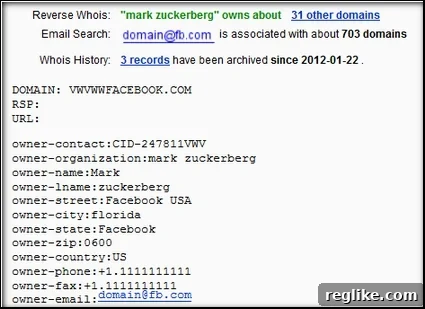
Having closely observed numerous domain handovers from cybersquatters to Facebook, this particular instance stood out as rather unconventional. While the email address associated with the domain now matched the one Facebook typically uses for newly acquired domains, certain aspects deviated from the norm. Instead of being registered under Mark Zuckerberg’s name or based in Florida, the record displayed different information. Furthermore, the phone number and address appeared to be fabricated, and the nameservers remained unchanged.
Facebook’s Ownership: A Question Mark
Although the updated email address suggested a potential acquisition by Facebook, doubts lingered. The inconsistencies in the WHOIS record made me question whether the tech giant genuinely owned the domain. It seemed more likely that this was a calculated maneuver to deter Facebook from pursuing legal action against the current owner of the typo domain.
The reasoning behind this strategy is quite clever. If Facebook’s legal team identifies the domain as a potential infringement and adds it to their list of targets, they would naturally consult the WHOIS record. Upon seeing the email address associated with Facebook’s domain acquisitions, they might assume that the company already owns the domain and decide to drop the matter, especially if it is simply a parked domain with no active content.
However, if the domain is used for something more substantial, such as phishing or spreading misinformation, Facebook’s team would likely investigate further. They might log in to their registrar accounts to check if they have control over the domain. If they realize the deception, they can initiate a transfer using the admin email address, assuming the domain is not locked.
The Ethical Implications of WHOIS Spoofing
It is important to emphasize that I am not endorsing or encouraging the practice of WHOIS spoofing. This observation is purely based on my curiosity and desire to understand the complexities of domain name ownership and potential legal challenges. The question that lingers is whether anyone else has encountered similar cases of WHOIS manipulation.
The internet, as vast and intricate as it is, often presents us with unexpected scenarios. This particular instance serves as a reminder of the importance of vigilance in the digital realm. From domain name registration to trademark protection, the legal landscape surrounding online assets is constantly evolving. As we navigate this complex environment, it is crucial to understand the potential risks and rewards associated with various online activities.
Protecting Your Brand in the Digital Age
For businesses and individuals alike, protecting your brand in the digital age is paramount. This includes not only securing your primary domain name but also monitoring for potential typos and variations that could be exploited by others. Cybersquatters, who register domain names similar to existing trademarks with the intent to profit from the goodwill associated with those trademarks, can pose a significant threat.
By actively monitoring the domain name landscape, you can identify potential infringements early on and take appropriate action. This may involve sending cease and desist letters, negotiating a domain transfer, or pursuing legal action if necessary. Investing in a comprehensive brand protection strategy is an essential step in safeguarding your online identity and preventing potential financial losses.
The Importance of Accurate WHOIS Information
While this case highlights the potential for WHOIS spoofing, it is important to remember that accurate WHOIS information is crucial for maintaining transparency and accountability on the internet. The WHOIS database serves as a valuable resource for identifying the owners of domain names and contacting them in case of legal disputes, technical issues, or other legitimate concerns. Falsifying WHOIS information can not only be a violation of domain registration agreements but also hinder efforts to address online security threats and protect intellectual property rights.
In conclusion, the peculiar case of vwvwwfacebook.com has sparked my curiosity and raised questions about the complexities of domain name ownership and the potential for WHOIS manipulation. While the exact circumstances surrounding this transfer remain unclear, it serves as a reminder of the importance of vigilance in the digital realm and the need for comprehensive brand protection strategies.
The Broader Implications of Domain Typosquatting
The scenario with vwvwwfacebook.com touches on a broader issue known as typosquatting. Typosquatting, also known as URL hijacking, is a form of cybersquatting that relies on mistakes such as typos made by Internet users when inputting a website address into a web browser. It involves registering domain names that are slight misspellings of popular websites. The goal is often to capitalize on the traffic generated by users who accidentally type the wrong URL.
The consequences of typosquatting can be significant. Malicious actors can use typosquatted domains to distribute malware, conduct phishing attacks, or spread misinformation. They may also simply monetize the traffic by displaying advertisements or redirecting users to affiliate websites. For legitimate businesses, typosquatting can lead to brand dilution, loss of revenue, and damage to their reputation.
Strategies for Combating Typosquatting
Several strategies can be employed to combat typosquatting. One approach is to register common misspellings of your domain name yourself. This prevents others from registering those domains and using them for malicious purposes. Another strategy is to monitor the internet for typosquatted domains and take action to shut them down. This can involve sending cease and desist letters, filing complaints with domain name registrars, or pursuing legal action.
In addition to these proactive measures, it is also important to educate internet users about the risks of typosquatting and encourage them to double-check the URLs they are typing into their web browsers. By raising awareness and promoting responsible online behavior, we can help to reduce the effectiveness of typosquatting and protect users from online threats.
The Future of Domain Name Regulation
The case of vwvwwfacebook.com also raises questions about the future of domain name regulation. As the internet continues to evolve, it is important to ensure that the domain name system remains secure, stable, and accountable. This may require new regulations and policies to address emerging threats such as typosquatting, cybersquatting, and WHOIS spoofing.
One potential solution is to strengthen the enforcement of existing domain name policies. This could involve increasing the penalties for violations, improving the accuracy of WHOIS information, and streamlining the process for resolving domain name disputes. Another approach is to develop new technologies that can automatically detect and prevent malicious domain name activity.
Ultimately, the future of domain name regulation will depend on the cooperation of stakeholders from across the internet community, including domain name registrars, internet service providers, law enforcement agencies, and government regulators. By working together, we can create a safer and more secure online environment for everyone.
Key Takeaways: Protecting Your Online Presence
The saga of vwvwwfacebook.com offers valuable lessons for anyone with an online presence:
* **Vigilance is Key:** Regularly monitor your brand name and its common misspellings across the internet.
* **Secure Common Typos:** Consider registering common typos of your domain to prevent malicious use.
* **Accurate WHOIS Information:** Ensure your WHOIS information is accurate and up-to-date (while being mindful of privacy regulations).
* **Brand Protection Strategy:** Develop a comprehensive brand protection strategy to safeguard your online identity.
* **Educate Your Audience:** Inform your audience about the risks of typosquatting and encourage safe browsing habits.
* **Stay Informed:** Keep abreast of the latest developments in domain name regulation and online security.
By taking these steps, you can significantly reduce your risk of falling victim to domain name abuse and protect your online brand from harm.