
Stringtel: A Game-Changer for New Top-Level Domain Applicants, Preventing Costly Mistakes.
Unlock Strategic Advantages with Stringtel: Your Essential Guide to New TLD Success
Navigating the intricate world of new Top-Level Domain (TLD) applications can be a daunting and expensive endeavor. With strict rules, intense competition, and high stakes, prospective applicants face numerous hurdles that can lead to significant financial losses and wasted time. Recognizing this critical need, leading industry publication Domain Incite has proudly launched Stringtel, an innovative and free-to-use tool designed to empower TLD applicants by providing unparalleled analytical insights into potential domain strings.
Stringtel represents a significant leap forward in domain intelligence. It acts as an indispensable compass, guiding applicants through the complexities of the new gTLD landscape. By offering a comprehensive evaluation of both inherent risks and promising opportunities associated with various TLD strings, Stringtel helps applicants make informed, data-driven decisions that can prevent costly missteps and pave the way for successful domain launches.
The Complex Landscape of New gTLDs: Why Intelligent Analysis is Crucial
The introduction of new generic Top-Level Domains (gTLDs) by ICANN has fundamentally reshaped the internet’s naming structure, offering brands, communities, and entrepreneurs unprecedented opportunities to establish unique online identities. However, this opportunity comes with a substantial investment in application fees, legal counsel, and strategic planning. The gTLD application process, governed by a voluminous applicant guidebook, demands meticulous attention to detail and a thorough understanding of policy, technical, and market considerations.
Previous rounds of gTLD applications have highlighted the immense challenges involved. Even well-resourced organizations, including tech giants, have fallen victim to common pitfalls. For instance, during a prior application window, Google famously submitted three applications for strings that inadvertently matched protected three-letter country codes, leading to their outright rejection. Such errors not only result in the loss of substantial application fees but also consume valuable time and resources that could have been allocated to viable projects. Stringtel directly addresses these pain points, offering a proactive solution to mitigate such risks from the outset.
How Stringtel Works: A Deep Dive into Its Analytical Power
Stringtel’s robust analytical framework is built upon two core pillars: the stringent rules outlined in the applicant guidebook and a vast repository of external domain registration data. This dual-faceted approach ensures that every string analysis is both policy-compliant and market-aware, providing a holistic view that no manual process could match.
Leveraging Applicant Guidebook Rules for Compliance
The ICANN applicant guidebook is a comprehensive document detailing all regulations, restrictions, and requirements for new TLDs. Stringtel meticulously applies these rules to each string submitted for analysis. This includes, but is not limited to:
- Prohibited Names: Identifying strings that are explicitly forbidden, such as certain geographic names (countries, territories, cities) or names of international organizations (e.g., Red Cross, Olympic Committee). Stringtel flags these immediately, saving applicants from investing in an application doomed for rejection.
- Character Restrictions: Checking for compliance with character sets, length requirements, and allowed symbols.
- Policy Violations: Detecting strings that might be deemed offensive, controversial, or contrary to public order or morality, based on established ICANN guidelines.
By automating these crucial compliance checks, Stringtel acts as a vigilant gatekeeper, ensuring that only eligible strings proceed through the preliminary evaluation stages. This early detection mechanism is invaluable, as a single policy violation can invalidate an entire application, regardless of its market potential.
Harnessing External Domain Registration Data for Market Insights
Beyond compliance, Stringtel taps into a colossal dataset of over 180 million already-registered domain names across popular legacy Top-Level Domains (like .com, .org, .net). This extensive data allows Stringtel to:
- Gauge Market Potential: By analyzing the prevalence of a specific string or related terms within existing second-level domains (SLDs), Stringtel can infer market demand and potential user adoption for a new TLD. For example, if “crypto” is a popular keyword in .com domains (e.g., “mycrypto.com”), it suggests a strong market for a hypothetical .crypto TLD.
- Identify Usage Patterns: Understanding how similar terms are currently used helps predict how a new TLD might be embraced by end-users and businesses. This can inform strategic decisions regarding target audiences and branding.
- Uncover Niche Opportunities: The data can reveal underserved segments or emerging trends, pointing towards strings that, while not immediately obvious, could become highly valuable new namespaces.
This data-driven insight into market dynamics is crucial for building a compelling business case for a new TLD. It helps applicants understand not just if a string *can* be registered, but if it *should* be registered, given the existing online ecosystem.
Mitigating Risks: Stringtel’s Proactive Shield
One of Stringtel’s most powerful features is its ability to identify and highlight potential risks that could derail an application or undermine the future viability of a new TLD. These risks fall into several critical categories:
Outright Rejection: Avoiding the Unallowable
As illustrated by Google’s prior mistakes, certain strings are simply not allowed. Stringtel is programmed to immediately flag strings that match blocked geographic names, such as country codes (e.g., “eth” for Ethiopia) or specific city names reserved by ICANN. It also extends to other explicitly forbidden terms, ensuring applicants do not waste resources pursuing an impossible goal. The financial implication of a rejected application – typically tens or hundreds of thousands of dollars in fees, not to mention consulting costs – makes this risk mitigation feature exceptionally valuable.
Identifying Contention: Preparing for Competition
The gTLD application process is often highly competitive. It’s common for multiple parties to apply for the same or very similar strings. When this happens, the applications enter “contention.” This can lead to costly and time-consuming contention resolution processes, including private auctions, community priority evaluations, or even withdrawal. Stringtel analyzes proposed application data to identify strings that are likely to be in contention, providing applicants with an early warning. This allows them to either refine their string choice, prepare for a competitive battle, or explore alternative, less contested options, thereby saving potential legal fees and strategic headaches.
Addressing String Collision: Ensuring Technical Stability
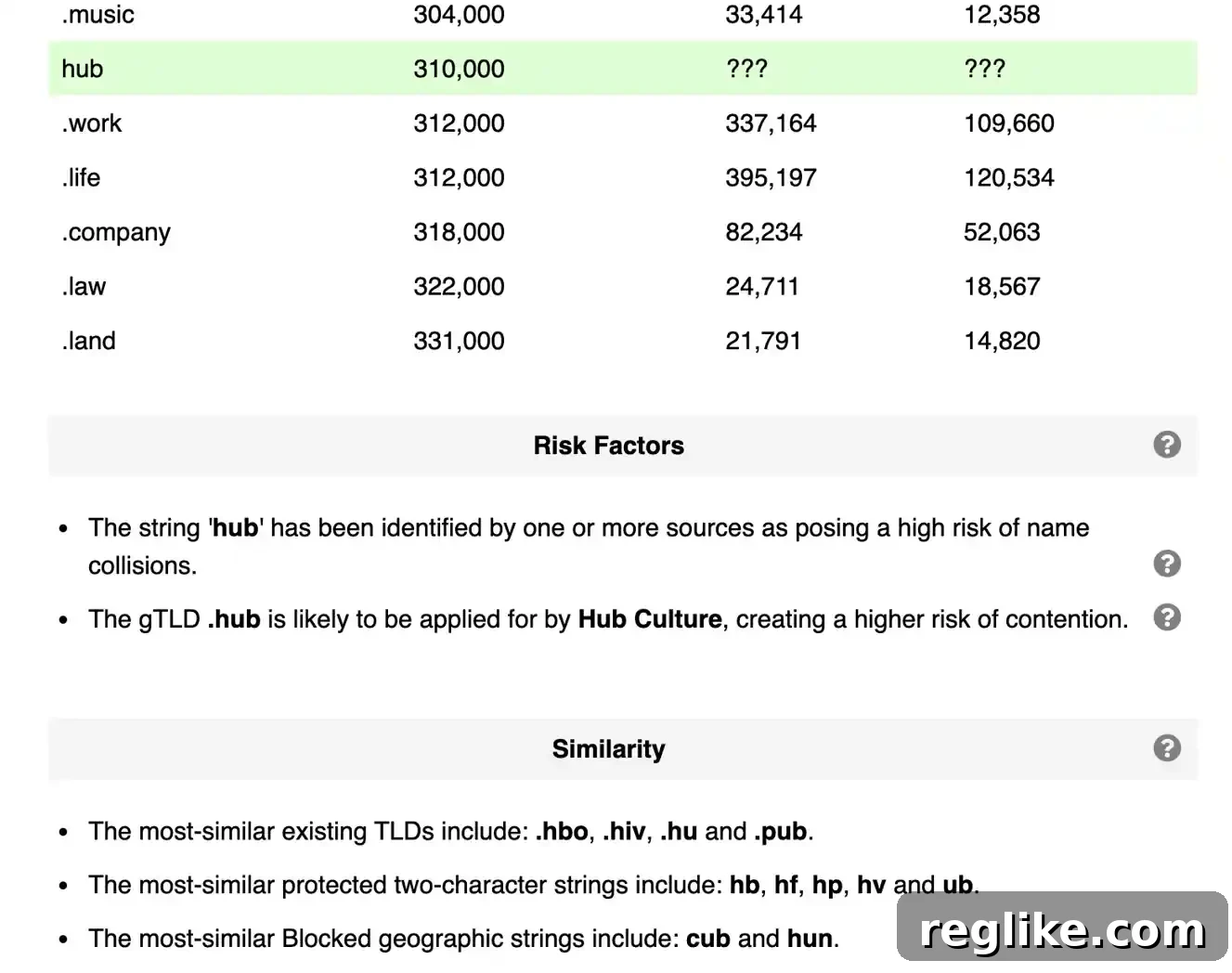
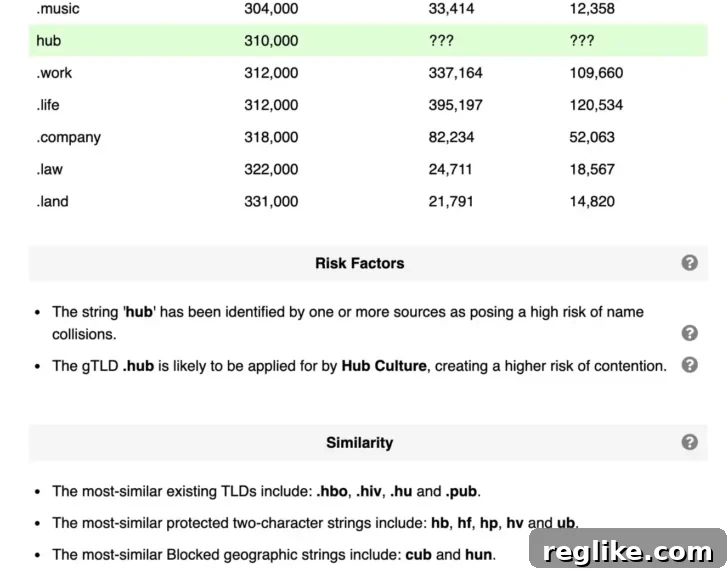
Perhaps one of the most critical technical risks is “string collision.” This occurs when a new TLD string conflicts with existing private-use names, internal network domains, or other reserved namespaces. String collisions can lead to serious DNS resolution issues, causing disruptions to internet services and creating security vulnerabilities. Stringtel’s sophisticated algorithms are designed to detect strings at high risk of collision, often referencing established collision lists and best practices. By flagging this early, Stringtel safeguards the technical integrity of the proposed TLD and prevents potentially catastrophic compatibility problems post-launch, which could impact millions of users.
Unlocking Opportunities: Stringtel’s Visionary Insights
Beyond risk mitigation, Stringtel is equally adept at identifying promising opportunities, helping applicants discover strings with strong market appeal and strategic value.
Market Potential through Second-Level Domain Analysis
Stringtel’s analysis of 180 million existing second-level domains is a goldmine for identifying market potential. It examines:
* Keyword Frequency: How often a specific term appears in registered domains. A high frequency suggests strong existing demand and recognition.
* Industry Relevance: The association of a string with popular industry keywords, indicating its suitability for a specific sector.
* Branding Versatility: The potential for the string to be used broadly across different brands or within a community.
This data allows applicants to assess whether a proposed TLD string would resonate with internet users and businesses, translating into higher registration rates and greater commercial success. For example, a string frequently used as a suffix or prefix in existing domains (e.g., “solutions,” “group,” “online”) often indicates high usability and demand for a new TLD. Such insights are invaluable for developing robust business plans and projections.
Strategic Value and Brand Enhancement
A well-chosen gTLD can significantly enhance a brand’s digital identity, create a unique online ecosystem, or serve as a strategic asset for an industry. Stringtel helps identify strings that not only meet technical and policy requirements but also offer strong branding potential, memorability, and clear market differentiation. This strategic insight is crucial for organizations looking to leverage a new TLD for competitive advantage.
Illustrative Examples: Stringtel in Action
To better understand Stringtel’s utility, let’s examine a couple of hypothetical scenarios:
The ‘.service’ String: A Nuanced Evaluation
Imagine inputting ‘service’ into Stringtel. The tool might indicate significant market potential, given the widespread use of the word across numerous industries and business types. It’s a versatile and highly recognizable term, suggesting high demand for a .service TLD. However, Stringtel would also flag several critical issues. For instance, it might identify a high risk of name collisions due to the term’s common use in internal networks or as a generic descriptive term in various contexts. Furthermore, Stringtel would highlight that ‘service’ is the singular form of the already existing and operational .services TLD. This poses a strategic challenge: would a .service TLD create unnecessary confusion or redundancy, potentially diluting the value of both? Stringtel provides this nuanced view, prompting applicants to consider the full spectrum of implications.
The ‘.eth’ String: A Clear Red Flag
In another example, entering ‘eth’ into Stringtel immediately triggers a stark warning: the string is forbidden. Why? Because ‘eth’ matches the three-letter country code for Ethiopia, which is reserved under ICANN’s geographic names policy. This illustrates Stringtel’s ability to act as an instantaneous compliance checker, preventing applicants from pursuing a string that is fundamentally unregistrable. Without Stringtel, an applicant might spend weeks researching and even pay initial fees before discovering this critical, yet easily avoidable, policy violation.
The Power of Accessibility: Stringtel is Free
One of Stringtel’s most compelling attributes is its accessibility. In an industry where specialized tools and consulting services often come with hefty price tags, Domain Incite has made Stringtel available for free. This commitment to democratizing domain intelligence means that aspiring TLD applicants, whether they are large corporations, innovative startups, or community organizations, can now access high-caliber analytical insights without incurring additional costs. This significantly lowers the barrier to entry for strategic planning and due diligence, ensuring that more applicants can make informed decisions from the earliest stages of their TLD journey.
Conclusion: Empowering the Next Generation of TLD Innovators
Stringtel is more than just a tool; it’s an intelligent companion for anyone contemplating a new Top-Level Domain application. By seamlessly integrating ICANN policy adherence with sophisticated market demand analysis, it provides a comprehensive, proactive, and invaluable resource. It empowers applicants to navigate the complexities of the gTLD ecosystem with confidence, mitigate significant financial and operational risks, and strategically position themselves for long-term success. As the internet continues to evolve, tools like Stringtel will become indispensable for shaping its future, fostering innovation, and preventing costly mistakes. Stringtel doesn’t just analyze strings; it illuminates the path to a smarter, more successful TLD strategy.