
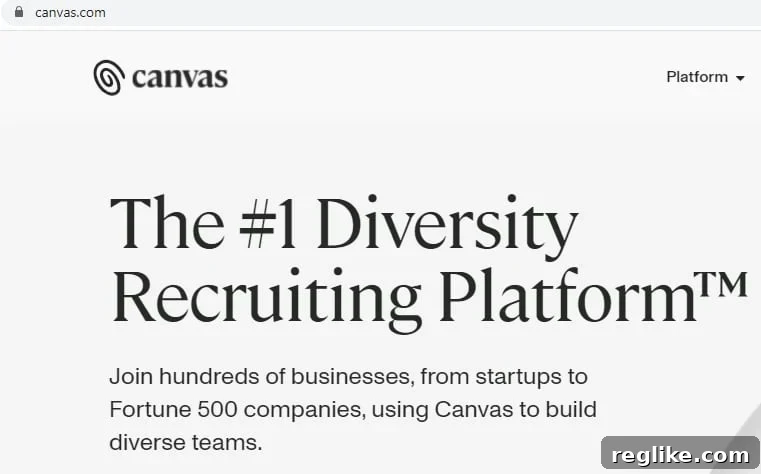
A Rebrand’s Reckoning: The High-Stakes Trademark Battle Over Canvas.com
In the dynamic world of digital branding, a premium domain name can be the cornerstone of a company’s identity and market success. Yet, as one job recruiting business recently discovered, upgrading to a highly coveted domain can also drag you into an unexpected and costly legal entanglement. This is the story of Canvas, a recruiting platform, and its fierce battle against Instructure, Inc. over the valuable Canvas.com domain, a dispute that sheds light on the complex interplay of branding, intellectual property, and digital asset acquisition.
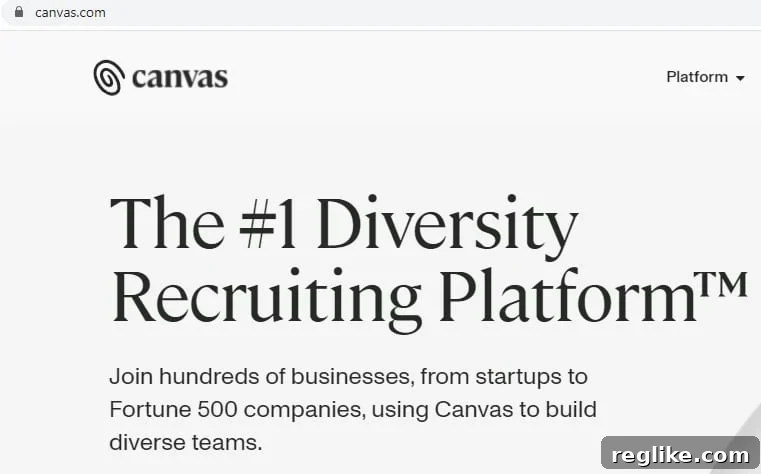
The journey to this legal showdown began earlier this year in May, when the innovative recruiting platform formerly known as Jumpstart made a pivotal strategic move. The company rebranded itself as Canvas, signaling a new chapter in its corporate identity. Central to this ambitious rebrand was the acquisition of the highly desirable Canvas.com domain name, a significant upgrade from its previous address, Jumpstart.me. This transition was intended to enhance brand recognition, improve search engine visibility, and solidify its market position. However, what was envisioned as a seamless ascent quickly transformed into a challenging and unexpectedly expensive legal battle, demonstrating the inherent risks that can accompany high-profile domain acquisitions.
Just two months later, in July, Instructure, Inc. launched its counter-offensive. Known primarily for its robust learning management platforms, prominently featuring its own “Canvas” product at Instructure.com, the company filed a lawsuit against the recruiting platform Canvas. The core of Instructure’s argument is straightforward: it asserts that the recruiting company’s use of the “Canvas” name and domain infringes upon Instructure’s established trademark rights for the identical term. Instructure maintains that its “Canvas” learning management system, while primarily educational, also supports career development and recruitment functions, creating a direct overlap and potential for consumer confusion with the services offered by the defendant recruiting platform. This perceived intersection of services is central to Instructure’s claim of trademark violation.
Understanding the Legal Claims: Trademark Infringement and Beyond
Instructure’s lawsuit is comprehensive, employing a range of legal claims designed to secure the Canvas.com domain and protect its brand. The primary accusations include:
- Trademark Infringement: This is the cornerstone of Instructure’s case, alleging that the recruiting platform’s adoption and use of the “Canvas” brand and associated domain name creates a likelihood of confusion among consumers, infringing upon Instructure’s existing and well-established “Canvas” trademark.
- Unfair Competition: This claim posits that Canvas is unjustly benefiting from the goodwill, reputation, and recognition that Instructure has built around its “Canvas” brand, thereby gaining an unfair competitive advantage in the marketplace.
- Cybersquatting: While the recruiting platform did not *register* the domain with initial bad faith intent (as it was acquired through a lease-to-own agreement from a third party), Instructure may argue that its continued use of the domain *after* receiving notice of infringement constitutes bad faith, or that the acquisition itself, given Instructure’s prior interest, implies a problematic intent. Cybersquatting cases hinge heavily on establishing bad faith.
- Other Ancillary Claims: Lawsuits of this nature often include additional claims to cover all legal bases and strengthen the plaintiff’s overall position, aiming to ensure maximum leverage in court.
Ultimately, Instructure’s clear objective is to compel the recruiting platform to relinquish the highly desirable Canvas.com domain name. This demand underscores the critical importance of exact-match, high-value domains in establishing digital brand authority and market leadership, particularly within competitive technological sectors.
The Domain Acquisition Dilemma: A Lease-to-Own Deal and a History of High Bids
The path to the recruiting platform’s acquisition of Canvas.com was anything but conventional. The domain was secured through a lease-to-own agreement with Branded Holding Group, LLC (BHG), the entity that previously controlled the coveted digital asset. This arrangement means that the recruiting platform, Canvas, does not yet hold outright ownership, adding another layer of intricacy to the current legal proceedings.
Significantly, Instructure itself had previously attempted to purchase Canvas.com. Their lawsuit provides crucial insight into this past negotiation:
“Upon information and belief, prior to Defendant’s acquisition of the www.canvas.com domain, BHG simply parked and held the domain with the obvious intention to cash in on the domain’s clear commercial value at the right time. At one point Instructure offered to purchase the domain, but BHG demanded an unreasonably-high price. Instructure was not willing to pay what BHG demanded, but cautioned BHG that it should not sell this domain to anyone operating in similar channels with similar services to Instructure’s CANVAS-branded platforms. Unfortunately, that is exactly what BHG did when it licensed the domain to Defendant.”
This excerpt from Instructure’s filing is particularly revealing. It acknowledges the significant commercial value of Canvas.com, a fact that BHG, as the domain owner, was clearly aware of and sought to capitalize on. Instructure’s assertion of an “unreasonably-high price” from BHG sparks a common debate within the domain industry: what truly constitutes a fair market value for a premium domain? Domain valuations are often subjective, influenced by factors such as brand relevance, keyword exactness, memorability, search engine optimization benefits, and the potential for market domination. While Instructure deemed BHG’s price unreasonable for its own budget, the subsequent lease-to-own deal with the recruiting platform suggests that the “unreasonable” price was indeed achievable for a willing buyer, complicating Instructure’s argument.
The Nuance of Domain Valuation and “Unreasonable” Claims
This case mirrors other disputes where a company claims a domain owner demanded an exorbitant price. However, the situation here is nuanced: Instructure is not directly suing BHG, the domain’s lessor. The argument about an “unreasonably-high price” might be intended to paint a picture of BHG’s awareness of potential conflict, or to suggest a lack of good faith in the subsequent licensing. Yet, if BHG offered similar terms to Instructure and later found a buyer in the recruiting platform Canvas, it merely reflects BHG’s right to seek the highest bidder for its valuable digital asset. Instructure’s own estimate, that the recruiting platform paid well over $1 million for Canvas.com in its lease-to-own agreement, further supports the idea that the market indeed supported a high valuation for the domain.
Lease-to-Own: A Strategic Choice with Risks
A lease-to-own agreement for a domain name offers companies a flexible strategy for acquiring high-value digital assets without a massive upfront capital outlay. It allows immediate use of a premium domain, spreading the significant cost over an extended period, with the option for outright purchase later. For rapidly growing startups or businesses seeking to preserve capital, this structure can be highly attractive. However, as demonstrated by this dispute, such agreements introduce additional contractual complexities and stakeholders into the equation, which can become deeply entangled in legal battles, especially when fundamental issues like trademark infringement emerge before the full ownership transfer.
The Breakdown of Negotiations and a Strategic Trademark Acquisition
Before the lawsuit, Instructure made an attempt to resolve the issue amicably. In June, a month prior to filing legal papers, Instructure sent a cease and desist letter to the recruiting platform, formally demanding that it discontinue using the “Canvas” brand and the Canvas.com domain. Initial responses suggested a potential for resolution through negotiation. Instructure’s complaint outlines these discussions:
“In response to Instructure’s demand, Defendant indicated that it would be willing to rebrand and stop using CANVAS, requested a reasonable rebranding transition period, and requested money from Instructure to help with Defendant’s rebranding costs, all of which Instructure was willing to provide if Defendant also transferred the canvas.com domain to Instructure.”
This account indicates that Instructure was prepared to offer financial assistance for a rebrand, contingent on the transfer of the crucial Canvas.com domain. Such an offer underscores the paramount importance Instructure placed on securing the domain and protecting its brand. However, these negotiations ultimately failed, leading the recruiting platform to pursue a radically different and highly strategic course of action.
Canvas’s Ingenious Counter-Move: Acquiring Existing Trademark Rights
Rather than conceding to Instructure’s demands, the recruiting platform Canvas executed a sophisticated legal maneuver: it sought out and acquired existing trademark rights that would legitimize its use of the “Canvas” term for its business purposes. This demonstrates a proactive and shrewd understanding of intellectual property law and a firm commitment to its chosen brand identity.
The recruiting platform located and acquired trademark rights from a seemingly unrelated California business that catered to wine companies in the Napa Valley and Sonoma regions. This business operated under a stylized mark, “CANVAS,” which was an acronym for “Concierge Alliance Napa Valley & Sonoma.” Crucially, this wine industry-focused enterprise also included a job board as part of its services, establishing a direct connection to employment-related activities. The original owner of this mark later applied for a word mark for “Canvas” that explicitly covered recruiting services as a field of use, bolstering the legal standing for its subsequent owner, the recruiting platform Canvas.
Key details of this strategic acquisition include:
- Acquisition Cost: The recruiting platform paid $57,000 to acquire these specific trademark rights. This investment, while substantial, is a fraction of the estimated multi-million dollar value of the Canvas.com domain, yet it could prove to be the linchpin of its legal defense.
- License-Back Provision: As part of the deal, Canvas provided a license back to the original wine company, allowing it to continue using the “CANVAS” mark for its specific, non-conflicting business activities, thereby preserving the mark’s ongoing use and validity.
- Seller Indemnification: Canvas also agreed to indemnify the seller, protecting them from any future legal liabilities arising from the trademark transfer, which is a common clause in such agreements.
Leveraging “Predecessor in Interest” for a Strong Defense
In its response to Instructure’s lawsuit, the recruiting platform Canvas is leveraging this acquisition to assert “predecessor in interest” rights. This powerful legal doctrine allows a trademark assignee to “inherit” the priority dates of the original user. By acquiring these rights, Canvas claims its entitlement to the “Canvas” trademark for employment-related services dates back to 2010 (and 2013 for specifically employment-related services), significantly predating Instructure’s allegations and potentially providing a robust defense against the infringement claims.
Broader Implications: Due Diligence and the Trademark-Domain Nexus
This unfolding legal battle serves as a potent reminder of the inherent complexities and potential conflicts at the intersection of trademark law and domain name management. For any company embarking on a rebrand or investing in a premium domain, comprehensive due diligence is not merely advisable—it is absolutely essential. This includes:
- Extensive Trademark Searches: Beyond simple keyword availability, companies must conduct thorough trademark searches across all relevant classes, industries, and geographical jurisdictions to uncover potential conflicts.
- Analysis of Industry Overlap: It’s crucial to assess not just direct competitors, but also companies in related or adjacent fields where consumer confusion could arise, especially concerning future expansion plans.
- Understanding Domain History: Investigating a domain’s past ownership, usage, and any prior disputes can provide invaluable insights into potential legal vulnerabilities.
- Contingency Planning: Businesses must develop contingency strategies for potential legal challenges, particularly when significant resources are allocated to a new brand identity and domain.
For domain investors and asset holders like BHG, this case also highlights the ethical and practical considerations when selling or licensing domains that could be contentious. While maximizing profit from valuable digital assets is a legitimate business goal, disregarding explicit warnings from established brands can lead to increased scrutiny and potential indirect involvement in legal disputes.
The Financial Stakes and Immediate Future of the Dispute
The financial ramifications of this legal contest are immense for the recruiting platform Canvas. The company recently closed a significant $50 million Series C funding round, elevating its valuation to an impressive $400 million. A negative outcome in this trademark dispute, potentially forcing a name change or loss of its coveted domain, could severely impede its growth trajectory, erode investor confidence, and necessitate another costly and time-consuming rebranding effort. This high financial valuation underscores the intensity with which Canvas is committed to defending its brand and domain.
The legal proceedings are advancing, with a crucial hearing scheduled for December 14. This hearing will address several pivotal motions, including Instructure’s request for a preliminary injunction. If granted, a preliminary injunction could compel Canvas to temporarily cease using the “Canvas” name or the Canvas.com domain while the full merits of the case are adjudicated. Such a ruling would represent a significant, potentially devastating, blow to the recruiting platform’s operations and market momentum.
Conclusion: A Landmark Battle for Digital Brand Identity
The Instructure v. Canvas lawsuit is far more than a mere dispute over a domain name; it represents a complex and high-stakes battle for digital brand identity and market positioning within rapidly evolving technological landscapes. It pits an established learning management system provider against an innovative recruiting platform, both asserting their right to a powerful and evocative brand name. The resolution of this case will undoubtedly establish important precedents for how companies navigate branding, domain acquisition, and intellectual property strategy in the digital era. It serves as a stark and compelling reminder that in the relentless pursuit of digital prominence, securing a valuable domain is merely the initial step—defending it against formidable legal challenges can often prove to be the greater, more arduous endeavor.