
SouthPole.com Domain Dispute: Clothing Manufacturer Fails to Win UDRP Case
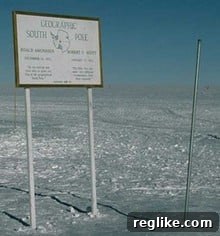
Photo from Wikimedia Commons
This article provides an update to a previous story regarding a Uniform Domain-Name Dispute-Resolution Policy (UDRP) case filed by Wicked Fashions, a clothing manufacturer, against the owner of the domain name SouthPole.com. The initial report detailed Wicked Fashions’ attempt to acquire the domain, arguing that it infringed upon their trademark for their “SouthPole” clothing line. However, the UDRP panel has ruled in favor of the domain owner, Chad Wright, denying Wicked Fashions’ claim.
The core of the dispute revolved around whether Wright registered and used the SouthPole.com domain in bad faith and whether he had legitimate rights or interests in the domain. The panel, after reviewing the evidence and arguments presented by both parties, concluded that Wicked Fashions failed to prove either of these elements. This outcome represents a significant win for domain name owners who utilize generic or descriptive domain names for legitimate business purposes.
The full decision from the National Arbitration Forum provides a detailed account of the panel’s reasoning. One crucial aspect of the case centered on Wright’s use of the domain for pay-per-click (PPC) advertising. Wicked Fashions argued that this practice constituted bad faith use, as it allegedly capitalized on the SouthPole brand to generate revenue. However, the panel disagreed, asserting that Wright’s use of generic domain names for PPC advertising was a legitimate business model. This finding is noteworthy because not all UDRP panels share this view, making it a key factor in Wright’s victory.
Furthermore, the panel explicitly refuted Wicked Fashions’ claim that the SouthPole.com domain contained links to competitors of the clothing manufacturer. The panel found this allegation to be “patently incorrect” and unsupported by any evidence. This misrepresentation likely weakened Wicked Fashions’ case and further solidified the panel’s decision in favor of Wright. The combination of a legitimate business model and the complainant’s inaccurate claims contributed to the UDRP panel finding in favor of the domain owner.
As presented by the evidence, Respondent’s business model is legitimate under the Policy. Complainant’s allegations about Respondent are incorrect or inconsistent. Complainant’s allegation that Respondent’s website corresponding with the domain name carries links to competitors of Complainant is incorrect and not supported by the evidence in any way. Complainant’s allegations about Respondent’s activities are inconsistent. Complainant first alleges Respondent is not engaged in any business or commercial enterprise, but then charges Respondent with having benefitted from a pay-per-click revenue scheme. Respondent openly admits that it obtains pay-per-click revenue from use of the domain name and many other domain names it owns and that this is the platform of its business.
Key Takeaways from the SouthPole.com UDRP Decision
This case offers several important lessons for both trademark owners and domain name holders. Firstly, it highlights the importance of conducting thorough due diligence before initiating a UDRP complaint. Making unsubstantiated claims or misrepresenting facts can significantly harm a complainant’s case. In this instance, Wicked Fashions’ inaccurate allegation regarding competitor links likely undermined their credibility and contributed to their loss.
Secondly, the decision underscores the legitimacy of using generic domain names for PPC advertising, provided that the domain owner is not intentionally targeting a specific trademark or engaging in deceptive practices. While some UDRP panels may view PPC advertising with skepticism, this case demonstrates that it can be considered a legitimate business model under certain circumstances. Domain investors often rely on this business model to generate revenue from their domain portfolios.
Thirdly, the case reinforces the principle that owning a trademark does not automatically entitle a trademark owner to every related domain name. To succeed in a UDRP case, a trademark owner must prove that the domain name was registered and is being used in bad faith. This requires demonstrating that the domain owner intentionally targeted the trademark, is attempting to profit from the trademark’s goodwill, or is disrupting the trademark owner’s business. Absent such evidence, the domain owner is likely to prevail.
The Significance of UDRP Disputes for Online Branding
UDRP disputes play a crucial role in shaping the online landscape and protecting intellectual property rights. They provide a relatively quick and cost-effective mechanism for resolving domain name disputes without resorting to lengthy and expensive litigation. However, UDRP cases are not always straightforward, and the outcome can depend on a variety of factors, including the specific facts of the case, the interpretation of the UDRP policy, and the composition of the panel.
For businesses, UDRP disputes represent a critical tool for protecting their brands online. A strategically chosen domain name is essential for establishing a strong online presence, attracting customers, and building brand recognition. When a third party registers a domain name that infringes on a trademark, it can create confusion, divert traffic, and damage the brand’s reputation. In such cases, a UDRP complaint may be the most effective way to reclaim the domain name and prevent further harm.
On the other hand, UDRP disputes can also be a source of frustration and expense for domain name holders. Domain owners who are accused of infringing on a trademark must defend their rights and demonstrate that they have a legitimate interest in the domain name. This can involve significant time and effort, as well as legal fees. It is therefore important for domain owners to be aware of the UDRP policy and to take steps to protect their domain names from unwarranted challenges.
The Evolving Landscape of Domain Name Disputes
The world of domain names is constantly evolving, and the legal landscape surrounding domain name disputes is changing as well. New technologies, business models, and online trends are creating new challenges for both trademark owners and domain name holders. For example, the rise of social media has created new avenues for brand infringement and domain squatting. Similarly, the increasing popularity of generic top-level domains (gTLDs) has led to a greater number of domain name disputes.
As the internet continues to evolve, it is essential for businesses and domain owners to stay informed about the latest developments in domain name law and policy. This includes understanding the UDRP policy, as well as other relevant laws and regulations, such as the Anticybersquatting Consumer Protection Act (ACPA). By staying informed and proactive, businesses and domain owners can protect their rights and avoid costly legal battles.
In conclusion, the SouthPole.com UDRP decision serves as a reminder that trademark ownership does not guarantee domain name ownership. It highlights the importance of demonstrating bad faith registration and use in UDRP proceedings. The case also reaffirms the legitimacy of certain business models involving generic domain names and pay-per-click advertising. As the digital landscape continues to evolve, understanding the nuances of domain name law and UDRP policies remains crucial for brand protection and online success.