
The Dark Underbelly of Zero-Click Advertising: A Hub for Cyber Scams
In the evolving landscape of digital advertising and domain monetization, innovative strategies often emerge, promising efficiency and increased revenue. Zero-click advertising, a concept designed to streamline user experience by directly forwarding them to relevant advertisers, initially seemed like a promising avenue. However, the reality has proven to be far more sinister. This article delves into the pervasive issue of online scams and fraudulent activities that have unfortunately become synonymous with zero-click platforms, highlighting the critical need for immediate and stringent action from providers.
Understanding Zero-Click Domain Monetization: A Double-Edged Sword
The theoretical appeal of zero-click domain monetization is undeniable. Imagine a user typing a domain name directly into their browser – a behavior known as direct navigation. Instead of landing on a generic parked page filled with multiple links, the user is immediately redirected to a highly relevant advertiser or offer. This mechanism bypasses the need for an intermediate click, aiming to create a more direct and efficient path to conversion for advertisers, and a seemingly effortless revenue stream for domain owners. For domainers, it represents a passive income model, leveraging unused or underutilized web traffic. For advertisers, it promises high-intent visitors who are already seeking specific content or products, theoretically leading to better ROI.
However, this elegant concept has been corrupted. What began as an optimization strategy has, in many instances, devolved into a breeding ground for cybercrime. The very directness that makes zero-click attractive also makes it a powerful tool for malicious actors, allowing them to instantly funnel unsuspecting users into elaborate scam ecosystems.
The Scammer Epidemic: Why Zero-Click is a Prime Target
The problem, as many industry observers and I have repeatedly pointed out, is that the zero-click channel is alarmingly susceptible to exploitation by scammers. The inherent structure of instantaneous redirection, often coupled with lax oversight from providers, creates an ideal environment for fraudulent activities to flourish. This lack of stringent vetting processes and proactive monitoring allows malicious advertisers to slip through the cracks, setting up campaigns designed purely to deceive and exploit.
Scammers are drawn to zero-click because it offers a direct conduit to a broad audience with minimal friction. They can quickly deploy sophisticated social engineering tactics, bypassing traditional ad filtering mechanisms and immediately presenting their deceptive content to users. This direct access, combined with the difficulty in tracing the origins of such redirects, provides a cloak of anonymity that cybercriminals eagerly exploit.
Common Scams Propagated Through Zero-Click Redirections
The types of scams proliferating via zero-click are diverse and constantly evolving, but they typically prey on user fear, urgency, or lack of technical knowledge:
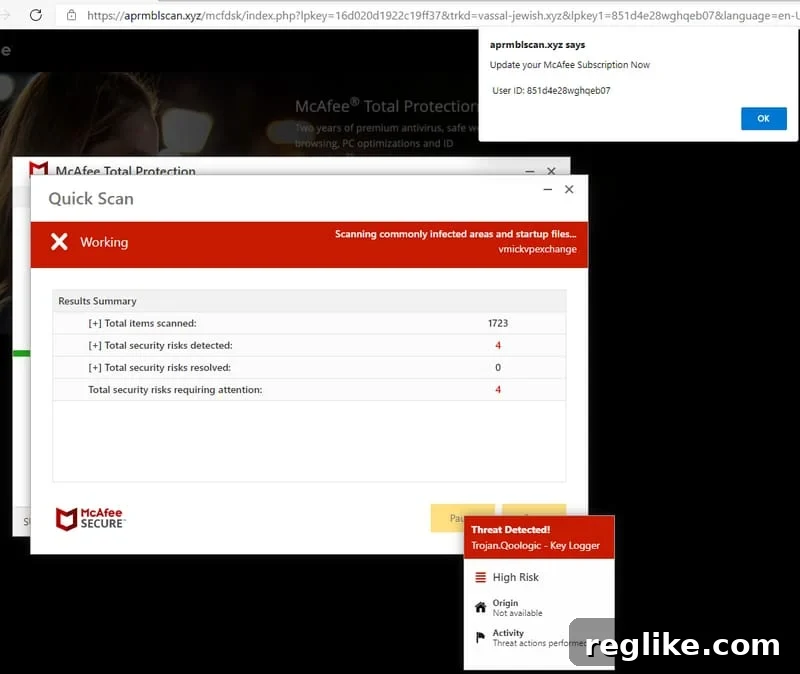
- Fake Security Warnings: These are among the most prevalent. Users are redirected to pages mimicking legitimate antivirus software (like McAfee, Norton, or Windows Defender). These pages often display alarming pop-ups claiming the user’s computer is severely infected, demanding immediate action such as downloading a “fix” or calling a fake tech support number. The image accompanying this article serves as a stark reminder of this insidious tactic.
- Browser Extension Scams: Many redirects aim to trick users into downloading malicious browser extensions. These extensions often promise enhanced functionality or security but secretly collect personal data, inject unwanted ads, or hijack browser settings, leading to further redirections and privacy breaches.
- Tech Support Scams: Similar to fake security warnings, these redirects lead to pages with urgent messages about system errors or viruses. They provide a toll-free number, urging users to call “certified technicians” who then attempt to charge exorbitant fees for unnecessary services or gain remote access to the user’s computer to install malware.
- Phishing Attempts: While less common in direct zero-click, some redirects can lead to sophisticated phishing pages designed to steal login credentials for banks, social media, or other online services by mimicking legitimate websites.
- Potentially Unwanted Programs (PUPs) and Malware: Users might be prompted to download seemingly harmless software updates or “essential tools” that are, in fact, PUPs or even full-blown malware designed to compromise their system, display excessive ads, or steal data.
A Personal Encounter with Zero-Click Deception
My particular disdain stems from witnessing these tactics firsthand and understanding their potential for harm. Just today, I experienced this disturbing reality. I visited a domain name in Chrome, expecting legitimate content, only to be immediately redirected. Instead of a standard parked page or a benign advertisement, I was met with a cleverly designed trick message, aggressively pushing me to download a suspicious Chrome extension after supposedly passing a “security check.” The entire experience was jarring and indicative of the predatory nature of these redirects.
Curious about the consistency of these malicious redirects, I replicated the visit in Firefox, and lo and behold, the same deceptive prompt appeared, attempting to coerce me into installing yet another dubious browser extension. This consistency across different browsers highlighted a systemic issue rather than an isolated incident.
Then, I switched to Microsoft Edge. The redirection took a slightly different, but equally nefarious, turn. There, I was confronted with the fake security site pictured above – a convincing imitation of a legitimate antivirus warning, complete with a pop-up dialog box demanding my attention. The urgency in the message, the counterfeit branding, and the immediate call to action were all classic hallmarks of a fear-mongering scam. Naturally, I refrained from clicking “OK” on the dialog box, as engaging with such prompts is a surefire way to exacerbate the problem, inviting unknown and potentially severe consequences onto my system.
These experiences are not unique to me; they are a daily reality for countless internet users. The sophisticated nature of these scams, from impersonating well-known security brands to leveraging psychological triggers, makes them incredibly dangerous, especially for those less familiar with the intricacies of online safety.
The Ethical Imperative: Protecting Vulnerable Users
The malicious use of misdirected web traffic is not just an inconvenience; it’s an ethical failing of the highest order. My deep-seated frustration is particularly directed at those who intentionally target and exploit vulnerable populations. Many victims of these browser extension scams, fake security warnings, and tech support ploys are likely elderly individuals, who may have limited technical literacy or be more trusting of what they see on their screens. These individuals are often less equipped to discern a legitimate warning from a sophisticated scam, making them prime targets for financial exploitation, identity theft, and severe digital distress.
The perpetrators of these scams are not just engaging in minor fraud; they are actively preying on human vulnerabilities, causing significant financial loss, emotional distress, and a profound erosion of trust in the digital ecosystem. It is an act of digital predation, and the platforms that inadvertently or negligently facilitate these activities bear a significant moral and ethical responsibility.
A Call to Action: Zero-Click Providers Must Step Up
The message to zero-click providers is unequivocal and urgent: clean up your act. The current state of affairs is unacceptable and unsustainable. The continued proliferation of scams not only harms individual users but also tarnishes the reputation of legitimate domain owners, advertisers, and the entire digital advertising industry. It devalues the concept of direct navigation and erodes user trust in online content.
Cleaning up this ecosystem requires a multi-faceted approach, demanding commitment and investment from the providers themselves:
- Stricter Vetting and Onboarding: Implement rigorous background checks and continuous monitoring for all advertisers and publishers on their platforms. Fraudsters should not be able to easily sign up and deploy malicious campaigns.
- Proactive Monitoring and AI-Driven Detection: Invest in advanced technologies, including AI and machine learning, to proactively detect and flag suspicious redirects, landing pages, and ad content in real-time. Automated systems can identify patterns indicative of scam activity more efficiently than manual reviews.
- Rapid Response and Enforcement: Establish clear, efficient reporting mechanisms for users and accelerate the process of investigating and taking down fraudulent campaigns. Consequences for repeat offenders must be severe, including permanent bans and collaboration with law enforcement where appropriate.
- Transparency and Accountability: Be transparent about their efforts to combat fraud and provide clear channels for users and partners to report abuse. They should also be accountable for the quality and safety of the traffic flowing through their systems.
- Collaboration with Cybersecurity Experts: Partner with cybersecurity firms, browser vendors, and industry groups to share threat intelligence and develop best practices for mitigating sophisticated scam techniques.
- Educate Users: While the primary responsibility lies with providers, contributing to user education about common online scams and how to identify them can also play a role in mitigating harm.
Empowering Users: How to Stay Safe from Zero-Click Scams
While we demand accountability from zero-click providers, users also have a role in protecting themselves. Awareness and proactive measures are crucial:
- Be Skeptical of Pop-Ups and Alarms: Legitimate security software rarely uses aggressive pop-ups or loud audio warnings to alert you of a virus. Never click “OK” or interact with unexpected security alerts.
- Verify the Source: Always check the URL in your browser’s address bar. Scam sites often have long, convoluted URLs or slight misspellings of legitimate brand names.
- Do Not Download Unknown Software: Never download browser extensions, software, or files from untrusted sources, especially if prompted by an unexpected pop-up.
- Use Ad Blockers and Security Software: Reputable ad blockers can sometimes prevent malicious pop-ups, and up-to-date antivirus software can offer an additional layer of protection.
- Keep Your Browser Updated: Ensure your web browser and operating system are always running the latest versions, which include critical security patches.
- Educate Yourself and Others: Share knowledge about common online scams with friends and family, particularly those who are less tech-savvy.
- Report Suspicious Activity: If you encounter a scam, report it to relevant authorities, your browser vendor, and potentially the zero-click provider if identifiable.
Conclusion: Reclaiming Trust in the Digital Space
Zero-click advertising, in its ideal form, could offer a seamless and efficient online experience. However, its current trajectory, heavily marred by the widespread exploitation by scammers, makes it a liability rather than an asset to the digital ecosystem. The proliferation of fake security warnings, malicious browser extensions, and predatory tech support scams not only undermines user trust but also inflicts tangible harm, especially on vulnerable populations.
It is time for zero-click providers to recognize the profound responsibility they hold. Their platforms, intended for legitimate monetization, have become unwitting conduits for cybercrime. Until these providers implement robust safeguards, enforce strict policies, and actively police their systems for fraudulent activities, I will continue to highlight their failures. The integrity of the internet and the safety of its users depend on their decisive action to purge this channel of its malicious elements and restore faith in the promise of a secure and trustworthy online environment.