
The Paradox of China’s Digital Landscape: Website Growth Stalls Amidst Unprecedented Business Expansion
Earlier this week, we delved into how digital consumers are poised to fuel demand for domains across China. Today, we turn our attention to a perplexing paradox within this dynamic market: why the proliferation of websites isn’t keeping pace with the country’s booming internet population and a staggering increase in new businesses. This fascinating discrepancy reveals a unique interplay of market forces, technological adoption, and evolving business strategies in the world’s most populous nation.
China’s Entrepreneurial Surge: A Global Phenomenon
In an ideal digital economy, the growth of businesses directly correlates with an increased need for online representation, primarily through dedicated websites. Each new company, striving for visibility and customer engagement, typically requires a digital storefront – an online address powered by a domain name. This fundamental principle drives demand in the domain industry worldwide. However, China presents an intriguing exception, where this conventional wisdom appears to be undergoing a significant reevaluation.
China has firmly established itself as a global epicenter for entrepreneurship and innovation, often dubbed a “paradise for startups.” The entrepreneurial spirit runs deep, with millions of young professionals and seasoned innovators alike launching new ventures across diverse sectors. This robust ecosystem is supported by government initiatives, a vast consumer market, and a rapidly advancing technological infrastructure. The sheer volume of new registrations is truly staggering; in the first quarter of this year alone, a remarkable 5.8 million new companies were registered in China. This figure represents an impressive year-on-year increase of 58%, as reported by China Global Television Network, underscoring the relentless pace of business creation.
The scale of China’s business landscape is immense. According to data from the National Development and Reform Commission, in 2017, the country already hosted 27 million corporations and an additional 65 million sole proprietorships, culminating in a colossal total of 92 million operating businesses. Given the consistent growth rates observed since then, it is reasonable to conclude that the current number of businesses operating in China has now comfortably surpassed the 100 million mark, solidifying its position as a powerhouse of commercial activity.
The Curious Case of Declining Websites: A Digital Anomaly
With such an extraordinary surge in new businesses and a colossal existing commercial base, one would naturally anticipate an equally dramatic expansion in the number of active websites. Yet, the reality in China presents a starkly different picture. The following chart, compiled from comprehensive CNNIC reports, illustrates this intriguing divergence, revealing a trend that challenges conventional digital market expectations.
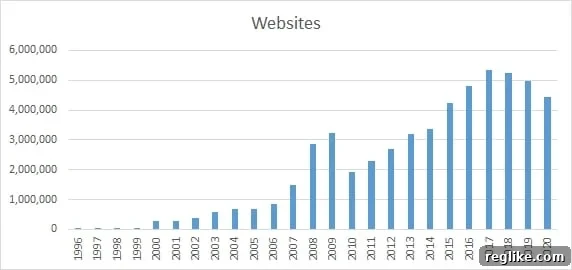
Upon examining these figures, two critical observations immediately stand out. Firstly, the overall number of websites in China remains surprisingly low, registering at approximately 4.4 million. This figure represents less than 5% of the estimated potential demand emanating from the country’s vast number of businesses. The disparity is immense, suggesting a fundamental disconnect between business formation and traditional online presence. Secondly, and perhaps more alarmingly, this number has not only stagnated but has actively been in decline over the last three years, exhibiting negative growth. This raises a crucial question: Why is China, a global leader in digital innovation and business growth, experiencing a contraction in its website count?
The E-commerce Juggernaut: A Dominant Digital Force
The answer, I believe, lies in the overwhelming gravitational pull and unparalleled attractiveness of China’s mega e-commerce platforms. Giants such as Alibaba (with its Tmall and Taobao marketplaces), Pinduoduo, and JD.com have not just captured market share; they have fundamentally reshaped how businesses operate and how consumers shop. China’s e-commerce landscape is a colossal $2 trillion market, a figure that continues to grow with astonishing velocity, making it the largest and most dynamic e-commerce market globally.
These platforms are not merely online stores; they are entire digital ecosystems brimming with constant innovation. They feature groundbreaking strategies like celebrity-driven live streaming e-commerce, where influencers showcase products in real-time, driving immediate purchases through immersive and interactive experiences. Social commerce, epitomized by group-buying models based on viral marketing among the billion-plus users of WeChat, allows consumers to pool their purchasing power for discounts, fostering community and rapid product dissemination. Furthermore, these platforms boast highly integrated payment and delivery services, offering seamless, end-to-end solutions that simplify transactions for both merchants and consumers. The advent of the Consumer-to-Manufacturer (C2M) model further empowers consumers by connecting them directly with factories, allowing for customized products and more efficient supply chains, all facilitated by these powerful platforms.
The Allure of Marketplaces: Convenience Over Independence
For millions of Chinese business owners, the decision to forgo a standalone website in favor of these established e-commerce marketplaces is a rational one. The platforms offer an immediate, massive audience, eliminating the need for extensive brand building and costly traffic acquisition that a new website would require. They provide integrated tools for inventory management, payment processing, customer service, and logistics, significantly lowering the barrier to entry for entrepreneurs. Instead of investing time, resources, and technical expertise into developing, maintaining, and promoting an independent website, businesses can leverage the platforms’ existing infrastructure, marketing capabilities, and trusted brand reputation. This strategic choice allows entrepreneurs to channel their energy directly into product development, sales, and customer engagement within an already thriving digital environment.
This overwhelming preference for integrated platforms has tangible consequences for the broader digital landscape. When attempting to locate a specific company’s official website using popular search engines like Baidu, one often encounters a scarcity of results pointing to independent domains. Instead, search queries frequently lead directly to the company’s storefronts or product listings on Alibaba, JD.com, or Pinduoduo. This phenomenon underscores the extent to which these platforms have become the primary digital identity and transactional hub for a vast number of Chinese businesses, effectively sidelining the traditional corporate website.
The Imperative of Digital Sovereignty: Looking Ahead
While the current reliance on e-commerce platforms offers undeniable immediate benefits, it also presents inherent long-term challenges for businesses. As these platforms continue to mature and consolidate their power, they invariably become more structured and, in many cases, more restrictive. Merchants often find themselves operating within a rigid framework of platform rules, commission structures, advertising policies, and data access limitations. The lack of direct customer data ownership, the inability to fully control the customer journey, and the constant threat of policy changes or increased fees can stifle brand differentiation and long-term growth. Businesses, in essence, become tenants rather than owners of their digital presence, subject to the landlord’s discretion.
In the long term, forward-thinking business owners will undoubtedly recognize the critical importance of cultivating their own independent digital address – a dedicated domain and website – where they retain complete control over their brand narrative, customer relationships, and strategic direction. This is not to suggest abandoning e-commerce platforms entirely, but rather to view a proprietary website as a foundational element of a diversified digital strategy. An independent website serves as a central hub where a business can fully express its unique identity, build direct customer relationships, gather proprietary data, and establish a digital home that is immune to external platform policies. It offers the ultimate digital sovereignty, ensuring that a business’s destiny remains firmly in its own hands, complementing sales channels on major marketplaces and other retail outlets.
The Future of China’s Domain Market: A Resurgent Demand
For these compelling reasons, I maintain a profoundly optimistic outlook for the future of the domain market in China. The current trend of declining websites, while significant, represents a phase in China’s unique digital evolution rather than a permanent state. As the e-commerce giants continue to mature, and as businesses increasingly seek to differentiate themselves, build stronger brands, and gain greater control over their digital assets, the demand for independent websites and, consequently, domain names, is poised for a significant resurgence.
This shift will be driven by a growing awareness among entrepreneurs of the strategic value of digital autonomy. The allure of platforms will remain, but businesses will increasingly understand that a truly resilient and sustainable online presence requires a dual approach: leveraging the reach of marketplaces while simultaneously building and nurturing their own digital properties. This renewed focus on independent websites will unlock immense potential for domain registrations, aligning China’s digital landscape more closely with global trends where a direct, owned online presence is considered indispensable for long-term success. The paradox of declining websites amidst soaring business growth is likely to resolve itself as the market evolves, heralding a vibrant new era for China’s domain industry.