
Navigating the New Internet Frontier: Understanding Browser Behavior with Emerging Top-Level Domains
The internet’s landscape is in constant evolution, and one of the most significant shifts in recent years has been the introduction and delegation of hundreds of new generic Top-Level Domains (gTLDs). Beyond the familiar confines of .com, .org, and .net, a vibrant new ecosystem of domain extensions has emerged, offering unprecedented opportunities for branding, niche identification, and online presence. However, with innovation comes the need for adaptation, not just from users and businesses, but also from the very browsers we use to navigate the web. This article delves into how web browsers, particularly Google Chrome, interact with these burgeoning domain names, exploring the underlying reasons for their behavior, the impact on user experience, and the broader implications for the future of online identity.
The Dawn of New Top-Level Domains (TLDs)
For decades, the internet’s address system was largely defined by a limited set of TLDs. While country-code TLDs (ccTLDs) like .uk or .de offered some variety, the generic space was dominated by a handful of extensions. Recognizing the growing demand for more specific, diverse, and brandable internet addresses, the Internet Corporation for Assigned Names and Numbers (ICANN) initiated a program to expand the number of gTLDs. This ambitious rollout has led to the delegation of extensions ranging from industry-specific options like .tech, .app, and .store, to geographic ones like .london or .nyc, and even brand-specific TLDs. The vision was to create a more organized, intuitive, and flexible internet, allowing businesses and individuals to choose domain names that perfectly reflect their purpose and identity.
These new TLDs are designed to open up new possibilities. Imagine a baker using a .bakery domain, an artist using .art, or a city promoting its tourism with .city. The potential for precise branding and clear communication is immense. However, like any significant change, the adoption of these new TLDs presents challenges. Users are accustomed to the old ways, and search engines and browsers need to adapt to ensure a seamless and secure experience across this expanded digital real estate. This adaptation process is what we are currently observing, particularly in how browsers like Google Chrome handle initial interactions with unfamiliar domain extensions.
Google Chrome’s Cautious Approach to Unfamiliar TLDs
When new top-level domains are delegated to the root, they don’t instantly become as universally recognized as .com. Browsers, designed with user safety and intuitive navigation in mind, often employ a cautious approach when encountering these novel extensions. This protective stance is precisely what many users might experience, perhaps prompting a query like, “Did you really mean to go to nic.tattoo?” – or more generally, questioning an address like nic.newtld if it’s not immediately recognized as a valid website address.
Here’s what typically transpires when you attempt to navigate directly to one of these emerging domain names in Chrome:
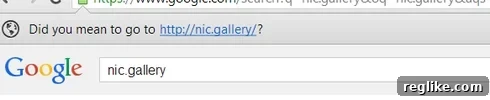
Instead of directly loading the website, Chrome defaults to performing a Google search for the domain name you typed in. For instance, if you type nic.newtld, the browser will conduct a search for “nic.newtld.” To access the actual web address, you are then required to click a subsequent link within the search results. This extra step, while seemingly minor, serves as a significant gatekeeper, ensuring users are intentionally heading to an address that might be outside their typical browsing habits.
The primary motivation behind this behavior is user safety and experience. In a world where phishing attempts and malicious websites are prevalent, browsers act as a first line of defense. By defaulting to a search, Chrome provides users with a moment of pause, allowing them to verify the legitimacy or intent of an unfamiliar domain. It reduces the risk of accidentally landing on a malicious site simply by mistyping or encountering an unknown extension. This mechanism essentially says, “We’re not sure about this one yet, let’s confirm your intention.”
Interestingly, this cautious approach isn’t a permanent roadblock. Typically, you only have to click the link to the actual web address once. After this initial click, the browser seems to “learn” or remember your intent for that specific domain. Subsequent visits to the same domain usually proceed directly to the website without the intermediate search step or the warning message. This indicates that Chrome’s behavior is likely a temporary measure, designed to ease the transition period until new TLDs become more widespread and commonly recognized by the general internet populace. As these domains gain traction and establish a legitimate online presence, browsers are expected to adjust their default behaviors, treating them with the same confidence as more established extensions.
User Experience and Trust: Bridging the Gap
The introduction of any new technology or standard inevitably brings challenges in user adoption and trust. For new TLDs, browser warnings, even if temporary, can initially hinder user confidence. A search redirect, while protective, might suggest to an untrained eye that the domain itself is suspicious or not fully legitimate. This perception is a critical hurdle for businesses and individuals who have invested in these unique domain names to build their brand.
The key to bridging this gap lies in sustained marketing efforts, building a strong online presence, and ensuring that websites on new TLDs adhere to the highest standards of security and content quality. An SSL certificate (HTTPS), professional website design, and valuable content can quickly establish credibility, helping users and browsers alike to recognize the domain as trustworthy. Over time, as more reputable websites adopt new TLDs, and as users become more accustomed to seeing a wider variety of extensions, these initial browser warnings will likely fade into obsolescence.
The Peculiar Case of Secondary Level Domains: The ‘nic’ Anomaly
Beyond the behavior observed with new TLDs at the root level, another intriguing aspect of the domain name landscape arises when examining certain second-level domain (SLD) registrations. An interesting observation occurs when attempting to type in “nic” as the second-level domain for many of the TLDs delegated by registries like Donuts. Donuts, a prominent registry operator for numerous new gTLDs (such as .guru, .photography, .solutions, etc.), manages a vast portfolio. When users attempt to access a domain like nic.guru or nic.photography, instead of reaching an active website, they often land on a parking page, typically managed by services like Searchezy.com, or are directed through a “zero-click” site.
Domain parking is a common practice where an unregistered domain name, or a registered domain that is not currently being used for an active website, is pointed to a temporary page. These parking pages frequently display advertisements, generating revenue for the domain owner or the parking service provider when visitors click on them. A “zero-click” site, or more precisely a “zero-click search result,” refers to a situation where a search engine displays the answer to a query directly in the search results, without requiring the user to click through to a website. In the context of domain names, a zero-click site could refer to a page that attempts to fulfill a user’s intent immediately, often through pre-determined links or aggregated information, without a true “website” experience.
The prevalence of “nic” as a parked or zero-click site on various Donuts TLDs suggests a strategy, possibly by domain speculators or the registry itself, to capture traffic associated with common or generic second-level domain terms. “Nic” can be an abbreviation for “network information center” or a common prefix, making it a potentially valuable keyword. This practice highlights the commercial aspects of the domain name industry, where even seemingly generic or administrative terms can be monetized. For users, it means that typing in what might seem like a logical or intuitive domain can lead to advertising content rather than specific information, further emphasizing the need for domain owners to actively develop their websites to provide genuine value.
SEO and New TLDs: A Level Playing Field?
A common question among website owners and digital marketers is whether new TLDs carry any inherent advantages or disadvantages in terms of Search Engine Optimization (SEO). Google, the dominant force in search, has consistently stated that new TLDs are treated equally to older, more established TLDs like .com. In other words, having a .tech domain versus a .com domain does not, by itself, grant any boost or penalty in search rankings. Google’s algorithms primarily focus on the quality and relevance of the content, the user experience offered by the website, and the overall authority and trustworthiness of the site, irrespective of its domain extension.
However, while there’s no direct SEO benefit, new TLDs can offer indirect advantages. A highly relevant TLD, such as a local business using .london or a technology company using .tech, can significantly enhance branding and memorability. A memorable and intuitive domain name can lead to higher direct traffic, better brand recall, and improved click-through rates in search results if the domain name itself clearly communicates the site’s purpose. These factors, while not direct SEO ranking signals, contribute to a positive user experience and strong brand identity, which in turn can indirectly benefit SEO performance.
Ultimately, regardless of the chosen TLD, the fundamental principles of good SEO remain paramount: creating high-quality, valuable content, ensuring a fast and mobile-friendly website, building relevant backlinks, and providing an excellent user experience. A new TLD offers a fresh slate and an opportunity to craft a distinct online identity, but success in search rankings will always be tied to the effort and quality invested in the website itself.
The Broader Impact on the Domain Name Ecosystem
The proliferation of new TLDs has had a profound impact on the entire domain name ecosystem. Registries, like Donuts, play a crucial role in managing and promoting these new extensions, often developing innovative strategies to encourage adoption. Registrars, the companies through which domain names are purchased by end-users, have expanded their offerings, providing a wider selection of domain choices than ever before. This increased competition and variety empower businesses and individuals to select domain names that are more specific, meaningful, and brand-aligned.
The expansion also signals a maturing of the internet’s addressing system. It moves away from a one-size-fits-all model towards a more specialized and diverse environment, reflecting the rich tapestry of human endeavors online. This ongoing evolution pushes the boundaries of online identity, making the internet a more organized and intuitive place for users to find what they’re looking for, provided they understand the nuances of this expanded landscape.
Best Practices for Navigating the New TLD Landscape
For domain owners considering or already utilizing new TLDs, embracing best practices is crucial for success and gaining user trust. This includes actively developing the website, ensuring it is secure (using HTTPS), providing valuable and high-quality content, and promoting the new domain consistently across all branding and communication channels. Education is also key; helping users understand the legitimacy and benefits of these modern extensions will accelerate their acceptance.
For internet users, awareness is paramount. While browsers like Chrome implement protective measures, users should remain vigilant, especially when encountering unfamiliar domain names. Always verify the source and purpose of a website, especially before entering sensitive information. Understanding that new TLDs are a legitimate and growing part of the internet helps foster an open but cautious approach to online navigation.
Conclusion: Embracing the Future of Online Identity
The internet is a dynamic entity, constantly evolving to meet the demands of a connected world. The rise of new Top-Level Domains represents a significant leap forward, offering unparalleled opportunities for specificity, branding, and innovation in online identity. While initial browser behaviors, such as Google Chrome’s cautious redirects, might present temporary navigational quirks, they are ultimately part of an adaptive process designed to ensure user safety and facilitate a smooth transition into this expanded digital frontier.
As these new TLDs continue to gain traction and widespread recognition, the internet will become an even more diverse and tailored space, allowing businesses, communities, and individuals to carve out truly unique and meaningful online presences. Understanding the nuances of this evolving landscape, from browser interactions to SEO implications and the broader ecosystem dynamics, empowers both users and domain owners to navigate the future of online identity with confidence and clarity. The promise of new TLDs lies in a more intuitive, representative, and vibrant internet, where every online address can tell a more precise and compelling story.