
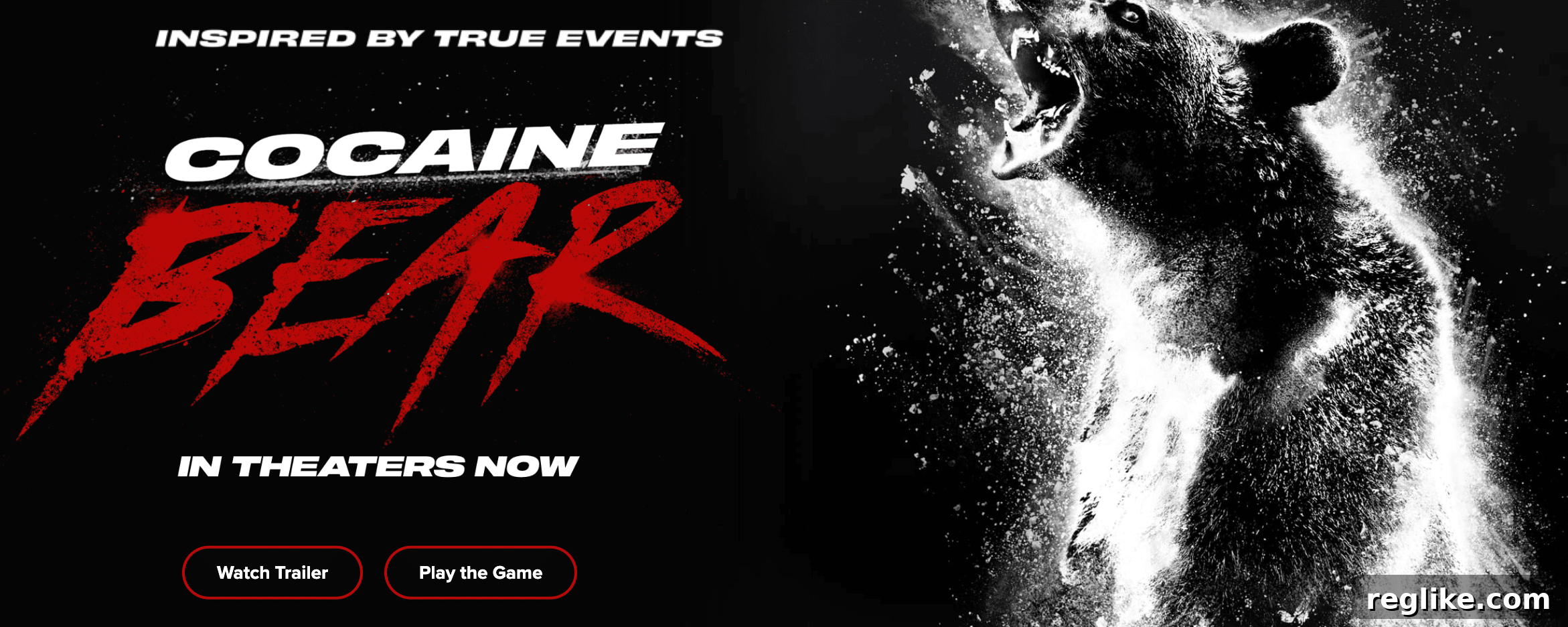
High on cocaine and wanting a domain.
The Wild Hunt for CocaineBear.com: A Cybersquatting Saga Ignited by Hollywood
The cinematic world recently saw the release of Cocaine Bear, a film that quickly captivated audiences with its outrageous premise: a bear ingesting a significant quantity of cocaine. What made this film even more intriguing was its foundation in actual events, lending a bizarre layer of reality to its thrilling narrative. The movie’s unexpected success has not only generated significant box office revenue and cultural buzz but has also highlighted a fascinating intersection of entertainment, intellectual property, and the high-stakes world of domain name disputes. While the film found its official home at CocaineBear.movie, the true battle for its digital identity has been brewing behind the scenes, centering on the coveted CocaineBear.com domain.
From Real-Life Oddity to Hollywood Blockbuster: The Genesis of Cocaine Bear
The story of the “Cocaine Bear,” or “Pablo Escobear” as it’s sometimes affectionately known, dates back to 1985. A black bear in Georgia discovered and consumed a duffel bag full of cocaine dropped by a drug smuggler. The bear tragically died from an overdose, but its extraordinary tale became a local legend, cemented by its taxidermied remains which can still be viewed today. This bizarre true crime story served as the perfect, if darkly comedic, inspiration for Universal Pictures’ horror-comedy film. The movie brought this peculiar piece of history to a global audience, transforming a local curiosity into a pop culture phenomenon. Its unique premise ensured high anticipation, driving significant online discussion and making the film a trending topic long before its release.
Navigating the Digital Landscape: Official Movie Presence and Domain Choices
In the age of digital marketing, a strong online presence is paramount for any major film release. Studios meticulously plan their digital strategy, which invariably includes securing official domain names. For Cocaine Bear, the choice for its primary online hub was CocaineBear.movie. This decision is strategically sound, as the .movie top-level domain (TLD) is specifically designed for films and film-related content, offering a clear, thematic, and easily identifiable web address for fans seeking official information, trailers, and promotional materials. An official .movie domain clearly signals authenticity and directly communicates the nature of the website’s content, which can be advantageous for targeted audiences.
However, despite the utility and relevance of the .movie TLD, the general public often defaults to searching for a brand’s presence using the familiar .com extension. The .com domain remains the undisputed king of TLDs, deeply ingrained in user habits and perceived as the most credible and authoritative online address. This widespread user expectation means that even with a perfectly fitting and officially sanctioned .movie domain, the absence of the corresponding .com can create confusion, dilute brand authority, and potentially funnel traffic to unofficial or unrelated websites. This is precisely where the plot thickens for Cocaine Bear.
The Heart of the Dispute: A Cybersquatting Complaint for CocaineBear.com
The digital domain for Cocaine Bear has become the subject of a formal cybersquatting complaint filed with the National Arbitration Forum, bearing case number 2031224. Cybersquatting refers to the practice of registering, trafficking in, or using a domain name with bad-faith intent to profit from the goodwill of a trademark belonging to someone else. Essentially, it’s an attempt to capitalize on another entity’s brand recognition by holding a domain name hostage, often with the expectation that the legitimate trademark holder will eventually be forced to purchase it at an inflated price.
In cases like this, the Uniform Domain-Name Dispute-Resolution Policy (UDRP), established by the Internet Corporation for Assigned Names and Numbers (ICANN), provides a streamlined and relatively cost-effective mechanism for resolving domain name disputes without resorting to traditional litigation. To succeed in a UDRP complaint, the complainant must demonstrate three key elements:
- The domain name is identical or confusingly similar to a trademark in which the complainant has rights.
- The registrant (the current owner of the domain) has no rights or legitimate interests in respect of the domain name.
- The domain name has been registered and is being used in bad faith.
The battle for CocaineBear.com clearly hinges on these criteria. The term “Cocaine Bear” became inextricably linked with the film and its associated intellectual property well before the .com domain was registered by a third party.
Unpacking the Timeline: When Domains Were Registered
The timing of domain registrations is often a critical factor in UDRP disputes. The official CocaineBear.movie domain was secured in 2021, strategically timed with the early stages of the film’s production and marketing rollout. This demonstrates a clear intent by the film’s creators or distributors to establish their digital footprint early. In stark contrast, CocaineBear.com was registered in May 2022. This date is significantly later than the initial announcements and promotional activities surrounding the movie, strongly suggesting that the registrant acquired the domain specifically to leverage the buzz and established brand recognition of the upcoming film.
The original registrant of CocaineBear.com had apparently let it expire before the current registrant acquired it in May 2022. This lapse indicates that while the domain might have existed previously, its current registration post-dates the widespread public knowledge of the film project. This sequence of events further strengthens the potential argument that the current registrant of CocaineBear.com acted in bad faith, knowing full well the commercial value and strong association of the term “Cocaine Bear” with the highly anticipated movie.
Identifying the Complainant: The Stakes for Brand Owners
While the National Arbitration Forum typically keeps the identity of the complainant confidential until a decision is rendered, it’s highly probable that the party initiating the dispute is directly involved with the Cocaine Bear film. This could be Universal Pictures, the studio behind the movie, or one of its subsidiaries or marketing partners. Securing the .com version of their film’s title is not merely about convenience; it’s a critical component of protecting their intellectual property and ensuring brand consistency across the web. An unofficial CocaineBear.com could potentially host competing content, misinformation, or even illicit material, damaging the film’s brand image and diverting valuable traffic.
There’s also an intriguing possibility, as suggested by the update in the original text, that the complaint could come from an entity associated with the actual taxidermied “Cocaine Bear,” such as Kentucky by Kentucky, a retail outlet that previously owned and displayed the bear and has certainly built a brand around its unique history. If such an entity has established trademark rights related to “Cocaine Bear” pre-dating the movie’s announcement, they too could have a legitimate claim. However, given the massive global marketing effort for the film, a direct connection to the movie’s creators remains the most likely scenario, aiming to consolidate all primary digital assets under their control.
The Enduring Power of the .COM: Why It Still Matters
In an era of hundreds of new gTLDs (generic Top-Level Domains) – from .app to .xyz, and specifically .movie – one might question why a studio would still fiercely pursue a .com domain. The answer lies in its unparalleled authority, familiarity, and search engine optimization (SEO) value. For decades, .com has been synonymous with professionalism and legitimacy on the internet. Users instinctively append .com to brand names when trying to find a website, making it the default mental go-to. This ingrained behavior translates into direct traffic, reducing reliance on search engines, and enhancing brand recall.
Furthermore, major search engines often subtly prioritize .com domains, or at least users trust them more, leading to higher click-through rates. Owning the .com for a brand like Cocaine Bear ensures that all direct search queries and word-of-mouth recommendations lead directly to the official content, preventing potential revenue loss, brand dilution, and confusion among fans. It’s an essential defensive registration, safeguarding the brand’s digital presence against opportunistic third parties who might exploit its popularity.
Brand Protection in the Digital Age: A Broader Perspective
The Cocaine Bear domain dispute is a microcosm of a much larger challenge faced by businesses and intellectual property owners globally. In today’s digital landscape, a brand’s online identity is as critical as its physical presence. Effective brand protection strategies extend far beyond simply registering the primary domain. They involve proactive monitoring for potential trademark infringements, registering defensive domains across various relevant TLDs, and being prepared to swiftly act against cybersquatters and domain abuse.
For a major film studio, this means not only securing the .movie TLD but also strongly considering the .com, .net, and .org versions, and potentially country-specific TLDs (ccTLDs) if the film has a significant international release. Each domain represents a potential gateway for customers and a touchpoint for the brand. Failing to secure these can result in lost marketing opportunities, diversion of legitimate traffic, and costly legal battles down the line. The initial investment in comprehensive domain registration and protection pales in comparison to the potential damages caused by brand hijacking or misuse.
Movie Marketing and Fan Engagement: The Domain’s Role
The success of a movie relies heavily on effective marketing and robust fan engagement. Domain names play a subtle yet significant role in this ecosystem. An easily memorable and intuitive domain name facilitates word-of-mouth marketing, making it simple for fans to find official content without needing complex URLs or extensive search engine queries. The struggle for CocaineBear.com illustrates the desire of a brand owner to control every facet of their online narrative. Having disparate domains (e.g., CocaineBear.movie and an unofficial CocaineBear.com) can fragment the audience, confuse promotional efforts, and dilute the overall impact of a unified marketing campaign.
In the digital age, movie studios leverage every available tool, from social media campaigns and influencer collaborations to interactive websites and exclusive content portals. The foundational element of this digital strategy is often a strong, singular domain identity. When that identity is challenged, it underscores the constant vigilance required to maintain a cohesive and powerful brand presence across all digital channels, ensuring that fans and potential viewers consistently land on authorized content. The .com domain, despite the rise of new alternatives, remains the linchpin for achieving this unified digital front.
The Resolution and Its Implications
The outcome of the National Arbitration Forum’s decision on CocaineBear.com will undoubtedly set a precedent and offer insights into how intellectual property rights are upheld in the domain name space, especially concerning popular culture phenomena. A favorable ruling for the complainant would reinforce the principle that trademark owners have a legitimate right to their brand names across common TLDs, especially when a domain is registered after a brand has achieved public recognition. It would serve as a powerful deterrent against future acts of cybersquatting, particularly in the fast-paced entertainment industry where new brands and titles emerge constantly.
Ultimately, the saga of CocaineBear.com is more than just a dispute over a website address. It’s a compelling illustration of the critical importance of digital real estate in the modern world. For the creators of Cocaine Bear, securing this domain is about consolidating their brand, protecting their investment, and ensuring that the wild, true story of a drug-addled bear is told on their terms, on their official digital platforms. It’s a reminder to all brand owners, regardless of industry, that a strong domain strategy is not a luxury, but a necessity for safeguarding their identity and ensuring their continued success in the ever-evolving digital landscape.