
Dan.com Unleashes Powerful New Features: Revolutionizing Domain Management and Sales with Advanced Categories
In the dynamic and ever-evolving world of domain investing, staying ahead of the curve is paramount. Domain name sales platforms constantly innovate to provide sellers with the tools they need to optimize their portfolios, streamline operations, and ultimately maximize their returns. A recent announcement from Dan.com, a leading player in the domain aftermarket, highlights its commitment to this continuous improvement. The platform has rolled out a significant product update, introducing a suite of powerful new features designed to empower domain owners, with the standout innovation being the much-anticipated ability to add domains to user-defined categories.
The Dawn of Domain Categories: A New Era for Portfolio Management
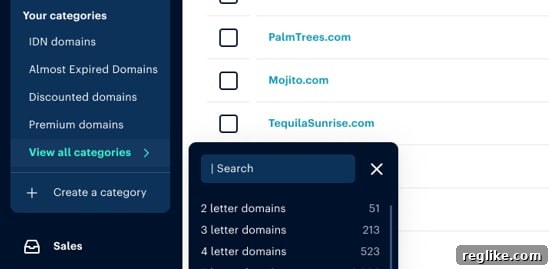
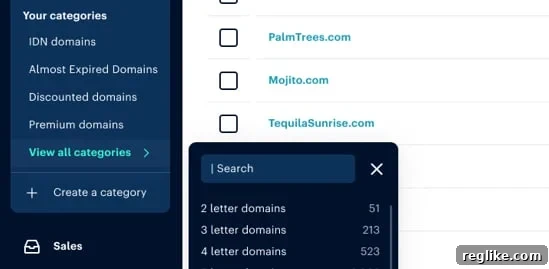
The introduction of domain categories on Dan.com marks a pivotal step towards more sophisticated domain portfolio management. While the initial implementation, which we might playfully refer to as “category light,” offers foundational organizational capabilities, its full potential is set to be unlocked in an upcoming release. Currently, domain investors can meticulously organize their digital assets into custom categories, a feature that brings immediate benefits in terms of clarity and personal workflow efficiency.
Imagine managing a sprawling portfolio of hundreds or even thousands of domain names. Manually tracking and applying specific strategies to each domain can be a monumental task. With current categories, sellers can group their domains based on various criteria. For instance, you might create categories like “Short Domains” for two-letter or three-letter gems, “Two-Word Domains” for highly brandable assets, or even segment your inventory by perceived value, such as “High-Value Premium” and “Entry-Level Opportunities.” Other practical categories could include “IDN Domains” (Internationalized Domain Names), “Almost Expired Domains” for those acquired with a specific strategy in mind, or “Discount Domains” for rapid liquidation. This foundational categorization, even in its initial stage, dramatically improves the ability to review, analyze, and comprehend one’s entire domain inventory at a glance.
Unlocking Strategic Power: Category-Wide Settings on the Horizon
The true game-changer, however, lies in the imminent future release, which promises to introduce category-wide settings. This enhancement is not merely an organizational tool; it’s a strategic powerhouse that will transform how domain sellers approach monetization and sales. The ability to apply specific settings to an entire category of domains will empower investors with unprecedented control and efficiency, enabling highly targeted sales strategies that were previously cumbersome or impossible to implement at scale.
Tailored Sales Strategies with Enhanced Landing Page Customization
One of the most impactful applications of category-wide settings will be the seamless customization of landing page types. Different types of domains often require different sales approaches. For example, a high-value, premium domain might benefit from a direct “Make Offer” option, encouraging negotiation and indicating its exclusivity. Conversely, a large collection of lower-priced domains, perhaps under $5,000, could benefit immensely from integrated financing options, making them accessible to a broader range of buyers and accelerating sales velocity.
The Power of Flexible Financing Options
Consider the strategic advantage of setting up a category specifically for “Sub-$5,000 Domains” or “High-Volume Inventory.” With category-wide settings, you could effortlessly enable financing as an option for every domain within this group. Domain financing, often facilitated through secure escrow services, allows buyers to acquire valuable digital assets without an immediate upfront lump sum. This flexibility significantly expands the pool of potential buyers, particularly for entrepreneurs and small businesses with limited initial capital. By making domain ownership more accessible, sellers can increase their sales conversion rates and move inventory faster, turning dormant assets into active revenue streams. Crucially, this feature could be selectively applied, allowing sellers to keep financing off their ultra-premium domains where immediate, full-cash offers might be preferred, thereby maintaining the perceived value and exclusivity of those assets.
Optimizing for Negotiation: The “Make Offer” Functionality
On the other end of the spectrum, premium and highly sought-after domains often benefit from a “Make Offer” mechanism. For domains valued significantly higher, or those whose market price is subject to subjective brand value and negotiation, allowing potential buyers to submit an offer ensures that the seller has the flexibility to entertain the highest bid. This approach encourages engagement, facilitates direct negotiation, and can lead to sales above a set asking price if multiple interested parties emerge. With category-wide settings, sellers could easily designate a “Premium Domains” category and activate the “Make Offer” feature across all domains within it, ensuring a consistent and strategic approach to selling their most valuable assets without having to configure each domain individually.
Beyond Financing and Offers: A Glimpse into Future Possibilities
The implications of category-wide settings extend far beyond financing and “make offer” options. Imagine defining other parameters like:
- Pricing Models: Automatically apply fixed pricing, “make offer,” or minimum offer thresholds to entire categories.
- Lead Capture Forms: Implement specific lead generation forms for domains where direct contact is preferred over immediate sale.
- Promotional Banners: Automatically display promotional messages or discounts for a category of domains intended for quick sale.
- Redirect Options: Manage redirects for parked or development domains within a category more efficiently.
- Visibility Settings: Control which domains are publicly listed versus those available only through direct outreach.
This level of granular control, applied broadly through categories, signifies a monumental leap in domain portfolio management, moving from tedious individual adjustments to strategic, group-based actions.
Enhanced Monetization: The Evolution of Hybrid Landing Pages
Another significant improvement rolled out by Dan.com focuses on their innovative hybrid landing pages. These pages represent a shrewd strategy for domain investors, combining the potential for immediate sale with passive monetization through pay-per-click (PPC) advertising. Through a robust partnership with Bodis, a leading domain parking and monetization service, Dan.com’s hybrid landers simultaneously display relevant PPC advertisements alongside a prominent call-to-action for buying the domain.
This dual-purpose approach is particularly beneficial for domains that might not sell immediately. Instead of sitting idle, these domains generate passive income from advertising clicks while waiting for the right buyer. Dan.com’s recent update includes strategic tweaks to these hybrid landing pages. While the exact nature of these adjustments wasn’t detailed, such improvements typically involve optimizing the layout, enhancing the user experience, refining ad placement, and clarifying the purchase pathway. The platform reports that these changes have demonstrably improved both ad revenue and sales, indicating a more effective balance between monetization and conversion.
For domain investors, this translates into a more efficient use of their inventory. Every domain, whether it sells in a day or a year, now has the potential to contribute to the portfolio’s overall profitability. The enhanced hybrid landers mean higher click-through rates on ads and clearer, more compelling purchase options, ultimately increasing the chances of both passive income and direct sales. This innovation reinforces Dan.com’s position as a platform that understands the multifaceted needs of domain owners, offering solutions that cater to both long-term holding strategies and active selling.
The Bigger Picture: Empowering Domain Investors
These latest product updates from Dan.com underscore a significant trend in the domain aftermarket: the increasing sophistication of tools available to domain investors. What was once a largely manual and often cumbersome process of managing hundreds or thousands of digital assets is rapidly being transformed by intelligent features that automate, streamline, and optimize. The introduction of advanced domain categories with impending category-wide settings, coupled with the optimization of hybrid landing pages, empowers sellers in several key ways:
- Increased Efficiency: Drastically reduce the time spent on individual domain management, freeing up valuable resources for acquisition and research.
- Optimized Sales Strategies: Apply nuanced sales tactics (like financing or “make offer”) to entire segments of a portfolio, rather than on a domain-by-domain basis, increasing conversion rates.
- Maximized Monetization: Ensure that every domain, even those not actively being sold, is generating passive income, improving overall portfolio yield.
- Enhanced Data Insights: Better organization often leads to clearer insights into which types of domains perform best under specific conditions.
- Improved Buyer Experience: Presenting tailored landing pages with appropriate sales options (like financing) can significantly improve the buyer’s journey and decision-making process.
As the domain industry continues to mature, platforms like Dan.com are crucial in providing the infrastructure and innovation needed for domain investing to thrive as a legitimate and profitable asset class. These recent enhancements are not just technical upgrades; they are strategic enablers for domain owners looking to elevate their game.
For those eager to dive deeper into the specifics and explore other features rolled out in this update, comprehensive details are available directly from the source in the official Dan.com product update #5. Domain investors are encouraged to explore these new functionalities and integrate them into their strategies to unlock new levels of efficiency and profitability.