
UDRP Due Diligence: How Archival Records Expose Flawed Claims in Domain Disputes
In the complex world of domain name disputes, particularly those governed by the Uniform Domain-Name Dispute-Resolution Policy (UDRP), complainants frequently submit detailed arguments to assert their rights. While many of these claims are legitimate, it’s not uncommon for UDRP complainants, and sometimes even their legal representatives, to make assertions that range from genuinely mistaken to conspicuously false. This raises critical questions: At what point does an error transition from an honest oversight to a deliberate misrepresentation? Furthermore, when does the failure to utilize freely available and easily accessible verification tools become a significant problem for a complainant?
The UDRP process is designed to offer a streamlined and efficient mechanism for resolving disputes concerning abusive registration of domain names. However, its effectiveness hinges on the integrity of the claims brought before the World Intellectual Property Organization (WIPO) or other accredited dispute resolution providers. The responsibility for thorough investigation, or due diligence, lies firmly with the complainant. Neglecting this crucial step can lead to wasted resources, prolonged disputes, and, ultimately, a dismissed complaint.
The Bancanet.com Case: A Clear Example of Insufficient Due Diligence
A recent decision handed down by WIPO regarding the domain name bancanet.com against Respondent Banco Nacional de Mexico, and brought by a complainant identified as NetBank Inc., provides a compelling illustration of these issues. This case perfectly demonstrates how basic investigative steps, readily available to anyone with an internet connection, could have fundamentally altered the complainant’s strategy – or prevented the filing altogether.
It’s worth noting that the identity of the complainant, NetBank Inc., presents its own set of ambiguities. Many will recall the original NetBank, an early internet bank that faced regulatory shutdown in 2007. Currently, the domain Netbank.com redirects to Bank of Internet USA, an entity based in San Diego. However, the complainant in this specific UDRP case was identified as operating out of Phoenix. This discrepancy in itself could be a red flag, highlighting the importance of clearly establishing the complainant’s legitimate claim to the asserted trademark rights.
Complainant’s “Bad Faith” Allegations: Unfounded Claims of Non-Use
In their filing, NetBank Inc. presented several arguments concerning the alleged “bad faith” registration and use of the bancanet.com domain name by the Respondent, Banco Nacional de Mexico, which registered the domain in 1999. The panel summarized the complainant’s position as follows:
With regard to bad faith, the Complainant argues that the disputed domain name is not used and has apparently never been used since its registration, that the disputed domain name was registered by the Respondent in order to prevent the Complainant from reflecting its marks in a corresponding domain name, that the Respondent has engaged in a pattern of the above-described conduct (continuously renewing the disputed domain name without using it), and that the disputed domain name was registered primarily for the purpose of disrupting the business of the Complainant, who is a direct competitor of the Respondent.
These are serious allegations. To succeed in a UDRP complaint, the complainant must prove three elements: first, that the domain name is identical or confusingly similar to a trademark in which the complainant has rights; second, that the respondent has no rights or legitimate interests in the domain name; and third, that the domain name has been registered and is being used in bad faith. The “bad faith” element often hinges on proving intent to profit from or disrupt a trademark owner’s business, which can include continuous non-use despite renewal if the intent is malicious.
Disproving the Core Claim: The Power of Archival Websites
Despite the complainant’s confident assertion that the disputed domain name “is not used and has apparently never been used since its registration,” a swift, rudimentary search using publicly available archival tools reveals a starkly different reality. In less than 10 seconds, anyone can access services like Screenshots.com to verify past usage of a domain. Navigating to screenshots.com/bancanet.com immediately brings up concrete evidence:
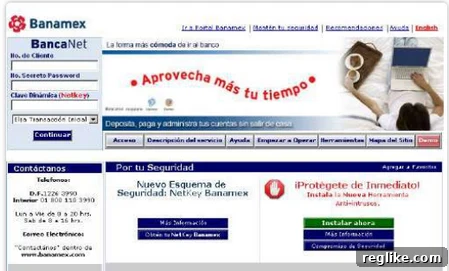
This screenshot undeniably shows that the domain name bancanet.com was actively used by Banco Nacional de Mexico as an online banking portal, prominently featuring the name “BancaNet.” This direct visual evidence flatly contradicts the complainant’s central claim of non-use. While the URL may have been subsequently taken down, reportedly due to security issues, its prior extensive use is beyond dispute. The temporary cessation of a website, especially for security reasons, does not equate to “never used” or a malicious “pattern of non-use.”
Beyond Screenshots.com, another universally recognized and powerful archival tool is the Internet Archive’s Wayback Machine (archive.org). A quick search on this platform would yield numerous historical snapshots of the bancanet.com website, further corroborating the respondent’s legitimate use of the domain name over many years. The accessibility and simplicity of these tools make the complainant’s failure to check them profoundly puzzling. It begs the question: how could legal counsel advise on such a claim without performing this basic due diligence?
The Panel’s Actual Basis for Decision: Lack of Trademark Rights
Perhaps the most significant aspect of this case, however, is that the WIPO panel ultimately did not even need to deliberate on the complainant’s “bad faith” allegations regarding non-use. Why? Because the complainant, NetBank Inc., failed to establish a fundamental prerequisite for any UDRP case: demonstrating clear and enforceable rights to the terms “NETBANK” and “Banknet.”
Despite asserting both registered and common law trademark rights, the complainant presented insufficient evidence to substantiate these claims. The burden of proof in UDRP cases lies squarely with the complainant to demonstrate ownership of a valid trademark. Without this, the entire complaint collapses, regardless of any other arguments made about the respondent’s conduct.
An independent search for live U.S. trademark registrations reveals the depth of this deficiency:
- For “Netbank”: The only live U.S. trademark application found is an intent-to-use filing by Bank of Internet USA. An “intent-to-use” application signifies future intent to use a mark, but it does not confer a registered right until the mark is actually in commerce and registered. This is critical: an application is not a registered trademark that can be asserted in a UDRP case. Moreover, Bank of Internet USA is a different entity from the complainant, NetBank Inc. (Phoenix).
- For “Banknet”: The only live U.S. registered mark found for “Banknet” is registered to Mastercard. Clearly, Mastercard is not the complainant in this case.
This lack of clear, actionable trademark rights for the complainant is a fatal flaw. The UDRP policy is explicit: the domain name must be “identical or confusingly similar to a trademark or service mark in which the complainant has rights.” If the complainant cannot definitively prove they possess these rights, the case cannot proceed, irrespective of any alleged “bad faith” on the part of the respondent or the existence of prior use. This procedural barrier meant that the panel did not even delve into the easily disproven “never used” claim, rendering it moot.
The Importance of Due Diligence and Ethical Considerations in UDRP Filings
The bancanet.com case serves as a powerful reminder of several critical aspects of domain name dispute resolution:
- The Primacy of Trademark Rights: A UDRP complaint is fundamentally a trademark dispute. Without a clear, demonstrable, and legally defensible trademark right, any claim, no matter how elaborate, is destined to fail. Complainants must thoroughly verify their own intellectual property portfolio before initiating proceedings.
- The Power of Public Archives: Tools like Screenshots.com and the Wayback Machine are invaluable resources for anyone involved in domain disputes. They offer an immutable historical record of domain usage, which can swiftly validate or invalidate claims of “non-use” or “bad faith” registration. Failing to consult these widely known and free tools before filing a complaint borders on negligence, or, in some cases, could suggest a deliberate attempt to mislead the panel.
- Ethical Responsibilities of Counsel: Legal professionals advising UDRP complainants have an ethical obligation to conduct thorough due diligence. Filing claims that are easily disproven by readily available evidence not only wastes the panel’s time and the respondent’s resources but also damages the credibility of the complainant and their legal team.
- Protection for Legitimate Domain Holders: This case also highlights how the UDRP system, when properly applied, protects legitimate domain name registrants from baseless allegations. Banco Nacional de Mexico, a long-standing user of the domain for its online banking services, was ultimately vindicated because the complainant couldn’t meet the fundamental requirements of the policy.
In conclusion, while UDRP offers a vital mechanism for brand protection against cybersquatting and abusive domain registrations, its efficacy relies on the accuracy and integrity of the claims presented. The bancanet.com decision is a stark illustration that cutting corners on due diligence, particularly regarding a complainant’s own trademark rights and a respondent’s historical domain usage, can lead to quick and conclusive dismissal. A simple, ten-second check of online archives can often unravel a complainant’s entire argument, underscoring the indispensable role of careful preparation and honest representation in domain name disputes.