
The High-Stakes Domain Battle: Ryan Kavanaugh vs. Ethan Klein and the Future of Online Criticism
In an increasingly digital world where personal brands and online reputations are paramount, a high-profile legal skirmish is unfolding between prominent film financier Ryan Kavanaugh and popular YouTuber Ethan Klein. At the heart of this dispute lies a provocative website, doesryankavanaughlooklikeharveyweinstein.com, which has become the focal point of a Uniform Domain Name Dispute Resolution Policy (UDRP) challenge. This case is not just about a domain name; it encapsulates the complex interplay between intellectual property rights, freedom of speech, and the evolving landscape of online criticism.
The Genesis of a Digital Conflict: Kavanaugh’s UDRP Challenge
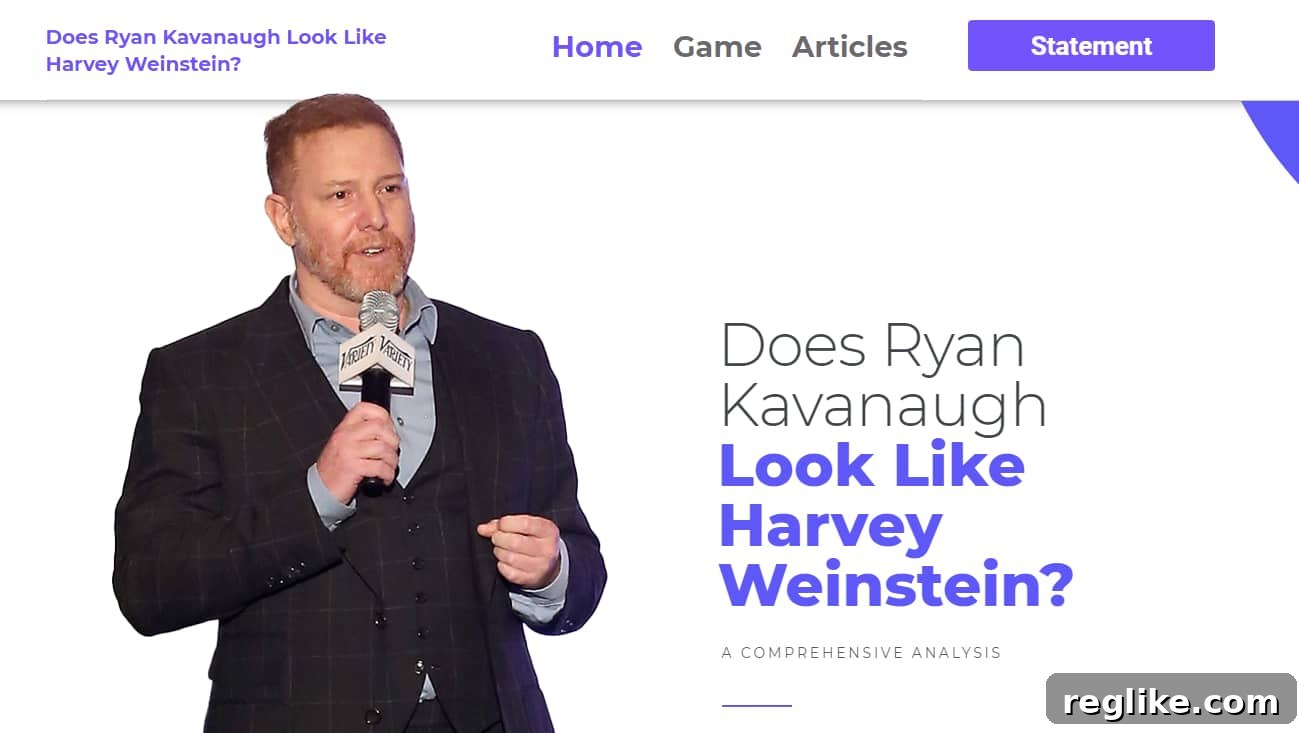
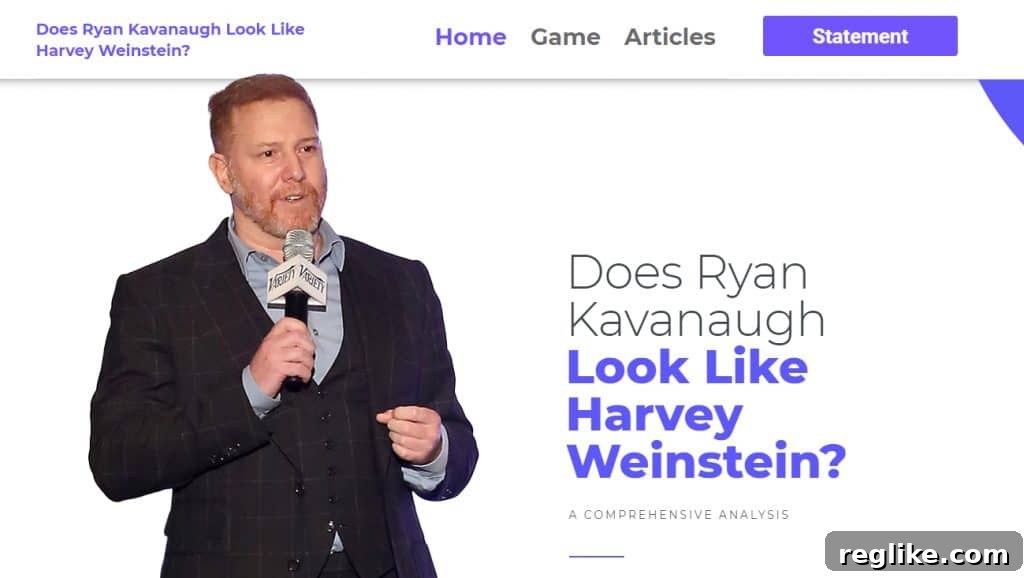
Ryan Kavanaugh, a significant figure in the entertainment industry known for his work with Relativity Media and Triller, has initiated a cybersquatting complaint under the UDRP framework. His objective is clear: to dismantle the website created by Ethan Klein, co-host of the H3 Podcast and H3H3 Productions. The domain name itself, “doesryankavanaughlooklikeharveyweinstein.com,” immediately signals its critical and confrontational nature, drawing a contentious comparison between Kavanaugh and the disgraced film producer Harvey Weinstein.
The website not only makes this visual comparison but also delves into aspects of Kavanaugh’s past, including widely reported DUI charges and other controversies. This digital platform serves as a repository for Klein’s commentary and allegations against Kavanaugh, fueled by an ongoing public feud that has spilled over from social media into legal arenas. Kavanaugh, asserting that the domain infringes upon his personal and professional brand, views the website as a malicious attack designed to damage his reputation and associate him with a highly negative public image.
This UDRP filing is not an isolated incident but rather a chapter in a larger legal battle. Kavanaugh had previously sued Klein, alleging defamation and other claims. In response, Kavanaugh himself has used platforms like CSQ.com to present his side of the story, discussing what he perceives as “the dark side of the power of social media.” Conversely, Ethan Klein provides his extensive counter-narrative and a detailed statement directly on the contested website, offering his perspective on the dispute and his justifications for creating the site.
Deconstructing the Uniform Domain Name Dispute Resolution Policy (UDRP)
To understand the likely outcome of Kavanaugh’s UDRP challenge, it’s crucial to grasp the fundamentals of this policy. The UDRP, administered by organizations like the World Intellectual Property Organization (WIPO), provides an expedited, administrative process for resolving disputes over domain name registrations. It’s designed to combat “cybersquatting,” which typically involves registering a domain name in bad faith, often to profit from a trademark or famous name, or to intentionally disrupt a competitor.
For a complainant like Ryan Kavanaugh to succeed in a UDRP action, they must prove three cumulative elements:
- The domain name is identical or confusingly similar to a trademark or service mark in which the complainant has rights. This means demonstrating a clear resemblance that could mislead internet users.
- The domain name registrant (Ethan Klein, in this case) has no rights or legitimate interests in respect of the domain name. This element often hinges on whether the registrant is using the domain for a legitimate non-commercial or fair use purpose.
- The domain name has been registered and is being used in bad faith. Bad faith typically implies an intent to commercially benefit from the complainant’s trademark, disrupt their business, or prevent them from using their mark in a domain name.
Failing to prove any one of these three elements will result in the denial of the UDRP complaint. The UDRP process is distinct from traditional court litigation; it is an administrative proceeding focused narrowly on domain name registration practices rather than broader issues of defamation or free speech, though these themes often loom large in the background.
Navigating the “Confusingly Similar” Hurdle for Critical Domains
One of the primary challenges for Kavanaugh lies in proving that “doesryankavanaughlooklikeharveyweinstein.com” is “confusingly similar” to his personal brand or a potential trademark. UDRP panels, particularly when dealing with critical or “sucks” domains, have historically shown a reluctance to find confusing similarity where the domain itself clearly signals criticism, parody, or satire rather than an official affiliation or endorsement.
The very nature of the domain name, structured as a question and explicitly linking Kavanaugh to a highly controversial figure, suggests an intent to criticize or comment, not to impersonate or create confusion about source or origin. Unlike a domain name such as “ryankavanaughofficial.com” registered by an unauthorized party, this domain acts as a platform for a specific, often negative, viewpoint. Panels often distinguish between domains intended to confuse consumers into believing they are visiting an official site and those clearly designed to host dissenting opinions. This distinction is paramount in cases involving freedom of expression.
Furthermore, UDRP panels frequently defer to the principles of free speech, particularly when the parties involved are U.S.-based. The UDRP is not designed to be a tool for suppressing legitimate criticism or commentary, even if that commentary is harsh or unflattering. Issues of defamation or libel are typically reserved for court systems, which are better equipped to handle the complexities of free speech jurisprudence.
Legitimate Interests and the Role of Online Criticism
The second UDRP element Kavanaugh must prove is that Ethan Klein has no legitimate rights or interests in the domain name. This is often where critical websites find their strongest defense. If a registrant can demonstrate that they are using a domain name for legitimate criticism, commentary, news reporting, or non-commercial purposes, they often satisfy this criterion.
Klein’s website, by its very content, functions as a platform for his critiques and public discussion concerning Ryan Kavanaugh. This falls within the broad ambit of free expression, which is generally considered a legitimate interest. Unless Klein is using the domain to commercially profit from Kavanaugh’s name in a misleading way, or to engage in genuine cybersquatting for resale, UDRP panels are typically hesitant to strip away domains used for genuine, albeit hostile, commentary. The explicit statement on the website itself, detailing Klein’s perspective, further reinforces its purpose as a platform for critical discourse rather than a commercial venture seeking to exploit Kavanaugh’s brand.
The Bad Faith Conundrum: Intent vs. Expression
Finally, proving “bad faith” in the registration and use of the domain name will be a significant hurdle for Kavanaugh. UDRP rules define bad faith in specific ways, often relating to commercial gain, disruption of a competitor’s business, or preventing a trademark owner from reflecting their mark in a corresponding domain name. While Klein’s actions might be perceived as hostile or damaging to Kavanaugh’s reputation, this does not automatically translate into “bad faith” as defined by UDRP.
Registering a domain name for the sole purpose of expressing a critical opinion, even a highly negative one, has often been distinguished from classic “bad faith” cybersquatting. Panels typically require evidence of commercial intent or a pattern of abusive registration. Without clear evidence that Klein registered the domain primarily to sell it to Kavanaugh for profit, or to intentionally disrupt Kavanaugh’s online business in a commercial sense, proving bad faith under UDRP guidelines becomes incredibly difficult. The intent here appears to be public commentary and criticism, not illicit commercial exploitation of a trademark.
The Impact of Parallel Legal Proceedings
Adding another layer of complexity to this UDRP case is the existence of parallel court proceedings. Ryan Kavanaugh has already filed a lawsuit against Ethan Klein, which likely addresses broader issues of defamation, libel, and other torts. UDRP panels often exercise discretion to decline disputes where ongoing litigation between the same parties regarding similar subject matter is taking place.
This approach helps to avoid conflicting legal outcomes and ensures that complex issues, particularly those involving nuanced free speech defenses, are handled by judicial systems that are specifically designed for such matters. The UDRP is a streamlined administrative process, not a substitute for a court of law equipped to weigh extensive evidence, hear oral arguments, and apply intricate legal standards regarding defamation and constitutional rights. Therefore, the existence of a prior or ongoing lawsuit could serve as an additional reason for the UDRP panel to dismiss Kavanaugh’s complaint without prejudice, allowing the court system to be the primary arbiter of this comprehensive dispute.
Historical Precedents: Echoes of Past “Sucks” Domain Cases
This case is not without precedent. It strongly echoes past domain disputes involving public figures and critical websites, many of which have favored free speech over trademark claims in the UDRP context. A notable example is the case involving conservative commentator Glenn Beck, who lost a UDRP dispute in 2009 over a critical meme site. In that instance, the panel similarly ruled that the domain, despite being critical and potentially damaging, did not meet the UDRP criteria for cybersquatting, particularly concerning confusing similarity and bad faith.
Such precedents underscore a consistent pattern in UDRP decisions: while trademark owners have rights, those rights are not absolute and must be balanced against the fundamental principles of free speech and legitimate criticism, especially online. UDRP panels are generally careful not to become instruments for censoring legitimate, albeit harsh, online commentary, recognizing the broader societal value of open discourse.
Conclusion: A Likely Outcome and Broader Implications
Considering the established principles of UDRP, the nature of the domain name, and existing legal precedents, it is highly probable that Ryan Kavanaugh’s UDRP complaint against “doesryankavanaughlooklikeharveyweinstein.com” will be denied. The domain clearly functions as a platform for criticism and commentary, making it difficult to establish “confusing similarity” or “bad faith” as defined by the policy. Furthermore, the strong protections for free speech in the U.S. and the existence of parallel court proceedings further tilt the scales against a successful UDRP outcome.
This case serves as a powerful reminder of the delicate balance between protecting intellectual property and safeguarding freedom of expression in the digital age. While public figures like Ryan Kavanaugh are entitled to protect their reputations and brands, the internet also provides a vital space for criticism, satire, and dissenting opinions. The UDRP is designed to prevent opportunistic cybersquatting, not to resolve complex disputes over online speech, which are best handled by the appropriate judicial systems. The eventual decision in this UDRP case will undoubtedly contribute to the ongoing narrative of how online criticism, celebrity feuds, and legal frameworks intersect in the ever-evolving landscape of the internet.