
The Evolving Landscape of Cybersquatting: Understanding the Decline in UDRP Filings
The digital realm, while offering unparalleled opportunities for businesses and individuals, also presents challenges related to intellectual property protection. One such challenge is cybersquatting, the practice of registering, selling, or using a domain name with the intent of profiting from the goodwill of a trademark belonging to someone else. While cybersquatting remains a concern, data reveals a significant decline in its prevalence, as evidenced by a decreasing rate of arbitration filings under the Uniform Domain Name Dispute Resolution Policy (UDRP).
Analyzing the Decline: UDRP Filings and .com Domain Growth
A comprehensive analysis conducted by Domain Name Wire, examining UDRP filings dating back to 2000, the year the UDRP was widely adopted, indicates a notable downward trend. To accurately assess the rate of cybersquatting, UDRP filings were compared to the total number of .com domain names registered each year. This comparison provides a valuable metric for understanding the relationship between domain name growth and the incidence of cybersquatting disputes.
It is important to acknowledge that .com domain names represent only a portion of the overall domain universe. However, the vast majority of UDRP filings pertain to .com domains, making this a relevant and significant dataset for analysis. The data reveals a substantial decrease in the rate of UDRP filings relative to the .com registration base. In 2000, the rate was approximately one UDRP filing for every 7,000 domains. By 2008, this rate had fallen to about one in 20,000 domains. Preliminary data from 2009 suggests a further decline, indicating a continued decrease in the incidence of cybersquatting relative to the growing number of registered domain names.
This decline signifies that the growth rate of UDRP cases has consistently lagged behind the growth rate of domain registrations, demonstrating a shift in the dynamics of the domain name landscape. As the number of domain names continues to increase, the proportion of domains involved in cybersquatting disputes is decreasing.
Methodology and Data Sources
To determine the total number of UDRP filings, Domain Name Wire compiled statistics from various sources. Data was obtained from the World Intellectual Property Organization (WIPO), the National Arbitration Forum, and UDRPsearch, a comprehensive database of UDRP decisions. Data from the Czech Arbitration Court, a relatively new service, was not included in the analysis to maintain consistency and comparability across the entire period studied.
The UDRP data was then compared to end-of-year .com registration data collected by Zooknic and DomainTools, reputable sources for domain name statistics. This comparison allowed for the calculation of the UDRP filing rate per .com domain name, providing a clear picture of the trend over time. The use of reliable data sources ensures the accuracy and validity of the analysis.
The consistent methodology employed throughout the study allows for a meaningful comparison of UDRP filing rates across different years. By focusing on .com domains and utilizing established data sources, the analysis provides a robust and reliable assessment of the evolving landscape of cybersquatting.
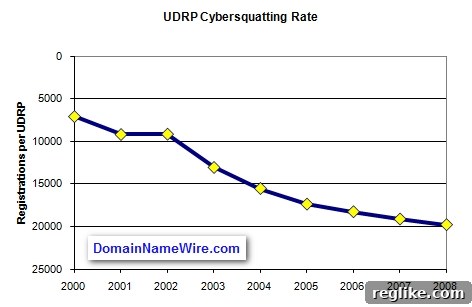
Graph illustrating the decreasing rate of UDRP cases relative to the total .com registration base. Note the inverted scale for clarity.
Factors Contributing to the Decline
The decrease in the rate of cybersquatting can be attributed to several factors, reflecting a growing awareness of domain name issues and a more proactive approach to protecting intellectual property rights. One significant factor is the increased knowledge and education about cybersquatting among domain registrants. As more individuals and businesses become aware of the potential risks and legal consequences associated with cybersquatting, they are less likely to engage in this practice.
Furthermore, the UDRP itself has played a crucial role in deterring cybersquatting. The UDRP provides a relatively quick and cost-effective mechanism for resolving domain name disputes, allowing trademark owners to reclaim domain names that infringe upon their rights. The availability of this remedy has discouraged potential cybersquatters from engaging in abusive domain name registrations.
Another contributing factor is the increasing sophistication of domain name registrars and registries in detecting and preventing cybersquatting. Many registrars have implemented systems to identify and flag suspicious domain name registrations, while registries are actively working to combat abusive practices. These efforts help to prevent cybersquatting before it occurs, reducing the need for UDRP filings.
The increased availability of information about domain name ownership and trademark rights has also contributed to the decline in cybersquatting. Potential domain registrants can easily research whether a particular domain name is associated with an existing trademark, helping them to avoid unintentional infringement. This transparency reduces the likelihood of unintentional cybersquatting.
Finally, the growing importance of online brand reputation has made businesses more vigilant in protecting their trademarks online. Companies are actively monitoring domain name registrations and taking swift action to address any instances of cybersquatting. This proactive approach deters potential cybersquatters and helps to maintain the integrity of online brands.
The Ongoing Importance of Brand Protection
While the rate of cybersquatting has declined, it is crucial for businesses to remain vigilant in protecting their trademarks and brand identity online. Cybersquatting can still pose a significant threat to a company’s reputation, revenue, and customer relationships. A strong brand protection strategy should include regular monitoring of domain name registrations, active enforcement of trademark rights, and employee education on cybersquatting and related issues.
Domain name monitoring services can help businesses to identify potential instances of cybersquatting quickly and efficiently. These services track domain name registrations worldwide and alert trademark owners to any domains that may infringe upon their rights. This allows businesses to take prompt action to address potential threats.
Enforcement of trademark rights is essential for deterring cybersquatting and protecting brand identity. Trademark owners should be prepared to file UDRP complaints or pursue other legal remedies to reclaim domain names that infringe upon their rights. A proactive enforcement strategy sends a clear message to potential cybersquatters that trademark infringement will not be tolerated.
Employee education is also crucial for preventing cybersquatting. Employees should be trained to recognize the signs of cybersquatting and to report any suspicious activity to the appropriate personnel. This helps to ensure that the company is aware of potential threats and can take timely action to address them.
Conclusion: A Positive Trend, But Continued Vigilance is Key
The decline in the rate of cybersquatting, as evidenced by the decrease in UDRP filings relative to .com domain registrations, represents a positive trend in the domain name landscape. This decline reflects a growing awareness of domain name issues, more effective enforcement mechanisms, and increased vigilance on the part of businesses. However, it is crucial to recognize that cybersquatting remains a threat, and businesses must continue to prioritize brand protection and take proactive steps to safeguard their intellectual property rights online.
By staying informed about the latest trends in domain name disputes, implementing robust monitoring and enforcement strategies, and educating employees on cybersquatting risks, businesses can minimize their exposure to this threat and maintain the integrity of their online brands. The fight against cybersquatting is an ongoing effort, and continued vigilance is essential for protecting intellectual property rights in the digital age.