
Unpacking Digital Identity: A Deep Dive into Local Business Domain Names
In today’s interconnected world, a business’s online presence is as crucial as its physical storefront. At the heart of this digital identity lies its domain name – the unique address that guides customers to a company’s website. A well-chosen domain name is a powerful asset, enhancing brand recognition, driving traffic, and building trust. Conversely, a poorly selected or improperly utilized domain can lead to confusion, lost opportunities, and even damage a brand’s reputation.
As an avid observer of effective branding and digital strategy, I often find myself reflecting on real-world examples. My local community pool and gym in Austin, Texas, provides an excellent, tangible case study. The perimeter fence, adorned with banners from various local businesses and supporters, offers a diverse collection of domain names. These banners serve as mini-advertisements, each attempting to capture attention and direct potential customers online. It’s a fascinating microcosm of local marketing efforts, presenting a spectrum of strategic successes and areas for improvement.
In this two-part series, we’ll embark on an analytical journey through these 13 domain names. We’ll examine each one through the lens of SEO, memorability, brand protection, and overall user experience. Our goal is to extract valuable lessons that any business, regardless of size or industry, can apply to strengthen its digital footprint. Let’s kick off with the first seven banners, dissecting their strengths, weaknesses, and the broader implications for online branding.
Domain Name Deep Dive: The First Seven Examples
1. ENTSAustin.com: A Geo-Specific Win with a Minor Pitfall

Analysis: This domain name exemplifies a strong local SEO strategy. By incorporating both the service (“ENTS” likely referring to Ear, Nose, and Throat specialists) and the specific geographic location (“Austin”), ENTSAustin.com immediately communicates what the business does and where it operates. This makes it highly relevant for local search queries and clear for residents seeking specialized medical care in the area. Geo-targeted domains are often favored by search engines for local results, contributing to higher visibility among a relevant audience.
Potential Concern: The primary issue here lies in the pluralization. While “ENTS” might be the official business abbreviation, many users might instinctively remember or type the singular “ENTAustin.com.” A quick check reveals that this singular version is, unfortunately, owned by another entity. This oversight presents a significant risk of user confusion and potential loss of traffic to a different, possibly competing, service. It underscores the critical importance of defensive domain registration – securing common misspellings, singular/plural variations, and even hyphenated versions of your core domain. Failing to do so can redirect potential customers away from your business and toward an unintended destination, diluting your marketing efforts and potentially harming your brand’s online presence.
2. StDavids.com: The Power of Established Brand Recognition

Analysis: StDavids.com is an exemplary domain for a well-established institution. In Austin, St. David’s HealthCare is a major hospital chain, a household name synonymous with medical care. The domain name itself is short, memorable, and directly reflects the widely recognized brand. For entities with significant offline recognition, a concise and direct domain name like this is highly effective. It capitalizes on existing public awareness, making it incredibly easy for people to recall and type. There’s no need for additional descriptive words or geographic indicators because the brand itself carries all the necessary information and trust.
Strengths: Its brevity contributes significantly to memorability, reducing the chance of typos. The strong brand association means users aren’t guessing what the site offers; they already know. This type of domain is a testament to the power of building a robust brand identity over time, where the name alone is enough to convey trust, quality, and recognition. It’s a seamless transition from real-world reputation to online accessibility, offering a direct and undisputed digital pathway for its community.
3. LakelineOaksRetirement.com: Descriptive Clarity vs. Length
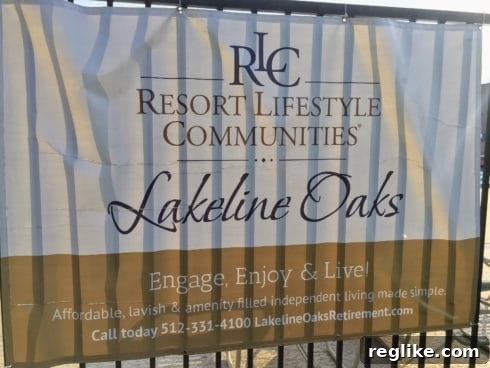
Analysis: This domain name is notably long, but it compensates with exceptional clarity. “LakelineOaksRetirement.com” leaves no room for ambiguity: it’s a retirement community located in or around the Lakeline Oaks area. For businesses targeting a very specific niche or demographic, a descriptive domain can be highly beneficial, as it immediately tells potential visitors exactly what to expect. While longer domains can sometimes be harder to remember or type, the specificity here might outweigh that drawback for its intended audience, who are likely searching for precisely these services.
Considerations: The original content mentions that “LakelineOaks.com” is owned by a realtor and was registered long before the retirement community. This is a classic example of a missed opportunity for a shorter, more premium domain. While adding “Retirement” clarifies the service, it also forces a longer name. This highlights the importance of thorough domain research and availability checks during the early stages of business naming. Having the core, shorter domain would have provided a more streamlined online presence, potentially attracting more direct traffic. Businesses often face this challenge, needing to decide between a longer, more descriptive name or a shorter, more brandable one that might require more marketing effort to establish context. In this case, the decision leans heavily towards descriptive utility.
4. Ready to Run: The Missed Call to Action

Analysis: This example presents one of the most fundamental advertising missteps. The banner simply reads “Ready to Run” without any accompanying domain name, website address, or even a QR code. While the name itself might be catchy or convey a particular brand message, its effectiveness as an advertisement is severely hampered by the absence of a clear call to action (CTA). An advertisement’s primary purpose is to inform and guide potential customers toward engagement. Without a digital destination, the banner fails to bridge the gap between initial interest and tangible interaction.
Lost Opportunity: The original text reveals that the company does possess a domain, ReadyToRunTexas.com. Not displaying this crucial piece of information on the banner is a significant oversight. Viewers who see “Ready to Run” are left to guess how to find the business online, or they simply won’t bother. This can lead to lost impressions, wasted advertising spend, and ultimately, missed business opportunities. Effective advertising, especially in physical spaces, demands clear and direct instructions on how to learn more or make a purchase. This serves as a vital reminder that even a strong brand or a great product needs an accessible pathway to its online home for marketing efforts to truly pay off.
5. ProsperityBankUSA.com: A Brand Protection Hazard
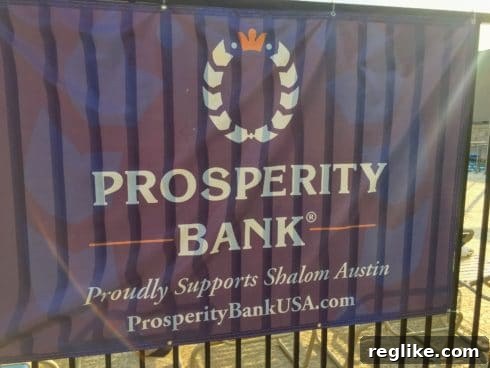
Analysis: The domain ProsperityBankUSA.com immediately raises concerns regarding brand protection and user experience. While the inclusion of “USA” might be intended to specify its national reach or distinguish it from international entities, it introduces a significant risk. As noted in the original analysis, dropping the “USA” part – a very common and natural user behavior when trying to remember or type a domain – leads to an entirely different bank. This scenario is particularly dangerous for financial institutions, where trust, security, and accurate information are paramount.
Implications: Customers looking for Prosperity Bank might instinctively type ProsperityBank.com, only to be redirected to a competitor or an unrelated financial service. This not only causes confusion and frustration but can also erode trust and lead to potential security risks if users input sensitive information on the wrong site. For critical services like banking, defensive domain registration is non-negotiable. Owning both the specific (ProsperityBankUSA.com) and the more generic (ProsperityBank.com) versions, and redirecting the latter to the former, would be a standard best practice to prevent such detrimental misdirection. This example highlights how a seemingly minor addition to a domain name can create major headaches and compromise customer confidence, emphasizing the need for robust brand protection strategies in the digital realm.
6. Goldstein-Insurance.com: The Hyphen Dilemma
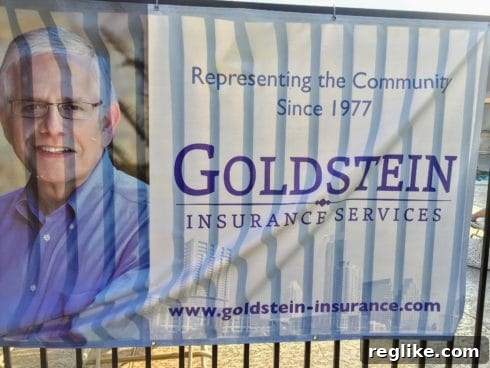
Analysis: Hyphens in domain names are a frequently debated topic in the world of online branding, and Goldstein-Insurance.com provides a classic illustration of the challenges. While a hyphen can visually break up words for readability, especially in longer, multi-word domains, they are generally advised against for several key reasons. The most critical issue, perfectly exemplified here, is user behavior: most people instinctively omit hyphens when typing a web address. Consequently, users attempting to reach “Goldstein-Insurance.com” are highly likely to type “GoldsteinInsurance.com.”
The Core Problem: The original content explicitly states that the unhyphenated version, GoldsteinInsurance.com, is *not* owned by this company. This represents a significant brand vulnerability and a continuous loss of potential traffic. Every person who types the natural, hyphen-free version is either encountering an error page, landing on a different site (perhaps a competitor), or giving up altogether. While the hyphen might have been chosen for stylistic reasons or because the unhyphenated version was already taken, the absence of defensive registration for the more intuitive version is a critical flaw. For businesses considering hyphenated domains, the golden rule remains: always secure the unhyphenated counterpart and set up a redirect to ensure all potential traffic reaches the intended destination. Without this crucial step, the hyphen becomes a barrier rather than an aid, undermining accessibility and brand consistency.
7. Pro-Tape.com: A Nod to Legacy, But Caution Advised

Analysis: Pro-Tape.com, much like Goldstein-Insurance.com, employs a hyphen in its domain name. However, the original analysis extends a “pass” due to a sense of nostalgia, perhaps implying that this domain has a long-standing history or operates within an industry where such naming conventions were more common in the past. While this sentimental concession is understandable, it’s essential to critically evaluate the practical implications of a hyphenated domain, even for legacy brands.
The Reality of Hyphens: Despite any nostalgic value, the fundamental challenges of hyphens persist. Users are still prone to omitting them, leading to the same potential issues of lost traffic and user confusion discussed with Goldstein-Insurance.com. If ProTape.com is not owned by this company and redirected to Pro-Tape.com, the business is still vulnerable to misdirection and missed opportunities. The “pass” here might reflect a historical context where domain naming was less sophisticated, or a brand was so established that it could overcome minor digital hurdles. However, for any new or evolving business, the advice remains consistent: prioritize unhyphenated domains. If a hyphen is absolutely necessary for branding or clarity, securing and redirecting the unhyphenated version is a non-negotiable safeguard to maintain a robust and accessible online presence in today’s digital landscape. The lessons from these examples underscore that while some legacy domains can be charming, modern best practices lean heavily towards simplicity and user-friendliness to maximize online discoverability and engagement.
Key Takeaways from the First Seven
Our initial exploration of these seven domain names from the community pool banners offers a wealth of insights into effective, and less effective, online branding strategies. We’ve seen firsthand the paramount importance of memorability, the critical need for brand protection through defensive domain registrations, and the impact of clear calls to action in advertising. The analysis of ENTSAustin.com and LakelineOaksRetirement.com highlighted the double-edged sword of descriptive domains: while they clarify offerings, they also demand careful consideration of length and potential conflicts with similar names.
The cases of “Ready to Run” and ProsperityBankUSA.com served as stark reminders of the perils of incomplete advertising and inadequate brand safeguarding, especially for sensitive sectors like finance. Finally, the discussions around Goldstein-Insurance.com and Pro-Tape.com reiterated the enduring challenge of hyphenated domains and the crucial necessity of owning and redirecting their unhyphenated counterparts. Every domain name functions as digital real estate; its value is directly proportional to its accessibility, clarity, and protection.
As we conclude this first part, it’s clear that crafting an effective online identity goes far beyond merely registering a name. It requires strategic foresight, an understanding of user behavior, and a commitment to protecting your brand across the vast digital landscape. There are still six more banners to dissect, each promising further valuable lessons in the intricate art and science of domain name selection. Stay tuned for the next installment, where we’ll continue our journey to uncover more insights from the Austin community pool’s digital supporters.