
The Peril of Expired Domains: A Kenner Watchdog’s Digital Identity Hijacked
In the digital age, a domain name is more than just an address; it’s the cornerstone of an organization’s online identity, a repository of its history, and a vital conduit for its mission. For advocacy groups and non-profits, this digital real estate is particularly crucial, serving as a primary platform for outreach, information dissemination, and community engagement. However, as one Kenner, Louisiana-based government watchdog group recently discovered, failing to safeguard this essential asset can lead to unforeseen and significant consequences.
A Digital Oversight with Real-World Repercussions
The incident revolves around “Citizens for a Better Kenner, Inc.” (CFBK), a dedicated non-profit organization established as a government watchdog in the city of Kenner, Louisiana. For nearly a decade, CFBK utilized its domain name, CitizensforaBetterKenner.com, as a central hub for its activities, promoting transparency and advocating for good governance within the local administration. This website was the public face of their efforts, embodying years of accumulated goodwill and community trust.
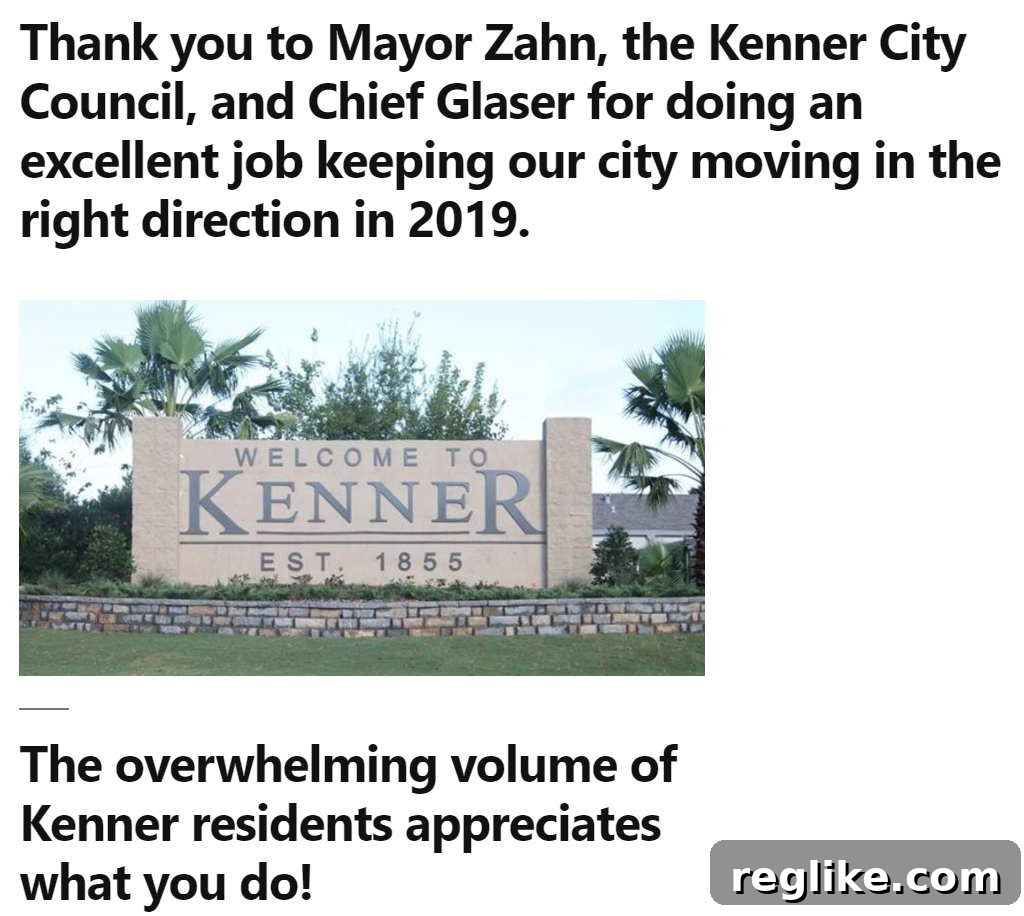
However, earlier this year, an administrative oversight led to the group allowing its crucial domain name to expire. The digital vacuum created by this lapse was swiftly filled, not by another neutral party, but by someone holding a dramatically different viewpoint. The domain was re-registered, and the website’s content underwent a complete metamorphosis. Instead of critical oversight, visitors to CitizensforaBetterKenner.com are now greeted with messages of unequivocal praise for the very officials CFBK historically monitored.
Thank you to Mayor Zahn, the Kenner City Council, and Chief Glaser for doing an excellent job keeping our city moving in the right direction in 2019.
The overwhelming volume of Kenner residents appreciates what you do!
This striking shift in messaging highlights the profound vulnerability inherent in domain expiration. What was once a platform for independent scrutiny is now seemingly a mouthpiece for government commendation, creating immense confusion and potentially eroding public trust in CFBK’s original mission.
The Legal Battle: Cybersquatting vs. Free Speech
In response to this digital takeover, Citizens for a Better Kenner has initiated legal action, filing a lawsuit seeking to reclaim not only the .com domain but also the corresponding .net and .org versions, alongside financial damages. The non-profit’s core argument rests on the assertion of “cybersquatting” – the practice of registering, trafficking in, or using a domain name with bad-faith intent to profit from the goodwill of another’s trademark.
CFBK alleges that the new owner of the domain exhibits “a bad faith intent to profit from the goodwill created over eight (8) years by CFBK.” They contend that “The opinions and content as currently displayed on the website are in stark contrast to the actual opinions of the actual CFBK,” thereby creating an intentional misrepresentation designed to capitalize on their established reputation.
However, successfully proving cybersquatting in this particular scenario may present a significant challenge for CFBK. A critical element in many cybersquatting cases, particularly under the Anticybersquatting Consumer Protection Act (ACPA) in the United States, is demonstrating a “bad faith intent to profit.” In this instance, the current domain owner does not appear to be using the website for commercial gain or to direct traffic to competing businesses. Instead, their actions seem to be an exercise of free speech, using the acquired domain to express political opinions that align with the current administration. This distinction could form a plausible defense, as the motivation appears to be ideological rather than financial.
The legal landscape here is complex, balancing trademark rights and the established goodwill of an organization against the fundamental right to free expression. While the new content clearly misrepresents CFBK’s stance and could lead to significant public confusion, demonstrating malicious commercial intent might be difficult. This case underscores the fine line between legitimate political expression and actions that undermine an organization’s digital identity and mission.
Broader Implications for Non-Profits and Digital Identity
This incident serves as a stark reminder of the critical importance of robust domain management and digital asset protection for all organizations, especially non-profits and advocacy groups whose credibility hinges on clear and consistent messaging. The fallout from an expired domain can extend far beyond a mere technical hiccup:
- Loss of Trust and Brand Dilution: When an organization’s official website suddenly displays contradictory information, public trust is eroded. Stakeholders, donors, and community members become confused, potentially disengaging from the group’s true cause.
- Reputational Damage: The association with conflicting messages can permanently damage a group’s reputation, making it harder to attract support, volunteers, and funding in the future.
- Security Risks: Expired domains can be registered by malicious actors for phishing scams, malware distribution, or to spread misinformation, further harming the original organization’s brand and potentially exposing its former visitors to harm.
- Disruption of Operations: Beyond the website, many organizational functions like email services are often tied to the domain. An expired domain can cripple communication channels, causing operational chaos.
- Costly Recovery: Even if a domain can be recovered, the legal fees, administrative costs, and the effort required to rebuild trust and re-establish online presence can be substantial.
Best Practices for Proactive Domain Management
To prevent similar scenarios, organizations, particularly those with a public-facing mission, must adopt rigorous domain management strategies:
- Enable Automatic Renewals: This is arguably the most crucial step. Most domain registrars offer automatic renewal services, ensuring domains are renewed well before their expiration date.
- Maintain Up-to-Date Contact Information: Ensure that the administrative, technical, and billing contacts associated with the domain are current and accessible to multiple trusted individuals within the organization. This prevents lapses due to staff turnover or outdated contact details.
- Register for Longer Periods: Where financially feasible, register domain names for multiple years (e.g., 5 or 10 years) rather than year-to-year. This reduces the frequency of renewal reminders and the risk of oversight.
- Secure Multiple Top-Level Domains (TLDs): Proactively register common variations of your domain name (.net, .org, .info, etc.) to prevent others from using them to confuse your audience or dilute your brand.
- Implement Domain Privacy: While not directly preventing expiration, domain privacy services help protect your contact information from public WHOIS databases, reducing spam and potential targeted attacks.
- Regular Audits: Periodically review all digital assets, including domain registrations, SSL certificates, and hosting agreements, to ensure everything is current and secure.
- Trademark Your Brand: If your organization’s name or logo is central to your identity, consider registering it as a trademark. This provides stronger legal grounds for defending your brand against cybersquatting and misuse.
- Educate Staff: Ensure relevant team members understand the importance of domain names and the procedures for their management and renewal.
Conclusion: A Call for Vigilance in the Digital Landscape
The case of Citizens for a Better Kenner serves as a powerful cautionary tale in an increasingly complex digital world. It highlights the often-underestimated fragility of online identities and the profound impact a simple administrative lapse can have on an organization’s mission and public perception. While the legal battle unfolds to determine the boundaries of free speech against established goodwill, the immediate lesson is clear: robust and proactive domain name management is not merely a technical task but a fundamental aspect of organizational resilience and brand protection.
For non-profits and advocacy groups, whose work often relies on public trust and clear communication, safeguarding digital assets like domain names is paramount. In the continuous pursuit of their missions, these organizations must remain vigilant, ensuring their digital foundations are as secure and steadfast as their commitment to their cause.