
Navigating the Volatility: A Deep Dive into Domain Name Company Stocks
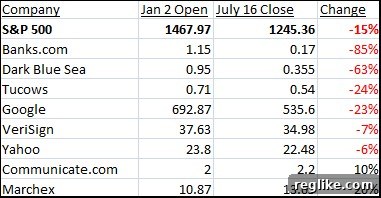
The global financial markets have recently faced a period of significant turbulence, characterized by widespread declines across various sectors. Within this challenging economic environment, the domain name industry, a critical yet often specialized segment of the digital economy, has experienced its own set of unique pressures and opportunities. While the broader market, typified by a notable percentage decline in indices like the S&P 500, has presented a tough landscape for investors, the performance of domain-related companies has been remarkably varied. Some “pure-play” domain entities have demonstrated unexpected resilience and even growth, while others have contended with considerable headwinds, reflecting both broader market sentiment and specific operational complexities inherent to their business models.
This comprehensive analysis aims to dissect the recent stock performance of key companies operating within or closely tied to the domain name ecosystem. We will delve into the underlying factors driving their trajectories, from core business strategies and revenue streams to external economic influences and competitive dynamics. Understanding the diverse facets of this industry—encompassing domain registrars, registry operators, monetization services, and digital asset holders—is crucial for grasping why certain companies flourish while others falter in an unpredictable market. By examining individual cases, we can glean valuable insights into the stability, growth potential, and inherent risks associated with investing in this vital corner of the internet economy.
The Dynamic Landscape: Market Challenges and Domain Industry Responses
Economic downturns typically exert pressure across nearly all industries, but their impact can vary significantly depending on a sector’s fundamentals and its sensitivity to consumer spending or corporate investment. The domain name sector, intrinsically linked to online advertising, digital infrastructure, and the foundational aspects of internet presence, often serves as an interesting barometer for digital economic health. When advertising budgets are constrained, or new business formations slow down, companies reliant on domain parking revenues or high volumes of new domain registrations can face immediate challenges. Conversely, entities providing essential infrastructure services, such as domain registry operators, often exhibit greater stability. Their revenue streams are frequently tied to recurring renewal fees and may even be buttressed by regulated price increases, making them more resilient to cyclical economic fluctuations.
The prevailing market sentiment, characterized by a general de-risking among investors, forces a closer scrutiny of business models and financial health. This period, therefore, acts as a crucial stress test, highlighting which companies possess the agility, strategic foresight, and financial robustness required not just to survive but potentially to emerge stronger. For investors keenly observing the digital asset landscape, recognizing these nuances is paramount to identifying where value and growth might still exist. Let’s now pivot to a detailed examination of how specific domain-related companies have performed, shedding light on the unique narratives behind their recent stock movements.
Spotlight on Key Domain-Related Stocks: Performance Analysis
Here’s an in-depth review of selected companies within the domain name ecosystem, providing context to their recent stock performance and the strategic decisions or market forces influencing their positions.
Banks.com (AMEX: BNX) – Navigating Significant Headwinds and Strategic Pivots
Banks.com has endured an exceptionally challenging period, marked by a dramatic depreciation in its stock value. As a company that has historically held valuable digital assets, notably IRS.com, its recent struggles underscore the inherent risks and complexities associated with managing premium domain portfolios. The rumored $10 million acquisition of IRS.com was widely seen as a strategic move to leverage a highly trafficked, category-defining domain for substantial revenue generation. However, reports suggesting the company was compelled to forward IRS.com traffic to its primary domain indicate a significant deviation from its intended monetization strategy. Such a redirection can drastically reduce direct advertising revenue, lead generation, or direct sales opportunities typically associated with a premium domain, thereby directly impacting the company’s financial potential and investor confidence.
Further exacerbating its difficulties, Banks.com has reportedly faced challenges in adhering to the covenants of a substantial $7 million note. Failure to meet loan covenants is a serious financial predicament that can trigger adverse consequences, including the potential forfeiture of underlying collateral. In this scenario, concerns have been raised about the risk of losing its foundational domain assets, which form the core value proposition of the company. The prior discontinuation of its ParkingDots service, a domain parking platform, further illustrates a pattern of operational setbacks and strategic adjustments that have yet to yield positive, stabilizing results. The convergence of diminished revenue capacity from key assets and critical financial obligations places Banks.com in a precarious position, demanding a clear and effective turnaround strategy to restore shareholder value.
Dark Blue Sea (ASX: DBS.AX) – The Ebbing Tide of Domain Parking Revenues
Dark Blue Sea, an Australian-listed entity and the parent company behind Fabulous, a prominent domain portfolio manager and parking service provider, has also experienced a substantial decline in its stock value. The primary driver for this downturn appears to be the broader industry trend of declining domain parking revenues. Domain parking, a business model centered on displaying advertising on undeveloped domain names, has faced increasing pressure from several fronts. These include evolving search engine algorithms that de-emphasize parked pages, heightened competition for online advertising placements, and a general maturation of the digital advertising market, all of which contribute to reduced profitability for simply parking domains for ad revenue.
Moreover, as an Australian company, Dark Blue Sea’s financial performance is likely impacted by fluctuations in foreign exchange rates, particularly its exposure to the U.S. dollar. A depreciating U.S. dollar against the Australian dollar would translate into lower revenues when converted back into its native currency, further squeezing profit margins already under pressure. While the company has initiated strategic partnerships, such as a sales agreement with GoDaddy, the full benefits and impact of these collaborations are still anticipated to materialize. The hope is that such alliances will unlock new monetization channels or provide a more stable revenue foundation. Nevertheless, the inherent challenges facing domain parking-centric businesses in the current economic and technological landscape underscore the need for continuous innovation and diversification.
Tucows (AMEX: TCX) – Valuing a Diverse Digital Portfolio in a Shifting Market
Tucows, a diversified internet services provider, recognized for its extensive domain registration services, wholesale operations, and substantial domain portfolio, has also observed a significant decrease in its stock value. Despite proactive efforts to underscore the intrinsic value of its vast digital asset holdings—a common strategy for companies with significant domain inventories to bolster investor confidence—its stock has persisted under downward pressure. The market’s hesitance to fully appreciate the value of large domain portfolios can be attributed to several factors, including the often illiquid nature of many domain assets, the subjective methodologies involved in their valuation, and the ongoing maintenance costs associated with holding them.
As a leading domain registrar, Tucows operates within a highly competitive market environment. While its wholesale domain services provide a robust and recurring revenue stream, broader market sentiment and investor perceptions regarding growth prospects within the traditional domain registration space can significantly influence its stock performance. The consistent decline in its share price suggests a market apprehension that may not be fully acknowledging the long-term asset value of its portfolio or the stability offered by its recurring revenue streams from registration services. Moving forward, Tucows’ ability to clearly articulate and demonstrate viable pathways for monetizing its assets and expanding its service offerings will be pivotal in re-engaging investor interest and reversing its current stock trajectory.
Google (NASDAQ: GOOG) – The Tech Giant’s Market Sensitivity
As a global technology behemoth, Google’s stock performance is intricately tied to the overall health and prevailing sentiment of the broader market, particularly within the dynamic technology sector. Its extensively diversified revenue streams, spanning from dominant search advertising and rapidly growing cloud computing to a myriad of other internet services, typically offer a degree of insulation from sector-specific shocks. However, during periods of widespread market downturn, even the largest and most fundamentally sound companies can see their valuations affected as investors globally gravitate towards de-risking their portfolios and prioritizing safer, more stable assets.
Google’s involvement in the domain name space is multifaceted and profound, ranging from its role as a significant domain registrar (Google Domains) to its foundational impact on online advertising, which indirectly shapes domain monetization strategies across the industry. The company’s inherent resilience during challenging economic times often hinges on its unparalleled capacity for innovation and its strategic ability to capitalize on market shifts. The perpetually evolving competitive landscape in technology, coupled with the relentless demand for adaptation, signifies that while Google remains an undisputed market leader, it is not entirely immune to the macroeconomic currents that sway investor perception and influence stock valuations. Its future performance will continue to serve as a key indicator for the broader tech sector, heavily influenced by its strategic responses to competitive threats and its ongoing success in capturing new market opportunities globally.
VeriSign (NASDAQ: VRSN) – A Pillar of Stability in a Volatile Digital Infrastructure
VeriSign distinguishes itself as one of the companies demonstrating remarkable resilience against significant market volatility, with its stock experiencing only a modest decline in comparison to the broader market’s steeper drops. This robust performance fundamentally underscores the inherent stability of its core business model. As the exclusive registry operator for the ubiquitous .com and .net top-level domains, VeriSign occupies an exceptionally unique and critical position within the internet’s foundational infrastructure. Its revenue streams are primarily derived from highly predictable and recurring domain renewal fees, making it significantly less susceptible to the cyclical economic fluctuations that frequently impact advertising-dependent businesses or those operating in highly competitive consumer-facing markets.
A pivotal factor contributing to VeriSign’s consistent and strong performance is its ability to implement automatic price increases for domain registrations and renewals. These adjustments are often stipulated within its long-term agreements with ICANN and the U.S. Department of Commerce. These regulated price uplifts provide a consistent and reliable boost to its revenue streams, effectively acting as a natural hedge against inflation and broader economic downturns. This unparalleled advantage, combined with the absolutely essential nature of its services (as every .com and .net domain globally relies on VeriSign for its fundamental operation), positions the company as a relative safe haven for investors. It appeals to those seeking stability and predictable returns within the technology sector, even amidst periods of profound market stress. VeriSign’s operational efficiency and critical infrastructure role allow it to effectively withstand broader economic pressures, distinguishing it significantly from many of its peers.
Yahoo (NASDAQ: YHOO) – Navigating Persistent Corporate Transformations
Yahoo, a name once synonymous with the early internet boom, has endured a complex and frequently tumultuous corporate journey, a narrative visibly reflected in its stock performance. While experiencing a relatively modest decline compared to some of its more challenged counterparts, its trajectory has been characterized by ongoing strategic challenges, numerous leadership changes, and persistent questions about its long-term viability. The “saga” often used to describe Yahoo refers to its enduring struggle to redefine its identity and reclaim a competitive edge within a rapidly evolving digital landscape, increasingly dominated by newer, more agile tech giants. Its historically diverse portfolio of internet properties, encompassing search, advertising, and various media platforms, has faced relentless competition, leading to fluctuating revenues, diminishing market share, and pervasive investor uncertainty.
The company’s stock performance is frequently a direct reflection of investor confidence in its management’s ability to successfully execute turnaround strategies, foster meaningful innovation, and effectively unlock shareholder value from its remaining assets. Periods of market downturn tend to exacerbate these underlying concerns, as investors become inherently more risk-averse and demand clearer, more compelling pathways to sustained profitability and growth. The ongoing narrative surrounding Yahoo powerfully highlights the critical importance of strong, decisive leadership and a coherent, adaptable business strategy in navigating the profound complexities of the technology industry. This is particularly true for legacy companies striving to remain relevant and competitive against disruptive forces. Its future prospects remain intrinsically tied to its capacity for adaptation and its ability to effectively capitalize on its remaining user base and valuable digital assets.
Communicate.com (OTCBB: CMNN.ob) – The Buzz of Strategic Repositioning
Communicate.com has presented a fascinating and often volatile case study in stock performance, characterized by significant and sometimes dramatic swings. Despite experiencing sharp downturns at various points, the company has managed to achieve a notable positive return year-to-date, indicative of periods of intense investor interest and speculative trading activity. Such performance is often a hallmark of smaller, over-the-counter listed companies undergoing significant strategic transformations or successfully generating considerable market “buzz.” The company’s announced impending name change to “Live Current Media” strongly signals a strategic repositioning, likely aimed at reflecting a profound shift in its core business focus or a comprehensive rebranding effort designed to better align with its future aspirations in the digital media space.
These rebranding initiatives, particularly when coupled with ambitious new business ventures or high-profile strategic partnerships, can generate significant excitement among investors, often leading to periods of rapid stock appreciation. However, the inherent volatility of such stocks also means they are susceptible to equally sharp corrections, frequently triggered by profit-taking, unmet operational expectations, or broader market jitters. The fundamental challenge for Communicate.com, or Live Current Media as it prepares to become, lies in translating this initial market enthusiasm into sustainable, long-term growth and consistent profitability. The market will undoubtedly closely scrutinize its execution of new strategies and its ability to deliver on the promises implied by its rebranding and renewed focus, which will be crucial for solidifying its gains and mitigating its susceptibility to dramatic stock fluctuations.
Marchex (NASDAQ: MCHX) – Capitalizing on Local Search and Advertising Trends
Marchex has distinguished itself with a robust positive stock performance, signaling growing investor confidence in its strategic direction and unique market positioning. The company’s core business model is intently focused on local search and advertising, a segment that has demonstrated impressive growth potential even amidst broader economic uncertainties. Marchex strategically leverages its extensive portfolio of domain names and advanced call tracking technology to effectively connect consumers with local businesses, providing invaluable leads and sophisticated analytics to its clients. This “bet on local” strategy places Marchex in an excellent position to capitalize on the increasing trend of consumers seeking local services and products online, alongside businesses’ growing investment in highly targeted, measurable advertising solutions.
While the broader market continues to grapple with widespread uncertainty, Marchex’s specialized and focused approach appears to resonate strongly with investors actively seeking growth opportunities within specific, high-potential niches. The company’s ability to consistently demonstrate tangible value to local businesses through its lead generation and analytics platforms provides a compelling investment narrative. Although the “jury is still out” on the pervasive long-term impact of its strategy, its current stock performance strongly suggests that early indicators are overwhelmingly positive. Continued success for Marchex will hinge on its capacity to scale its offerings efficiently, maintain its competitive edge within the rapidly evolving local search ecosystem, and effectively monetize its unique data and technological assets. Its positive trajectory serves as a compelling example of how highly focused strategies in specific, high-growth market segments can yield strong returns even during challenging economic periods.
Broader Implications and Future Outlook for the Domain Name Industry
The diverse performance observed across these domain-related stocks offers a compelling microcosm of the broader shifts, challenges, and opportunities within the expansive internet industry. It clearly highlights a significant divergence between companies that serve as fundamental infrastructure providers, such as VeriSign, those heavily reliant on volatile advertising-centric models, like Dark Blue Sea and to some extent Banks.com, and those that are successfully innovating within specialized, high-growth niches, such exemplified by Marchex. The market, in times of uncertainty, unequivocally tends to reward stability, essential services, and clear pathways to profitability, while rigorously scrutinizing business models susceptible to economic downturns, technological obsolescence, or significant operational missteps.
For both astute investors and active industry participants, this in-depth analysis underscores several critical takeaways and considerations for the future:
- Importance of Diversified and Stable Revenue Streams: Companies with multiple, robust, and predictable revenue sources, or those providing essential, non-discretionary services, are significantly better equipped to weather economic storms and market fluctuations.
- Effective Asset Monetization Strategies: The true and sustainable value of a domain portfolio transcends its mere size. It lies fundamentally in the company’s ability to effectively and consistently monetize those assets, whether through direct development, sophisticated lead generation, or strategic sales.
- Agility and Strategic Adaptation: The capacity to pivot business models, strategically rebrand, or successfully enter new, high-growth market segments (e.g., local search, digital media) is absolutely critical for long-term survival and sustained growth, especially for companies facing significant headwinds in their traditional markets.
- Strong Leadership and Prudent Financial Governance: Sound management practices and rigorous financial governance are paramount. This becomes even more critical when companies are navigating complex financial obligations, adhering to loan covenants, or contending with intricate and volatile market conditions.
The domain name industry continues its dynamic evolution, constantly adapting to technological advancements, shifts in user behavior, and the ever-changing landscape of digital commerce. While periods of market volatility inherently present significant challenges, they also concurrently offer profound opportunities for well-managed, strategically focused companies to clearly distinguish themselves, innovate effectively, and ultimately emerge stronger. The ongoing performance and strategic responses of these companies will continue to serve as a continuous, vital narrative for understanding the overall health, future direction, and enduring resilience of the dynamic digital asset landscape.