
Navigating the Evolving Landscape of Domain Data Access: DomainTools Steps Up Amidst WHOIS Challenges
DomainTools Unveils Solution for Restricted WHOIS Access: Bringing Historical Data to Light
In the dynamic realm of domain name management and online security, access to comprehensive WHOIS data remains paramount. However, recent shifts in registrar policies have presented significant challenges to this critical information flow. One notable development was GoDaddy’s decision to restrict access for certain WHOIS services, creating an immediate need for alternative solutions.
Stepping into this breach, DomainTools, a leading provider of domain and IP intelligence, has introduced an innovative, albeit potentially interim, solution. Their platform now offers “recent WHOIS records” for domain names registered with GoDaddy, specifically addressing instances where current registrar-provided data lacks essential information. This move highlights the ingenuity required to maintain transparency and utility in an increasingly complex digital environment.
The Indispensable Role of WHOIS Data in the Digital Ecosystem
To fully grasp the significance of DomainTools’ initiative, it’s crucial to understand why WHOIS data is so vital. Traditionally, WHOIS records served as a public directory, providing contact information for domain name registrants. This transparency was foundational for several critical functions:
- Cybersecurity Investigations: Identifying the owners of malicious domains, phishing sites, or command-and-control servers is often the first step in threat intelligence and incident response.
- Brand Protection: Companies rely on WHOIS data to detect and address cybersquatting, trademark infringement, and other forms of online brand abuse.
- Legal and Regulatory Compliance: Law enforcement, legal teams, and regulatory bodies frequently use WHOIS information to resolve disputes, investigate crimes, and ensure compliance.
- Domain Investment and Research: Domain investors and researchers leverage historical WHOIS data to track ownership changes, identify trends, and assess the value of domain assets.
- Due Diligence: Before acquiring a domain or engaging with an online entity, checking WHOIS records provides essential background information.
However, the original open nature of WHOIS has evolved significantly due to privacy concerns, most notably with the advent of GDPR and similar regulations. This has led to a delicate balancing act between data privacy and the legitimate need for access to domain ownership information.
GoDaddy’s WHOIS Blocking: A Catalyst for Change
GoDaddy’s decision to block certain WHOIS services from accessing its full records sent ripples through the domain industry. While specific reasons cited might include efforts to combat data scraping, reduce resource strain, or enhance user privacy, the immediate effect was a noticeable gap in accessible domain intelligence.
This blocking mechanism meant that tools and services relying on direct WHOIS queries to GoDaddy’s systems would return incomplete or no information. For professionals who daily depend on comprehensive domain data – from security analysts tracking threats to brand managers defending intellectual property – this disruption posed a significant operational challenge. It underscored the vulnerability of relying on a single data source and amplified the need for resilient, multi-faceted data aggregation strategies.
DomainTools’ Strategic Response: Bridging the Information Gap
Recognizing the immediate impact of GoDaddy’s policy, DomainTools moved swiftly to provide a workaround. Their platform now intelligently displays a “recent WHOIS record” when official registrar data for a GoDaddy-registered domain is found to be incomplete or missing key details. This feature serves as a crucial stopgap, offering users a valuable snapshot of historical information that might otherwise be unavailable.
Here’s an illustrative example of how DomainTools presents this crucial information:
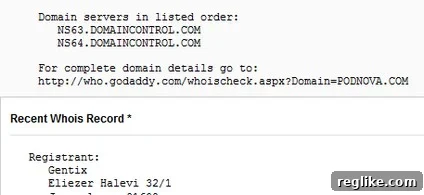
The accompanying note, “We provide this record when data provided by the registrar is missing key information,” clearly communicates the context and purpose of this historical data. It emphasizes DomainTools’ commitment to delivering actionable intelligence, even when facing external data limitations.
Understanding the “Recent WHOIS Record”: Limitations and Advantages
While DomainTools’ solution is a welcome development, it naturally comes with questions regarding the recency and provenance of these records. It’s not immediately clear how “recent” these records truly are, or if they were compiled and archived by DomainTools prior to GoDaddy’s blocking measures taking full effect. This distinction is crucial, as the utility of a “recent” record hinges on its proximity to the present moment.
Despite these uncertainties, the availability of such records is a significant advantage. In scenarios where current WHOIS data is intentionally obscured or entirely inaccessible, even slightly older information can provide invaluable clues. For instance, knowing the previous registrant, historical contact details, or past registration dates can often unlock further investigative paths, especially when tracking the evolution of a domain’s ownership or usage.
The experience of many users underscores this need. Numerous professionals have encountered situations where critical historical WHOIS information, essential for their investigations or due diligence, has become suddenly unavailable due to these blocking mechanisms. DomainTools’ proactive approach helps mitigate such data droughts, enabling continuous research and analysis.
The Broader Implications for Domain Intelligence and Data Access
This situation with GoDaddy and DomainTools is a microcosm of a larger, ongoing debate within the internet governance community regarding WHOIS access versus individual privacy. The tension between the legitimate needs of cybersecurity, brand protection, and legal enforcement on one side, and the imperative to protect personal data on the other, is unlikely to dissipate soon.
This scenario also highlights several key trends shaping the future of domain intelligence:
- Increased Reliance on Historical Data Archives: As real-time WHOIS access becomes more restricted, well-maintained historical databases like those offered by DomainTools will grow exponentially in value.
- Innovation in Data Aggregation: Services will need to become more sophisticated in how they gather, process, and present domain information, combining various sources and employing advanced analytics to overcome data silos.
- The Role of ICANN: The Internet Corporation for Assigned Names and Numbers (ICANN) will continue to play a pivotal role in shaping global WHOIS policies, attempting to strike a balance that serves all stakeholders.
- Diversified Data Strategies: Organizations will increasingly adopt diversified strategies, combining multiple domain intelligence tools, passive DNS data, SSL certificate records, and other data points to build a comprehensive picture.
Adapting to the New Reality: Strategies for Effective Domain Research
For individuals and organizations heavily reliant on domain data, adapting to this evolving landscape is key. Leveraging advanced tools like DomainTools, understanding the nuances of “recent” versus “real-time” data, and employing multi-source verification strategies are becoming standard practice. Furthermore, staying informed about policy changes from registrars and ICANN is crucial for anticipating future data access challenges.
DomainTools, through its continuous innovation, exemplifies how domain intelligence providers are striving to maintain transparency and utility in the face of these challenges. By offering readily available “recent WHOIS records,” they empower users to continue their critical work, even when confronted with data blockages from primary registrars.
Conclusion: The Future of Domain Transparency
The incident with GoDaddy’s WHOIS blocking and DomainTools’ subsequent solution underscores the dynamic nature of domain data access. While privacy concerns rightfully reshape how personal data is handled, the essential need for comprehensive domain intelligence for security, brand protection, and investigation remains undiminished. Services like DomainTools are instrumental in bridging these gaps, demonstrating resilience and adaptability in safeguarding the utility of WHOIS information. As the digital landscape continues to evolve, the ongoing quest for balanced, accessible, and accurate domain data will remain a critical frontier for all stakeholders.