
New platform helps security teams quickly find the source of attacks.
Revolutionizing Cyber Investigations: DomainTools Unveils the Iris Platform
In today’s rapidly evolving digital landscape, organizations face an unprecedented barrage of sophisticated cyber threats. The speed and stealth with which attackers operate demand equally agile and powerful defensive mechanisms. Identifying the origin of an attack, understanding its scope, and ultimately neutralizing the threat are paramount for maintaining operational integrity and protecting sensitive data. Recognizing these critical needs, DomainTools today announced the launch of its innovative Iris platform, a groundbreaking solution designed to empower security teams by significantly streamlining the investigation of security incidents and pinpointing their sources with unparalleled efficiency.
The introduction of Iris marks a pivotal moment in cybersecurity, offering companies a robust tool to navigate the complex web of threat intelligence. By integrating a vast array of DomainTools’ existing and proprietary data sets into a singular, intuitive workflow, Iris dramatically simplifies the process of connecting disparate pieces of information. While meticulously crafted to benefit enterprises that may not possess the extensive resources required to manage intricate systems tapping directly into DomainTools’ comprehensive API, its utility extends far beyond. Domain name attorneys, brand protection specialists, and a broad spectrum of professionals engaged in uncovering the true entities behind malicious or suspicious domain names will find Iris an indispensable asset.
Connecting the Dots: Unmasking Threats with Integrated Intelligence
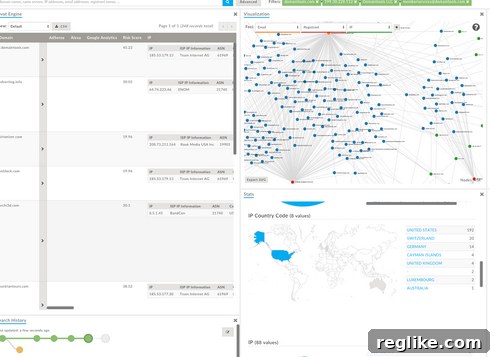
One of the most compelling features of the Iris platform is its ability to transform a single data point into a rich tapestry of interconnected intelligence. An investigation can commence with something as seemingly innocuous as a suspicious domain name, an IP address, an email artifact, or even a specific SSL certificate hash. From this initial anchor, Iris seamlessly connects the dots, correlating it with a wealth of other data points across DomainTools’ extensive database. This intricate web of relationships allows analysts to rapidly expand their understanding of an adversary’s infrastructure and modus operandi.
A significant challenge in modern cyber investigations is the pervasive use of WHOIS privacy services, which obscure the true ownership details of domain names. This anonymity often acts as a significant roadblock, hindering investigators from quickly identifying and attributing malicious activity. Iris adeptly circumvents these privacy layers by leveraging alternative, passive intelligence. It correlates domain names not just through direct ownership records, but also through shared infrastructure attributes. For instance, domains utilizing the same IP address, sharing identical MX records, or deploying the same Google Analytics and Adsense code, often reveal a common thread – suggesting they are controlled by the same malicious actor or organization. This indirect correlation capability is crucial for unmasking hidden networks and understanding the broader scope of a threat actor’s operations.
Beyond the Surface: Deep Dive into Data Correlation
The power of Iris lies in its sophisticated engine that processes and visualizes these connections. Imagine starting with a single malicious domain encountered in a phishing email. Iris can instantly show you other domains hosted on the same IP address, potentially revealing a cluster of attack infrastructure. It can highlight domains sharing identical name servers or mail exchange records, indicating a common host or operator. Furthermore, the ability to identify shared analytics or advertising IDs (like Google Analytics UA codes or AdSense publisher IDs) provides a powerful forensic link, as attackers often reuse these identifiers across multiple domains, inadvertently leaving a digital footprint that Iris can exploit. This multi-faceted approach to data correlation ensures that even the most determined adversaries struggle to remain anonymous for long.
Beyond static data points, Iris also incorporates historical data, allowing analysts to trace changes over time. Understanding when a domain was registered, when its IP address changed, or when new related domains appeared can provide crucial context, helping to establish timelines for attacks and anticipate future actions by threat actors. This historical context is invaluable for proactive threat hunting and predicting potential future targets or methods.
Real-World Impact: Proactive Defense Against Sophisticated Attacks
During a recent exclusive preview of the system, DomainTools executives vividly demonstrated the transformative potential of Iris through compelling real-world scenarios. In one particularly insightful example, the platform illustrated how a business could proactively identify and mitigate the threat posed by a sophisticated spear phishing campaign. By analyzing an initial malicious domain linked to the attack, Iris quickly revealed a network of other seemingly unrelated domain names associated with the same threat actor. These associated domains, potentially dormant or planned for future use, were part of the attacker’s broader infrastructure.
This capability to unveil an attacker’s entire operational footprint is a game-changer. Rather than reactively responding to individual phishing attempts as they occur, organizations leveraging Iris can gain a comprehensive understanding of the adversary’s preparatory actions. By identifying these additional malicious domains before they are actively deployed in an attack, the company can proactively block access to them across its network perimeters. This preemptive action significantly reduces the window of opportunity for attackers, preventing employees from falling victim to future phishing attempts and substantially bolstering the organization’s overall cybersecurity posture.
From Reactive to Proactive: Empowering Incident Response Teams
The shift from a reactive to a proactive security stance is a cornerstone of modern cybersecurity strategy, and Iris is engineered to facilitate this transition. Incident response teams, often overwhelmed by the volume and complexity of alerts, can leverage Iris to move beyond mere containment. Instead of simply shutting down a known malicious domain, they can use Iris to map out the entire threat infrastructure, identify related campaigns, and potentially uncover the identity or group behind the attacks. This deep contextual understanding allows for more effective remediation, ensures all facets of an attack are addressed, and provides invaluable intelligence for future defensive strategies.
Furthermore, Iris enhances the digital forensics process. When a breach occurs, time is of the essence. Investigators need to quickly understand the entry point, the extent of compromise, and any lateral movement. By starting with an indicator of compromise (IOC), such as a malicious IP address or a suspicious domain, Iris can rapidly build a profile of the attacker’s tools and infrastructure, accelerating the forensic analysis and guiding remediation efforts more precisely. This rapid correlation drastically cuts down the mean time to detect (MTTD) and mean time to respond (MTTR), critical metrics in any robust cybersecurity framework.
Streamlined Workflow and Continuous Monitoring
For many seasoned professionals familiar with the intricate nuances of using DomainTools’ extensive system for domain name investigation, the power of its underlying data is well understood. However, the Iris platform elevates this experience by fundamentally redesigning the workflow, making it remarkably more intuitive and accessible. It takes the raw power of DomainTools’ intelligence and presents it through a highly visual and interactive interface, transforming complex data points into actionable insights with unprecedented ease. This means even highly experienced analysts can achieve deeper insights faster, while those with less specialized training can quickly become proficient investigators.
Beyond the immediate investigative benefits, Iris introduces a critical capability for ongoing security operations: continuous monitoring. Cyber threats are not static; attackers constantly evolve their tactics, techniques, and procedures (TTPs), and frequently shift their infrastructure. An investigation is rarely a one-off event. By integrating continuous monitoring features, Iris allows security teams to track changes related to identified threats or threat actors. If a malicious group registers new domains, modifies their DNS records, or shifts their hosting infrastructure, Iris can automatically alert analysts, ensuring that a past investigation continues to yield protective intelligence. This persistent vigilance is vital for maintaining a strong defensive posture against adaptive adversaries.
The Power of Persistent Vigilance
Imagine setting up a monitoring profile for a specific threat actor’s known infrastructure. Iris will continuously scan for new domains registered using similar patterns, shared IP addresses, or identical analytic codes. This proactive surveillance ensures that as soon as an adversary attempts to establish new staging grounds or launch follow-up attacks, your security team is immediately alerted. This capability transforms static threat intelligence into dynamic, real-time protection, significantly enhancing an organization’s ability to stay ahead of emerging threats.
This ongoing monitoring is particularly valuable for protecting against brand infringement, phishing attacks targeting specific employees, or supply chain vulnerabilities. By monitoring domains that mimic a company’s brand or appear suspicious within its ecosystem, Iris provides an early warning system, allowing for swift action to take down malicious sites before they cause significant damage or reputational harm. The platform essentially extends the investigative reach beyond a single incident, fostering a culture of perpetual threat intelligence and proactive defense.
Conclusion: A New Era of Cyber Threat Intelligence
The launch of DomainTools Iris represents a significant leap forward in the field of cyber threat intelligence and incident response. By combining extensive data integration, an intuitive workflow, and powerful correlation capabilities, Iris empowers security teams of all sizes to quickly unravel complex attack infrastructures, bypass anonymity measures, and transition from reactive defense to proactive threat hunting. It not only accelerates the process of identifying the source of attacks but also equips organizations with the tools to anticipate and neutralize future threats. In an age where every second counts, Iris provides the clarity and speed necessary for effective cybersecurity, solidifying DomainTools’ commitment to delivering cutting-edge solutions that protect the digital world.