
The Scott Rigsby Foundation Domain: A Cautionary Tale of Misdirected Legal Action in Domain Recovery
In the vast and interconnected world of the internet, a domain name serves as more than just a web address; it’s the digital cornerstone of an organization’s identity, reputation, and mission. For non-profit organizations, a domain can embody years of dedication, trust, and community engagement. Therefore, when a domain associated with a noble cause unexpectedly falls into the wrong hands and is repurposed for ethically questionable activities, it represents not only a technical disruption but also a profound violation of public trust and purpose. The ongoing saga surrounding the former domain of the Scott Rigsby Foundation, ScottRigsbyFoundation.org, stands as a compelling and unfortunately illustrative example of the critical importance of vigilant digital asset management and, perhaps more significantly, the necessity of employing correct legal strategies for domain recovery. This high-profile case offers vital lessons for anyone navigating the intricate challenges of domain expiration and misuse, underscoring that accurately identifying the truly culpable party in a domain dispute is absolutely paramount for a successful and efficient resolution.
The Inspiring Journey of Scott Rigsby and the Genesis of His Foundation
To truly appreciate the gravity and unfortunate complexity of this domain name dispute, it’s essential to understand the remarkable individual and the noble purpose behind the foundation. Scott Rigsby’s personal journey is one defined by extraordinary courage, unwavering resilience, and an indomitable spirit. As a young man, he experienced a horrific car accident, an event that irrevocably altered the trajectory of his life. Dragged hundreds of feet from a pickup truck, he endured a harrowing ordeal that led to an intensive 12-year period of medical care, during which he underwent a staggering 26 surgeries. Yet, from this crucible of profound pain, physical challenges, and arduous recovery, Scott Rigsby emerged not merely as a survivor, but as a beacon of inspiration and hope.
His deeply personal experience ignited a powerful desire within him to assist others grappling with similar physical adversities. This compelling motivation ultimately led to the establishment of the Scott Rigsby Foundation, Inc., a non-profit organization dedicated to empowering amputees and individuals facing physical challenges. Through a focus on sports, community engagement, and providing vital support systems, the foundation aimed to foster independence and improve the quality of life for countless individuals. The foundation’s primary online presence, hosted at ScottRigsbyFoundation.org, quickly became an indispensable hub. It served as a critical platform for connecting with supporters, sharing uplifting stories of perseverance, disseminating valuable resources, and, crucially, raising funds to sustain its vital mission. More than a mere website, it was the digital embodiment of Rigsby’s enduring legacy and the collective, compassionate spirit of the community he had painstakingly built. The domain name itself accumulated significant brand goodwill and recognition, meticulously cultivated over years of selfless dedication and impactful work.
The Unfortunate Lapse: How a Domain Name Becomes Vulnerable to Misuse
Despite the profound importance and emotional investment associated with ScottRigsbyFoundation.org, the domain name, originally registered through GoDaddy, regrettably expired. This seemingly administrative oversight initiated an unfortunate chain of events that would ultimately lead to its egregious misuse. Domain name expiration is a surprisingly common occurrence in the digital realm, often stemming from administrative lapses such as outdated contact information, which prevents the delivery of crucial renewal notices, or a simple failure to configure automatic renewal settings. These seemingly minor details can have monumental consequences.
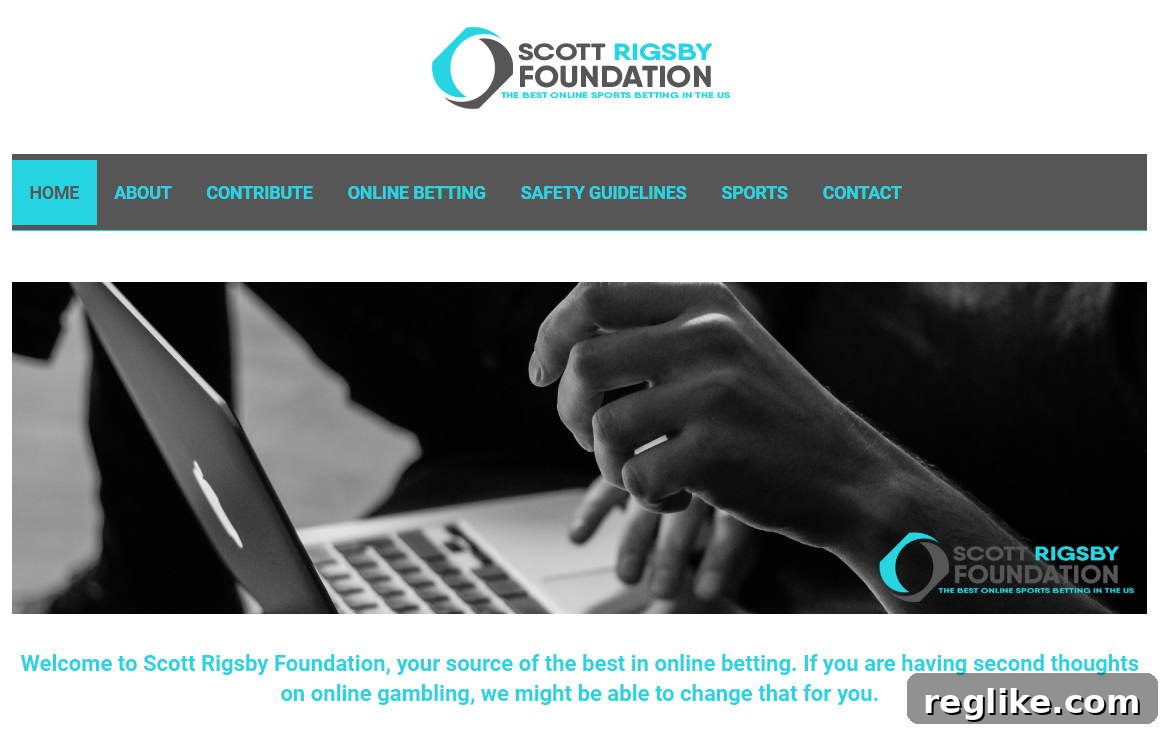
When a domain name lapses, it typically enters a multi-stage expiration process. Initially, there’s a “grace period,” offering the original registrant a window of opportunity to renew the domain without penalty. Should this period pass without renewal, the domain may then transition into a “redemption period,” providing a final chance to reclaim it, though often at a higher cost. If the domain remains unrenewed through these critical phases, it is eventually released back into the public pool or auctioned off through platforms operated by registrars, as was the case with GoDaddy. In this specific scenario, the domain was subsequently acquired by an unrelated third party through one such process. This acquisition then led directly to its current, highly inappropriate and damaging utilization. The new registrant strategically capitalized on the domain’s established identity and goodwill, creating a website that visually mimicked the original foundation’s aesthetic. However, instead of promoting charity and inspiration, this new site shockingly endorsed online gambling — a complete and utter antithesis to the foundation’s inspiring, health-focused, and community-driven mission. This brazen transformation not only severely tarnished the foundation’s carefully built legacy but also generated considerable confusion among the public and inflicted significant reputational damage upon Scott Rigsby and his work.
The Core Dispute: The Rationale Behind Suing GoDaddy for Domain Recovery
It is entirely understandable that Scott Rigsby was profoundly distressed by the egregious misuse of his former foundation’s domain. Witnessing a website bearing his name and mimicking his organization’s visual identity, yet actively promoting online gambling, was undoubtedly a deeply frustrating and disheartening experience. In his determined pursuit of justice and the urgent recovery of the domain, Rigsby’s legal counsel made a pivotal strategic decision: they identified and targeted GoDaddy, the domain registrar, as the primary defendant in their lawsuit. Rigsby’s legal contention was rooted in the belief that GoDaddy bore culpability for the domain’s expiration and its subsequent re-entry into the market via their expired domain platform. This perspective likely stemmed from a profound sense of frustration with the overall predicament and a perceived, albeit perhaps legally misconstrued, responsibility on the part of the registrar to actively prevent such unsavory misuses.
However, this chosen legal strategy immediately presented significant hurdles. While GoDaddy, as one of the world’s most prominent domain registrars, facilitates the registration of millions of domain names and manages numerous expired domain auctions, its legal responsibilities are primarily administrative and transactional. Domain registrars are tasked with facilitating registrations, providing essential DNS services, and adhering strictly to policies set forth by ICANN (Internet Corporation for Assigned Names and Numbers). Crucially, they are generally not held liable for the independent actions of individual domain registrants or for the specific content hosted on those domains, unless explicitly mandated by specific legal provisions or direct court orders. Rigsby’s lawsuit against GoDaddy, rather than pursuing direct action against the new domain registrant who was actively misusing the site, highlighted a fundamental misunderstanding of the established legal framework governing domain ownership, registrar responsibilities, and ultimate liability in domain disputes.
Understanding Domain Law: Clarifying Who is Truly Responsible
The Scott Rigsby Foundation case serves as a critically important educational moment regarding the often-complex legal landscape surrounding domain names and their ownership. At the very core of domain law lies the fundamental principle of primary registrant responsibility. It is, unequivocally, the domain registrant’s ultimate and ongoing duty to ensure that their domain name is renewed punctually and that all associated contact information remains accurate and up-to-date. While reputable registrars like GoDaddy do provide courtesy renewal reminders and offer various services to facilitate this process, the primary onus for timely renewal rests firmly and squarely with the domain owner.
The Defined Role and Inherent Limits of a Domain Registrar
Domain registrars occupy a crucial administrative position within the global internet infrastructure. They are accredited by ICANN to facilitate the sale and management of domain names and their corresponding registration records. Their core services encompass processing new registrations, managing DNS (Domain Name System) settings, and enabling domain transfers between different owners or registrars. However, it is vital to understand that registrars are generally not tasked with, nor capable of, acting as content police or actively monitoring the specific content hosted on every single domain they register. Furthermore, they typically do not bear responsibility for the specific actions, intentions, or content decisions of their individual registrants, particularly concerning the process of domain expiration and subsequent re-registration, provided they strictly adhere to established ICANN policies and their own published terms of service. A registrar’s liability is typically circumscribed and limited, unless it can be definitively proven that they acted in demonstrable bad faith or violated specific, applicable laws directly related to their role as a registration provider.
The Anti-Cybersquatting Consumer Protection Act (ACPA) and Its Specific Application
A significant component of Rigsby’s legal claim against GoDaddy involved allegations under the Anti-Cybersquatting Consumer Protection Act (ACPA). The ACPA is a landmark federal law explicitly enacted to combat “cybersquatting”—the bad-faith, abusive, and intentional registration of domain names that are identical or confusingly similar to a distinctive trademark, with the express purpose of profiting from or diluting that trademark. The foundational spirit and the precise letter of the ACPA are aimed directly at the individual or entity that actually registers, traffics in, or uses a domain name with a malicious, bad-faith intent to exploit or profit from someone else’s established trademark.
In the particular context of the Rigsby case, attempting to hold GoDaddy liable under the ACPA presents an insurmountable legal hurdle. GoDaddy itself did not register the domain in bad faith; rather, it simply facilitated the re-registration process after the original domain expired, acting entirely within its standard operational procedures and ICANN guidelines. The true “cybersquatter,” if such a designation applies, would unequivocally be the new registrant who acquired the expired domain and subsequently repurposed it for online gambling activities. Consequently, directing an ACPA claim against the registrar, who fundamentally serves as a neutral intermediary in the registration process, fundamentally misinterprets the precise scope and intended application of the legislation. Courts have consistently ruled that registrars are not generally liable under the ACPA merely for providing standard domain registration services; the liability rests with the party engaged in the bad-faith registration or use.
Effective Avenues for Domain Recovery: A Strategic and Targeted Approach
Given the well-established legal landscape governing domain names and registrar responsibilities, Scott Rigsby’s strategic decision to sue GoDaddy appears, in hindsight, to have been a significant misstep. There were, and indeed still remain, more direct, cost-effective, and legally appropriate avenues specifically designed for situations such as this, offering a higher probability of successful domain recovery.
The Uniform Domain-Name Dispute-Resolution Policy (UDRP)
The Uniform Domain-Name Dispute-Resolution Policy (UDRP) is an internationally recognized, administrative arbitration-based process established by ICANN specifically to resolve disputes over the registration and use of domain names. It stands as a significantly faster, less expensive, and more streamlined alternative to traditional court litigation. For a complainant to successfully reclaim a domain name under UDRP, they are typically required to prove three essential elements:
- The disputed domain name is identical or confusingly similar to a trademark or service mark in which the complainant has demonstrable rights.
- The registrant (the current domain holder) has no legitimate rights or justifiable interests in respect of the domain name.
- The domain name has been registered and is being used in bad faith.
In Scott Rigsby’s specific case, with a well-established entity named “Scott Rigsby Foundation” and the domain ScottRigsbyFoundation.org being actively used for online gambling, he would have possessed an exceptionally strong UDRP claim. The domain is clearly identical to his foundation’s name, the new registrant almost certainly holds no legitimate interest in a domain bearing Rigsby’s name (particularly given its use for a gambling site), and the deliberate act of mimicking the original foundation’s site while promoting gambling would provide compelling evidence of bad faith. A UDRP filing could have potentially resolved this complex matter within a few months, with substantially less financial outlay and emotional burden compared to a protracted and costly federal lawsuit.
Direct Litigation Against the Actual Registrant
Should the UDRP process not have been deemed suitable or if it had failed for any reason, the next logical and legally sound course of action would have been to pursue litigation directly against the individual or entity who acquired the domain name and was actively misusing it. This targeted approach allows for legitimate claims under specific intellectual property laws, such as the ACPA, as the actual “cybersquatter” would then be the rightful defendant. While traditional litigation can indeed be a costly and time-consuming endeavor, directing it at the correct and liable party dramatically increases the probability of a successful outcome. This allows the court to directly address crucial issues like trademark infringement, evidence of bad-faith registration, and the full extent of damages incurred by the original brand owner. In stark contrast, pursuing a lawsuit against the domain registrar in such a scenario often culminates in dismissal, as registrars are largely afforded legal protection from liability concerning the content or actions of their independent customers.
The High Cost of Misdirected Legal Action in Domain Disputes
The legal path Scott Rigsby chose—pursuing a lawsuit against GoDaddy—has undeniably proven to be an arduous and exceptionally expensive undertaking. After several years navigating the complexities of the federal court system, a judge ultimately dismissed Rigsby’s third amended complaint. The court concluded that the claims asserted against GoDaddy lacked sufficient legal merit under the presented theories, including those based on the ACPA. Undeterred, Rigsby is now in the process of appealing this dismissal, a decision that will further prolong the legal battle and inevitably incur substantial additional costs. This protracted legal process, characterized by numerous filings, extensive hearings, depositions, and subsequent appeals, represents a significant financial and emotional drain.
Federal litigation, in particular, involves considerable legal fees for attorneys, potentially high costs for expert witnesses, and various court expenses. These invaluable resources, which could have been far more effectively directed towards his foundation’s noble charitable work or a more targeted and likely successful domain recovery effort, are instead being consumed in a legal battle that, from a dispassionate legal perspective, appears fundamentally misdirected. The true tragedy here is that the ultimate objective—recovering the essential domain name—could have, with a high degree of probability, been achieved years ago and for merely a fraction of the current expenditure, had a more appropriate and efficient legal strategy, such as a UDRP filing, been initially pursued. The author’s original insightful observation that “this could have been settled a couple of years ago for a lot less money” resonates with undeniable truth. The costly pursuit of an unlikely victory against an intermediary registrar regrettably overshadows the more direct, legally sound, and potentially successful avenues that were readily available against the actual perpetrator of the domain’s misuse.
Key Lessons Learned: Best Practices for Domain Management and Digital Asset Protection
The unfortunate and highly public Scott Rigsby Foundation case offers critical, actionable takeaways for individuals, businesses, and non-profit organizations alike concerning effective domain name management and robust digital asset protection. Proactive measures can prevent such costly and frustrating scenarios:
- Proactive Renewal and Auto-Renewal Implementation: Always prioritize enabling automatic renewal for all critical domain names. Ensure that up-to-date payment methods are securely linked and verified. Additionally, register multiple reminder email addresses, not just a single one that might become inactive or overlooked.
- Accurate and Updated Contact Information: Meticulously keep your WHOIS contact information current and precise. This ensures that you receive vital renewal notices, security alerts, and other critical communications from your domain registrar and ICANN.
- Strategic Trademark Protection: For established brands, organizations, and even personal names that command significant public recognition, actively pursuing trademark registration (whether federal or common law) provides an immensely strong legal foundation for future domain disputes, particularly under established policies like UDRP and legislation such as ACPA.
- Implement Domain Monitoring Services: Consider subscribing to specialized domain monitoring services. These tools can alert you promptly to any unauthorized changes in your domain’s status, ownership records, or critical DNS configurations.
- Thorough Understanding of Registrar Terms of Service: Familiarize yourself comprehensively with your chosen domain registrar’s policies and terms of service, especially those pertaining to domain expiration, renewal processes, and their specific procedures for dispute resolution.
- Seek Specialized Legal Counsel Immediately: Should a domain dispute arise, do not hesitate. Consult promptly with legal professionals who specialize specifically in intellectual property and domain law. Their expert guidance can help you understand and implement the most effective and efficient domain recovery strategies, whether that involves UDRP, ACPA litigation directly against the registrant, or other pertinent legal avenues, thereby helping to avoid costly and time-consuming missteps.
Conclusion: Navigating the Complexities of Digital Identity Protection
The unfortunate and protracted saga of the ScottRigsbyFoundation.org domain stands as a powerful and poignant reminder of the inherent vulnerabilities present in our digital identities and the paramount importance of adopting a clear, strategic, and legally informed approach to their protection and, when necessary, their recovery. While Scott Rigsby’s profound frustration and his entirely justified desire to reclaim his foundation’s tarnished digital legacy are fully understandable, the ultimate decision to pursue a lengthy and, thus far, legally unsuccessful lawsuit against GoDaddy highlights an absolutely critical lesson: understanding the nuanced intricacies of domain law and accurately identifying the truly responsible and liable party in a dispute is fundamentally paramount to achieving a successful outcome.
This compelling case unmistakably underscores that domain registrars primarily serve to facilitate registration services and are, under most circumstances, rarely held liable for the independent, subsequent actions or content choices of their individual registrants. Effective and efficient domain recovery strategies typically involve leveraging established and specialized tools such as the Uniform Domain-Name Dispute-Resolution Policy (UDRP) or pursuing direct litigation against the actual party who is actively misusing the domain. As the digital world continues its rapid evolution, embracing proactive domain management, meticulously coupled with informed and strategic legal counsel, remains the most robust and indispensable defense against such unforeseen challenges. Ultimately, protecting one’s digital assets transcends merely owning a website; it is about safeguarding an entire legacy, preserving a carefully built reputation, and ensuring the continued ability of an organization or individual to fulfill its intended, impactful purpose in the digital age.