
Beyond the Hype: Is Low New TLD Adoption Truly an Awareness Issue, or a Demand Deficit?
The digital landscape is constantly evolving, and with it, the options available for establishing an online presence. For years, the .com domain reigned supreme, becoming synonymous with internet credibility and brand recognition. However, the introduction of hundreds of new Top-Level Domains (nTLDs) aimed to revolutionize this ecosystem, offering a wider array of choices like .tech, .store, .app, .online, and many more. Yet, despite this expansion, their adoption rates have often fallen short of initial projections, sparking a persistent debate within the domain industry. A prevailing narrative suggests that the primary obstacle hindering the widespread success of these innovative domain options is a significant “awareness gap.” Proponents of nTLDs frequently argue that if more people simply knew about these alternatives, their uptake would naturally increase. While this perspective holds some initial appeal and logic, a deeper examination reveals that the situation might be more nuanced, pointing towards a potential demand issue, particularly among those actively involved in domain registration.
The Awareness Gap Argument: A Closer Look
For a considerable period, the mantra from various nTLD registries, marketing organizations, and even some industry observers has been consistent: new domain options are suffering because the general public remains largely unaware of their existence. The reasoning is straightforward: if an entrepreneur doesn’t know they can register a domain ending in .shop for their e-commerce business, or a developer isn’t aware of .dev for their tech project, they will default to searching for a .com, or simply give up if their desired name is taken. This argument posits that the vastness of the internet and the established dominance of .com have made it exceptionally challenging to educate billions of users about the hundreds of new, often highly specific, alternatives now available. Consequently, significant marketing budgets have been allocated by some registries to promote their extensions, hoping to carve out a niche and elevate them into common knowledge. Despite these efforts, the perception that most internet users still automatically assume a website ends in .com persists, presenting a formidable hurdle for nTLDs striving for broader acceptance and higher registration volumes. This perspective emphasizes the upstream challenge of consumer education and brand recognition for these newer digital identities.
Shifting Perspectives: Are Domain Registrants Truly Unaware?
While the “general public awareness” argument holds merit for the casual internet user, it becomes less convincing when we focus specifically on the segment of the population that actually engages in domain registration. These are individuals, businesses, and organizations actively seeking to establish or expand their online presence. My own observations, and indeed a growing sentiment within the industry, suggest that the narrative of unawareness might not fully apply to this critical group. How could they not be aware? Anyone who has recently embarked on the journey of finding and registering a domain name has likely encountered a plethora of nTLD options. Major domain registrars, in their pursuit of offering comprehensive services and catering to diverse needs, have prominently integrated nTLDs into their search interfaces. When a prospective registrant types a desired domain name into the search bar, particularly if the .com version is unavailable, they are immediately presented with a wide array of alternatives.
Consider a typical scenario at a leading domain registrar like GoDaddy, which exemplifies this ubiquitous exposure. If a user searches for “MyCompany” and the .com is taken, the search results page doesn’t just suggest alternative spellings of “MyCompany.com.” Instead, it actively surfaces a diverse range of nTLDs, often highlighting them as “premium” or “available” options. The screenshot below vividly illustrates this point:
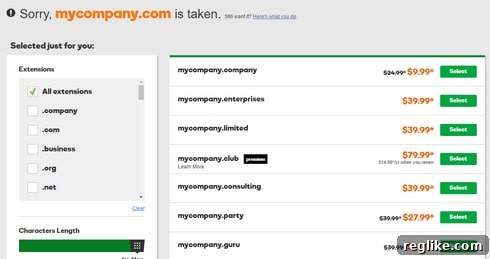
A few years ago, this very search result page would primarily have been populated with variations of .com domains, perhaps with hyphens or numbers. Today, the landscape is dramatically different, filled with non-.com alternatives such as .site, .online, .store, .shop, and many more. This visual evidence unequivocally demonstrates that individuals in the process of registering a domain name are not only exposed to but actively presented with a rich selection of nTLD options. They see them. They are aware that these options exist. The question then ceases to be about mere visibility and shifts to why, despite this awareness, the registration rates for many nTLDs remain comparatively low.
The Demand Deficit Hypothesis: Why Awareness Isn’t Enough
If domain registrants are indeed aware of new TLDs, as evidence strongly suggests, then the core issue might not be a lack of awareness but rather a deficit in demand. This hypothesis delves into the reasons why registrants, when presented with various choices, frequently opt against registering an nTLD, even when it offers a perfectly suitable, or even more descriptive, name than an available .com. Several factors contribute to this potential demand gap:
- Perceived Value and Prestige: The .com extension has enjoyed decades of undisputed dominance, cementing its status as the default and most prestigious domain. For many businesses and individuals, a .com domain still signals established credibility, trustworthiness, and a global presence. An nTLD, even if highly relevant, may sometimes be perceived as a “second choice” if the desired .com is unavailable, potentially undermining its perceived value in the eyes of the registrant or their target audience.
- Brand Recognition and Memorability: A significant concern for businesses is whether their customers will easily remember and correctly type a non-.com domain. Decades of internet usage have hardwired “dot com” into collective consciousness. While .tech might be perfect for a tech startup, there’s an underlying fear that customers might instinctively add “.com” at the end, leading to lost traffic or confusion.
- Trust and Security Associations: Although baseless, some users harbor subconscious biases or even misconceptions about the trustworthiness of newer extensions. While nTLDs are subject to the same rigorous security protocols as .com, the sheer familiarity of .com often translates into an unspoken sense of security and legitimacy.
- Email Address Adoption: Beyond websites, domain names are crucial for professional email addresses. Companies consider how an email address like “[email protected]” or “[email protected]” will be perceived and whether it might cause any confusion or appear less professional than its .com counterpart.
- SEO Misconceptions: Historically, there were myths that nTLDs might negatively impact Search Engine Optimization (SEO). While Google and ICANN have repeatedly clarified that nTLDs are treated equally in search rankings (a .tech domain ranks just as well as a .com domain, all else being equal), these myths can persist in the minds of some registrants or their marketing advisors, leading to hesitation.
- Target Audience Familiarity: Registrants often consider their target audience. If their audience is less tech-savvy or accustomed to traditional internet norms, opting for an nTLD might seem like an unnecessary risk, even if the domain itself is more descriptive.
- Cost and Renewals: While some nTLDs are competitively priced, others, especially premium ones, can come with higher registration and renewal fees than standard .com domains, making them a less attractive option for budget-conscious registrants, particularly small businesses or startups.
These factors collectively suggest that simply being aware of nTLD options isn’t sufficient. Registrants are weighing these choices against established norms, perceived risks, and the long-term implications for their brand and online strategy. The decision often boils down to a value proposition that, for many, still heavily favors the traditional .com.
The Interplay of Awareness and Demand in the Domain Market
It would be overly simplistic to declare the issue as purely one of awareness or solely one of demand. In reality, the two are inextricably linked and engage in a complex feedback loop. While domain registrants themselves are demonstrably aware of nTLDs, the broader internet population’s limited awareness indirectly affects demand. If a business adopts an nTLD, but its potential customers are unfamiliar with the extension, it could lead to user confusion, missed traffic, or a perceived lack of credibility. This potential friction makes registrants hesitant. Conversely, higher public awareness of nTLDs would likely increase the comfort level of registrants, boosting demand. As more prominent brands and successful ventures adopt nTLDs, this would further normalize their use, creating a virtuous cycle where increased awareness drives demand, and increased demand fuels even greater awareness.
Currently, however, this feedback loop appears insufficient to overcome the deeply ingrained habits and perceptions surrounding .com. The challenge for nTLDs is not just to be seen, but to be truly valued and understood as legitimate, effective, and even superior alternatives in certain contexts. This requires a shift in focus from merely announcing their existence to demonstrating their tangible benefits and building trust in their long-term viability and impact on digital branding.
Paving the Way Forward: Overcoming Challenges for New TLDs
For nTLDs to achieve their full potential, the industry must move beyond the basic awareness debate and address the underlying demand issues. This involves a multi-pronged approach:
- Targeted Education and Use Cases: Instead of broad, generic awareness campaigns, focus on educating specific industries and communities about the direct benefits of relevant nTLDs. For instance, promoting .tech to startups and developers, .store to e-commerce businesses, or .art to artists, clearly illustrating how these domains enhance brand identity and provide more meaningful online addresses.
- Highlighting Success Stories: Showcase prominent or rapidly growing brands that have successfully adopted nTLDs. Real-world examples can significantly alleviate registrant concerns about credibility and memorability, demonstrating that an nTLD is a viable and powerful choice.
- Enhanced Registrar Promotion: Domain registrars play a crucial role. Beyond just displaying available options, they can provide more educational content explaining the value proposition of nTLDs, addressing common myths (like SEO impact), and offering tools to help registrants choose the most appropriate extension for their needs.
- Building Brand Equity for nTLDs: Registries need to continue investing in building the individual brand equity of their TLDs. This means not just marketing the existence of, say, .app, but marketing the concept of what a .app domain signifies: innovation, mobile-first, and cutting-edge technology.
- Facilitating Seamless Integration: Ensure that nTLDs integrate seamlessly with other online services, from email providers to website builders, reinforcing their legitimacy and ease of use.
The vision behind new TLDs was to create a more diverse, descriptive, and intuitive internet. Achieving this vision requires not only bringing these options to the attention of registrants but also convincingly demonstrating their inherent value and addressing the deeper anxieties that prevent their wider adoption. It’s about changing long-held habits and perceptions, a task that requires more than just making people aware; it requires earning their trust and convincing them of the long-term benefits.
Conclusion: Reframing the nTLD Dilemma
The premise that new Top-Level Domains suffer from a mere awareness problem, while partially true for the general populace, appears increasingly insufficient to explain their moderate adoption rates among those who actually register domains. Evidence from domain registrar interfaces strongly suggests that active registrants are, in fact, well aware of the myriad non-.com options available to them. The real challenge, therefore, seems to reside more in a “demand deficit,” rooted in various factors such as the enduring prestige of .com, concerns about brand recognition, perceived value, and historical misconceptions. While public awareness undoubtedly plays a role in influencing registrant comfort and broader market acceptance, the critical juncture lies in convincing domain registrants that nTLDs offer genuine, strategic advantages for their online presence and brand building. Moving forward, the industry must pivot its focus from simply informing registrants that nTLDs exist, to robustly articulating their unique value propositions, addressing lingering concerns, and fostering a new era of trust and confidence in these innovative digital identifiers. The future success of new TLDs hinges not just on visibility, but on becoming the preferred, not just available, choice for a diverse and evolving internet.