
Protecting Your Passion: Why Trademarks Don’t Belong in Your Fan Site Domain Name
The digital age has revolutionized how enthusiasts connect and celebrate their passions. From cutting-edge technology to classic automobiles, popular culture franchises to beloved sports teams, online fan communities thrive on shared interests and collective dedication. Building a fan site is often a labor of love, a desire to create a hub where like-minded individuals can gather, discuss, and share their enthusiasm for a particular brand or product. However, amidst this commendable drive, a common and often irresistible temptation arises: incorporating the official trademark of the brand directly into the fan site’s domain name.
While seemingly a straightforward path to recognition and attracting relevant traffic, this practice carries significant legal and ethical risks that can ultimately jeopardize the very community you aim to foster. Even if you are the most ardent company fan, deeply committed to celebrating and promoting a brand, you must resist the urge to include a trademark in your domain name. This vital piece of advice is frequently overlooked, steering many well-intentioned site owners down a treacherous path fraught with potential disputes, costly legal battles, and the eventual loss of their online presence. Understanding the profound reasons behind this recommendation is paramount for anyone looking to establish a sustainable and legally compliant fan-based website.
Consider the illustrative case of the GM Volt electric car. Upon its release, the innovative vehicle generated considerable public interest and media attention. Articles in prominent publications, such as this piece published in the New York Times, often referenced and even linked to fan-created resources. One notable example was GM-Volt.com. The article, while citing the site, meticulously noted that it was explicitly unaffiliated with General Motors (GM). On the surface, GM-Volt.com appeared to be a successful independent endeavor, attracting substantial traffic and presumably generating revenue for its owner. Data from analytics services like Compete.com revealed that GM-Volt.com garnered approximately 75,000 visits a month – an impressive figure for a niche enthusiast site, certainly not something to be dismissed lightly.
The Allure of Branded Domains: Why They Seem So Appealing
The primary attraction of incorporating a trademark into a fan site’s domain name stems from several perceived advantages that, at first glance, appear beneficial. Firstly, it offers instantaneous recognition. A domain such as “brand-name-fans.com” immediately communicates its purpose to potential visitors, who are likely searching for information or a community centered around that specific brand. This directness can be very appealing. Secondly, it can provide an initial boost in search engine optimization (SEO), as search algorithms often associate trademarked terms with high relevance, potentially helping the site rank higher for related queries. Lastly, it effectively capitalizes on the existing brand equity, drawing in traffic that might otherwise be significantly harder to attract. This initial burst of success, exemplified by GM-Volt.com’s robust traffic numbers, can create a deceptive sense of security, leading site owners to mistakenly believe their venture is both popular and legally permissible.
The Imminent Peril: Legal Ramifications of Trademark Infringement
Despite any initial success or pure intentions, utilizing a trademarked term in a domain name without explicit authorization from the trademark holder is an extremely precarious undertaking. The owner of the trademark, in this scenario, General Motors, possesses extensive legal rights to protect their invaluable intellectual property. There are primarily two well-established avenues through which they can reclaim such an infringing domain, each carrying significant weight and potential consequences for the domain registrant:
1. The Uniform Domain-Name Dispute-Resolution Policy (UDRP)
The UDRP is an administrative procedure established by the Internet Corporation for Assigned Names and Numbers (ICANN). Its purpose is to provide a relatively swift and cost-effective mechanism for trademark owners to resolve disputes over domain name registrations that infringe upon their rights. Distinct from a full-blown judicial lawsuit, UDRP proceedings are conducted online by accredited dispute resolution providers. To successfully file and win a UDRP complaint, the trademark owner typically needs to demonstrate three crucial elements:
- The domain name is identical or confusingly similar to a trademark or service mark in which the complainant (the trademark owner) has established rights. A domain like “GM-Volt.com” is an unequivocal example that would fall into this category for General Motors.
- The registrant (the domain owner) has no rights or legitimate interests in respect of the domain name. Merely being a devoted fan, even one who has invested significant time and resources, generally does not confer a legitimate interest, especially if the site is commercialized or competes with the brand.
- The domain name has been registered and is being used in bad faith. Examples of bad faith include registering a domain primarily to sell it to the trademark owner for an inflated profit (a practice known as cybersquatting), or to disrupt the business of a competitor, or to attract internet users for commercial gain by creating a likelihood of confusion with the complainant’s established mark.
For domains like GM-Volt.com, proving these elements would likely be a straightforward process for the trademark holder. The inevitable outcome of a successful UDRP complaint is the mandatory transfer of the disputed domain name to the complainant, leaving the fan site owner with nothing but a lost investment, wasted effort, and the collapse of their online community.
2. Traditional Trademark Lawsuits in National Courts
Beyond the UDRP, trademark owners retain the formidable option to pursue a full-scale trademark infringement lawsuit in national courts. These lawsuits are considerably more intricate, time-consuming, and significantly more expensive than UDRP proceedings. A successful trademark infringement lawsuit can result in a range of severe penalties and remedies:
- Injunctions: A court order legally prohibiting the domain owner from further using the trademarked term and mandating them to transfer the infringing domain.
- Monetary Damages: Financial compensation for the losses suffered by the trademark holder due to the infringement. This can encompass lost profits, damage to brand reputation, and even statutory damages in cases where intentional infringement or counterfeiting is proven.
- Attorneys’ Fees: In many legal jurisdictions, the prevailing party in a trademark lawsuit can recover their legal costs, which can easily escalate to hundreds of thousands of dollars, presenting a catastrophic financial burden for an individual or small entity.
The sheer risk of facing such a lawsuit, even if you firmly believe your intentions are benevolent and non-malicious, serves as a powerful deterrent. The prohibitive cost of defending against such complex legal claims, irrespective of the final judgment, can be financially ruinous for an individual site owner or a nascent business.
Brand Dilution and Conflicting Commercial Interests: A Deeper Dive
Beyond the immediate legal threats, there exists a more nuanced but equally damaging issue: brand dilution and conflicting commercial interests. A trademark holder’s brand is an meticulously cultivated and highly valued asset, embodying specific values, quality standards, and a distinct market position. Unauthorized fan sites, particularly those that attempt to monetize their traffic, can inadvertently or, in some cases, intentionally undermine this crucial brand integrity and erode its value.
The GM-Volt.com example perfectly encapsulates this problem. While some might initially perceive such a site as “good for building GM’s brand,” a closer examination reveals a profound conflict of interest. The original article highlights that the site was “littered with ads for GM’s competitors.” Envision a potential customer actively seeking information on the GM Volt, only to be confronted with prominent advertisements for rival vehicles from Ford or Lexus. This directly diverts potential sales and customer attention to competitors, actively harming GM’s commercial interests rather than providing support. It fosters confusion among consumers and significantly dilutes the brand’s carefully crafted message, effectively transforming what was intended to be a benign fan hub into an unauthorized platform for competitive advertising.
The situation escalates in irony and problematic implications when disclaimers, intended to clarify non-affiliation, are themselves co-opted for such purposes. The original article vividly illustrates how “Even a disclaimer message saying the site isn’t affiliated with General Motors Company is turned into a contextual ad for Ford.” This stark visual evidence unmistakably demonstrates the direct clash of interests and the potential for a supposedly supportive fan site to actively work against the very brand it purports to celebrate.
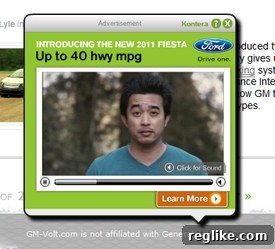
Such practices provide compelling evidence of “bad faith” in UDRP cases and significantly bolster a trademark holder’s position in any subsequent legal action. It irrevocably transforms what might have been considered a harmless fan endeavor into a direct commercial competitor, albeit an unauthorized and infringing one, making the case for intervention by the brand owner much stronger.
Learning from Large-Scale Operations and Acknowledged Risks
It is certainly true that some prominent companies have successfully built entire businesses around similar car enthusiast sites and other brand-specific online communities. Internet Brands, a publicly traded corporation, stands out as a significant example. They operate an expansive network of enthusiast forums and content sites, many of which cater to specific car models, brands, or niche interests. However, even well-established and sophisticated players like Internet Brands openly acknowledge that there’s inherent risk in their operational model, particularly concerning intellectual property rights. This candid admission from a multi-million dollar corporation, possessing vast legal resources, critically underscores the universal nature and pervasive presence of these legal challenges. If a sophisticated entity recognizes and budgets for these risks, individual fan site owners, with far fewer resources, should be exponentially more cautious and proactive in their approach to domain naming and content management.
Best Practices for Creating a Sustainable and Legally Safe Fan Site
Does this comprehensive overview mean that you should abandon your dream of creating a fan site altogether? Absolutely not! The passion, community spirit, and unique insights cultivated by dedicated fan sites are incredibly valuable and enrich the broader online landscape. The crucial distinction lies in doing so responsibly, ethically, and, most importantly, legally. Here’s a robust framework for building a successful, engaging, and enduring fan community without inviting legal trouble:
1. Thoughtful and Non-Infringing Domain Name Selection
This constitutes the single most critical step in establishing your fan site. Rather than directly incorporating the trademark, employ descriptive words that unmistakably indicate your site’s fan-based, unofficial nature. For instance, instead of “GM-Volt.com,” consider creative and legally safe alternatives such as:
- VoltEnthusiasts.com
- MyVoltCommunity.net
- TheVoltFanHub.org
- ElectricCarTalk.info (if your scope is broader than a single model)
- VoltDriversForum.com
- [BrandName]FanZone.com
Prioritize creativity, distinctiveness, and clearly differentiating your site from the official brand’s online presence. This proactive approach clearly signals to all visitors that you are an independent entity, significantly reducing the likelihood of trademark infringement claims and fostering a genuine, unique identity for your community.
2. Value-Driven Content and Authentic Community Building
Focus your efforts on providing original, high-quality content that genuinely adds value for your specific community. This could encompass a wide range of engaging materials and features:
- User-generated reviews, in-depth discussions, and personal anecdotes.
- Practical tips, unique tricks, and detailed maintenance guides not readily available on official manufacturer sites.
- Interactive forums for collaborative troubleshooting, sharing experiences, and asking questions.
- Comprehensive event listings for fan meetups, conventions, or local gatherings.
- Original articles, photography, or video content related to the brand.
The ultimate objective is to cultivate authentic interaction and establish your site as a go-to resource primarily because of its unique community, valuable content, and distinct voice, rather than solely relying on its name’s association with a famous brand.
3. Ethical and Compliant Monetization Strategies
If your plan includes monetizing your fan site, it is imperative to do so ethically and without creating direct conflicts of interest with the brand you admire. Absolutely avoid:
- Displaying advertisements for direct competitors (as observed with GM-Volt.com). This is a clear red flag.
- Selling unauthorized merchandise that bears the brand’s official logo, copyrighted images, or other protected intellectual property.
- Engaging in any practices that could be perceived as attempting to “pass off” your site as an official or endorsed platform.
Instead, explore and implement legitimate monetization avenues such as:
- Affiliate marketing for complementary products (e.g., car accessories, cleaning supplies for an automotive fan site, but *never* competitor vehicles or directly branded items).
- General interest display advertising, ensuring that the ad networks do not inadvertently serve advertisements for direct competitors.
- Offering premium content or membership tiers for exclusive access, provided your content offers truly unique value and doesn’t infringe on copyrighted material.
- Soliciting voluntary donations from appreciative community members to support site operations.
4. Clear and Prominent Disclaimers
While a disclaimer alone will not absolve you of trademark infringement if one occurs, it remains a crucial best practice to clearly and unequivocally state your non-affiliation with the official brand. Position this disclaimer prominently on your homepage, on a dedicated ‘About Us’ page, and ideally in the footer of every single page on your site. Ensure it is static, unambiguous, and designed in such a way that it cannot be hijacked or repurposed by contextual advertising services to display conflicting advertisements. A concise and clear statement like, “This site is an independent fan-created resource and is not affiliated with [Brand Name] Company,” can significantly contribute to managing user expectations and demonstrating good faith.
The Bottom Line: Play It Safe and Smart for Long-Term Success
Your profound passion for a brand is an incredibly powerful motivator for establishing a vibrant online community. However, that commendable passion must always be tempered with a thorough understanding and strict adherence to intellectual property law. The risks associated with using a trademark in your domain name are substantial, ranging from the swift and decisive loss of your domain through a UDRP action to the daunting prospect of defending a costly and protracted federal lawsuit. Furthermore, this practice can inadvertently cause significant harm to the very brand you admire by diluting its carefully crafted message or actively promoting its competitors.
My advice remains unequivocally clear and consistent: by all means, create a fantastic fan site. Dedicate yourself to building a thriving community, share your boundless enthusiasm, and contribute truly valuable content that enriches the fan experience. But under no circumstances should you incorporate trademarks into your domain name. By consciously choosing a creative, descriptive, and unequivocally non-infringing domain, you proactively protect your significant investment of time and resources, ensure the long-term longevity and growth of your cherished community, and uphold the highest standards of ethical online practices. Play it safe, play it smart, and your fan site can flourish for years to come without the ever-present threat of legal reprisal.