
The Unprecedented Shift: Why Verisign is Investing in .COM Visibility on GoDaddy Ads
In the dynamic world of digital branding and domain names, subtle shifts often signal monumental changes. A recent observation during a baseball game offered a compelling glimpse into such a shift, revealing a fascinating development in the relationship between domain registries and registrars.
While enjoying a Cardinals game last night, an advertisement for GoDaddy.com caught my eye, strategically placed behind the batter. GoDaddy’s presence in sports advertising, particularly baseball, is certainly not new; their distinctive branding has long been a fixture of such broadcasts. However, this particular ad felt different, subtly altered in a way that warranted a closer look.

The difference might not be immediately apparent, nestled within the familiar GoDaddy aesthetic. It’s a detail that speaks volumes about the evolving strategies in the domain name industry. For those who didn’t spot it at first glance, a magnified view brings this intriguing modification into sharp focus.
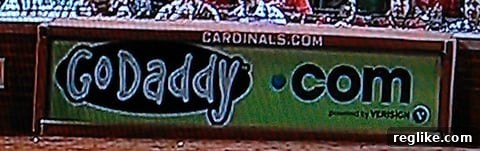
The magnified image clearly highlights the core of this observation. It’s a striking paradox when viewed against the backdrop of GoDaddy’s own recent branding initiatives. We are well aware that GoDaddy has been actively rebranding, notably by shedding the “.com” from its primary brand name to reflect a broader, more modern identity. Yet, this advertisement not only reintroduces “.com” into its visual space but explicitly labels it as an advertisement supported by Verisign.
This is far from a minor detail; it represents a significant strategic pivot. Consider the historical context: previously, Verisign, as the registry for the .com top-level domain, received invaluable, free marketing exposure through these very same GoDaddy ads. The simple display of “GoDaddy.com” implicitly promoted the ubiquitous .com extension without any direct cost to Verisign. Now, the tables have turned. Verisign is actively paying GoDaddy to not just include, but prominently highlight, the “.com” suffix on its advertisements. This transition signifies a fundamental shift in how established TLDs are marketed and how registries interact with major registrars.
Decoding GoDaddy’s Evolving Brand Identity and Its Impact
GoDaddy’s decision to drop “.com” from its official branding was a bold move, indicative of a company striving to modernize its image and expand beyond its foundational offering of domain registration. This strategic shift aimed to position GoDaddy as a comprehensive provider of online services, encompassing everything from website building and hosting to online marketing tools, rather than just a gateway to the internet via .com addresses. The move reflected a broader industry trend towards a more diverse internet landscape, where various top-level domains (TLDs) were gaining traction, and reliance solely on the “.com” identity could be seen as limiting.
The rebranding was met with mixed reactions within the domain industry. While some lauded it as a necessary step for an evolving tech company, others questioned the wisdom of distancing from the most recognized and trusted domain extension globally. GoDaddy’s strategy, however, was clear: to create a brand identity that was synonymous with all aspects of online presence, regardless of the TLD chosen by its customers. This vision enabled GoDaddy to broaden its appeal and better serve a new generation of entrepreneurs and small businesses looking to establish their digital footprint.
Verisign’s Strategic Investment in .COM: Protecting a Digital Legacy
The paradox presented by the GoDaddy ad – GoDaddy shedding “.com” while Verisign pays to promote it – underscores the immense value and strategic importance of the .com domain name for Verisign. As the exclusive registry for .com, Verisign’s entire business model is intrinsically linked to the continued dominance and widespread adoption of this particular TLD. For Verisign, .com is more than just an extension; it’s a global standard, a symbol of trust, and the digital address that billions worldwide instinctively type into their browsers.
The historical ubiquity of .com meant that for decades, it enjoyed unparalleled organic promotion. Every website, every business card, every email address ending in .com served as a free advertisement for the TLD. GoDaddy’s “GoDaddy.com” ads were merely one facet of this vast, unpaid promotional network. However, with the proliferation of new generic top-level domains (gTLDs) and GoDaddy’s own shift away from explicit .com branding, Verisign faces a new competitive landscape. To maintain its market share and protect its core revenue stream, Verisign must now actively invest in keeping .com at the forefront of the public consciousness.
This decision to pay GoDaddy is a calculated move to reinforce the enduring value and reliability of .com in an increasingly fragmented domain space. It demonstrates Verisign’s commitment to ensuring .com remains the default choice for businesses and individuals seeking a robust and globally recognized online identity. It’s an investment in continued market leadership and a testament to the fact that even the most established brands must adapt their marketing strategies to new realities.
The Dawn of a New Era in TLD Marketing and Digital Advertising
This development transcends a simple transaction between two industry giants; it heralds a significant paradigm shift in how top-level domains are marketed and perceived. The days of TLDs passively benefiting from organic adoption are, if not entirely over, certainly evolving. We are entering an era where registries will actively compete for mindshare, and a critical component of that competition will involve strategic partnerships with powerful registrars like GoDaddy.
Registrars, with their vast customer bases and extensive advertising reach, are transforming into prime advertising platforms for TLDs. This dynamic is akin to traditional product placement or sponsored content, but applied to the very foundation of online identity. It suggests a future where the visibility of a TLD might increasingly depend on the marketing budget of its registry, rather than just its inherent utility or legacy status. This shift fundamentally alters the economic model of the domain name industry, creating new revenue streams for registrars while demanding more proactive engagement from registries.
Implications for the Broader Domain Name Ecosystem
The ramifications of Verisign’s decision to pay for .com promotion extend across the entire domain name ecosystem:
-
For Registries: This move sets a precedent. Other registries, especially those managing newer gTLDs, will likely follow suit, investing in targeted advertising through registrars. This will intensify competition, requiring registries to develop sophisticated marketing strategies and forge strong alliances with key registrars. Marketing budgets will become as critical as technical infrastructure.
-
For Registrars (like GoDaddy): Companies like GoDaddy stand to benefit immensely. Beyond their primary business of domain registration and hosting services, they now possess a powerful new revenue stream: acting as advertising conduits for TLD registries. This solidifies their position as central players in the domain market, not just as sellers of names, but as influential shapers of TLD perception and adoption.
-
For New gTLDs: The “hundreds of coming top-level domains” mentioned in the original context face an even more competitive environment. If even the mighty .com needs paid promotion, newer TLDs like .shop, .tech, .app, or even niche ones like .baseball (as speculated) will undoubtedly need to invest heavily in visibility. The days of simply launching a TLD and expecting organic growth are long gone. Expect to see targeted advertising for specific gTLDs across various platforms, potentially even mirroring the GoDaddy example in sports broadcasts.
This new dynamic will likely accelerate the adoption of new TLDs that have strong marketing backing, while those without significant promotional budgets might struggle to gain traction despite their relevance or uniqueness. It will transform the decision-making process for businesses and individuals when choosing a domain, as advertising will play an increasingly influential role in shaping preferences.
What This Means for Businesses and Domain Owners
For businesses and individuals seeking an online presence, this evolving landscape presents both challenges and opportunities. While the sheer variety of TLDs offers unprecedented choice and the potential for more specific and memorable domain names (e.g., yourbrand.shop or yourname.blog), the increased advertising for established and new TLDs will influence perception.
The enduring trust and recognition associated with .com, bolstered by Verisign’s renewed investment, will continue to make it a strong contender for many. However, the rise of niche TLDs, actively promoted by their registries, means that businesses can strategically choose an extension that better reflects their industry, location, or brand identity. For instance, a tech startup might find .tech more relevant and appealing, especially if supported by robust marketing campaigns.
Domain owners will need to think more critically about their domain strategy, considering not just the brand name but also the psychological impact and perceived authority of the TLD. A well-chosen, advertised TLD can enhance brand recall and convey immediate relevance to a target audience, making the domain selection process even more integral to overall branding.
The Future Landscape: Branding, Visibility, and the Digital Frontier
This specific instance of Verisign paying GoDaddy for .com visibility is likely just the beginning. We can anticipate a future where TLDs are actively and aggressively marketed, much like any other product or service. This will include sophisticated digital campaigns, strategic sponsorships, and innovative partnerships between registries and registrars. The goal will always be to capture attention and influence the choice of the billions of internet users worldwide.
The role of the top-level domain in a brand’s identity is becoming more complex and nuanced. It’s no longer just a technical address; it’s a branding asset, a trust indicator, and a statement of purpose. The balance between the legacy and perceived authority of .com and the specificity and innovation offered by new gTLDs will continue to be a fascinating area of development. As the digital frontier expands, so too will the creativity and financial investment required to stake a claim within it.
Conclusion: A Glimpse into Tomorrow’s Digital Identity
The subtle change on a GoDaddy ad during a baseball game offers a profound insight into the future of the domain name industry. Verisign’s decision to pay for the prominent display of .com on GoDaddy’s platforms signifies a crucial turning point, highlighting the intensified competition and strategic investments required to maintain TLD relevance in a crowded digital landscape. It underscores that even the most established domain extensions must now actively fight for their position. This dynamic shift will undoubtedly shape how businesses choose their digital identities and how users navigate the internet for years to come, making the domain name space more vibrant, competitive, and innovative than ever before.