
Mastering Domain Promotion: GoDaddy’s Strategic .LA Billboard Campaign in Los Angeles
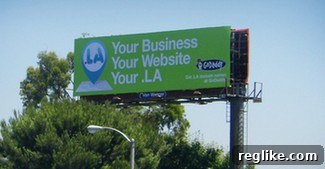
In an increasingly interconnected digital world, the lines between traditional and modern marketing strategies are continually blurring, giving rise to innovative opportunities for brand promotion. A compelling illustration of this synergy recently emerged with GoDaddy’s focused campaign for the .LA domain name. This initiative gained significant traction when GoDaddy CEO Blake Irving personally shared a photograph of a prominent .LA billboard located in the vibrant heart of Los Angeles. Irving’s tweet immediately sparked conversations across social media platforms, perfectly demonstrating a shrewd fusion of old-school physical visibility with cutting-edge digital amplification. This strategic move underscores a growing trend within the domain industry: harnessing tangible, real-world presence to promote a digital asset, especially one with strong geographic relevance and appeal.
The Enduring Power of Offline Advertising in a Predominantly Digital Era
While the internet has undeniably revolutionized every facet of advertising and commerce, traditional marketing channels, such as billboards, retain a powerful and often underestimated capacity to capture attention, particularly for campaigns demanding high visibility and local impact. Billboards offer a unique, non-skippable, and inescapable form of advertising that can register with an audience in a way that sometimes eludes fleeting digital ads. For a domain name like .LA, which possesses a deep resonance with a specific geographical location – Los Angeles – a physical billboard acts as a constant, visually arresting reminder to both the city’s residents and its numerous visitors. It serves to plant a seed of recognition, fostering instant brand recall and directly associating the .LA domain extension with the iconic city it endeavors to represent.
GoDaddy, a colossal entity in the realm of domain registration and web hosting services, boasts a long and storied history of deploying robust, creative, and at times audacious advertising campaigns. The company has consistently allocated substantial resources to wide-reaching television commercials, highly visible Super Bowl advertisements, and various promotional stunts, showcasing an acute understanding of mass market appeal and strategic brand building. Therefore, their calculated decision to utilize a billboard for the .LA domain is not merely a regression to antiquated marketing methods; rather, it represents a sophisticated strategic calculation. It effectively leverages the immediate, visceral impact of a large-format outdoor advertisement while simultaneously generating invaluable digital buzz through CEO Blake Irving’s influential tweet. This comprehensive, multi-channel approach significantly maximizes reach and ensures that the core message permeates both the physical urban landscape and the expansive virtual sphere.
Deconstructing the .LA Domain Strategy: Ingenious Repositioning of a Country Code TLD
The .LA domain name embodies a fascinating duality in its identity. Originally designated as the country code top-level domain (ccTLD) for the nation of Laos, it has been ingeniously repurposed and aggressively marketed to appeal specifically to businesses, organizations, and individuals deeply associated with Los Angeles, California. This strategic repositioning is a masterful stroke of branding, artfully transforming a lesser-known national identifier into a highly desirable and locally relevant digital address. The billboard campaign stands as a central pillar in this elaborate rebranding effort. By strategically placing the advertisement directly within the confines of Los Angeles, GoDaddy is explicitly communicating to the local populace that .LA is unequivocally “for them,” thereby cultivating a profound sense of ownership and immediate relevance.
However, this innovative strategy is not without its unique set of challenges. Unlike newly established generic top-level domains (gTLDs) that are specifically conceived and launched for particular cities, such as .nyc or .london, .LA commenced its existence with an entirely different foundational purpose. Overcoming this initial identity and firmly embedding its new association with Los Angeles demands persistent, creative, and highly intelligent marketing efforts. The billboard serves as an exceptionally powerful visual anchor in this endeavor, providing a tangible, undeniable link between the digital extension and the physical city. Its ultimate objective is to overwrite any prior associations and unequivocally solidify the image of .LA as the quintessential digital address for the sprawling metropolis famously known as the City of Angels.
GoDaddy’s Marketing Masterclass: Precision and Data-Driven Promotion
GoDaddy’s marketing acumen is widely recognized and extensively documented throughout the industry, and their campaigns are almost never arbitrary or haphazard. They are universally renowned for their sophisticated capability to meticulously track the efficacy and return on investment of their incredibly diverse advertising endeavors, ranging from high-budget Super Bowl commercials to highly localized promotional efforts. It is therefore highly probable that this specific .LA billboard campaign in Los Angeles is an integral component of a meticulously planned strategy, meticulously designed with predefined metrics for accurately measuring its overall impact and profitability. While directly attributing sales or sign-ups solely from a billboard can present challenges, GoDaddy undoubtedly employs a variety of indirect and direct attribution methods – such as unique URLs embedded in the ad, scannable QR codes, or exclusive discount codes specifically linked to the campaign – to accurately gauge its influence on .LA domain registrations and subsequent website traffic.
Furthermore, CEO Blake Irving’s deliberate decision to tweet the photograph of the billboard serves as an exemplary case study in modern, integrated marketing communications. This action does not merely promote the .LA domain itself; it ingeniously promotes the *promotion* of .LA. This sophisticated approach creates a crucial secondary layer of engagement, brilliantly leveraging the expansive reach of social media to amplify an offline advertising initiative. His tweet effectively reached a significantly broader audience than just those who physically observed the billboard, generating widespread online discussions and catapulting the campaign onto a global stage. This strategic utilization of a high-profile executive’s personal brand to endorse a significant marketing effort is a sophisticated tactic that many contemporary companies aspire to successfully emulate.
The Promise and Intricacies of Geotargeting for Domain Names
The innovative concept of geotargeting, a practice where marketing messages are precisely tailored to a user’s specific geographical location, holds immense potential and strategic value for domain names with strong local ties, such as .LA. If a user located within Los Angeles were to visit the GoDaddy.com website, it would be a logical and highly effective marketing tactic to prominently present them with targeted promotions and offers for the .LA domain. The original discussion briefly mentioned an attempt to verify such geotargeting, which, at that specific time, did not yield any explicit .LA promotions on the GoDaddy homepage for users accessing it from within Los Angeles.
There are several plausible explanations for this observation. It is conceivable that GoDaddy might have been in the initial phases of testing this particular type of targeting on a very limited segment of its user base, or perhaps the feature itself was still under active development and refinement. Implementing effective, real-time, and highly accurate geotargeting can be an intricate process, necessitating sophisticated IP detection technologies, advanced user preference analysis, and robust dynamic website content delivery mechanisms. It is also possible that, even if implemented, the testing phase deliberately involved only a small percentage of visitors to meticulously gather data and refine the process without disrupting the general user experience. Given GoDaddy’s advanced analytical capabilities and commitment to user experience, it is highly probable that if such granular geotargeting for .LA users in Los Angeles was not fully active at that precise moment, it was – or remains – a crucial component on their strategic roadmap to maximize conversion rates and significantly enhance the online experience for locally relevant users.
The seamless integration of traditional offline brand building, exemplified by the prominent billboard, with highly personalized online promotions, such as dynamic geotargeting on the company’s website, represents the ultimate benchmark in contemporary marketing. When a user first encounters a memorable billboard, then proceeds to visit the associated website and immediately finds highly relevant, tailored content, the entire brand experience becomes incredibly cohesive, impactful, and ultimately, highly effective. This comprehensive and synergistic approach powerfully reinforces the brand message and expertly guides the user smoothly through the entire conversion funnel, from initial awareness to final registration.
The “Local Domain” Phenomenon: Beyond .LA and the Crucial Role of City Involvement
The broader and increasingly significant trend of “local” domain names, particularly the proliferation of new generic top-level domains (gTLDs) like .city, .nyc, .london, .berlin, and numerous others, represents a pivotal development in the internet’s naming architecture. These specialized domains are meticulously designed to furnish businesses, organizations, and individuals with a distinct, easily recognizable online identity directly linked to their specific geographical location. For a substantial number of these city-centric domains, their greatest success and widespread public adoption are achieved when the actual city government or relevant local authorities actively endorse and champion the initiative.
Consider, for instance, the remarkable success story of the .nyc domain. A seemingly simple tweet from then-Mayor Michael Bloomberg, announcing the availability of .nyc domains, generated an unprecedented flurry of media coverage, public discourse, and genuine interest. This powerful, official endorsement from a highly visible and influential civic leader immediately bestowed immense credibility and desirability upon the .nyc extension, effectively transforming it from a mere technical identifier into a potent symbol of civic pride and local identity for New Yorkers. The city government’s active and unwavering involvement ensured that the domain was perceived not merely as a commercial product but as an integral and indispensable component of New York City’s evolving digital infrastructure.
This is precisely where the .LA domain faces a subtly different, though equally challenging, marketing landscape. As previously elaborated, .LA is a strategically repurposed country code TLD originally designated for Laos. While GoDaddy’s marketing team has ingeniously pivoted its focus towards Los Angeles, it conspicuously lacks the official, direct backing of the Los Angeles city government in the same emphatic way that .nyc enjoys the explicit support of New York City’s administration. This distinction is profoundly crucial. Without direct and official city involvement, the arduous task of promoting .LA as the definitive digital address for Los Angeles falls primarily and squarely upon the shoulders of domain registrars like GoDaddy. They are compelled to exert significantly more effort to firmly establish the connection and cultivate the deep local affinity that often arises much more organically with official government endorsement and community buy-in.
The Future of Domain Promotion: Emphasizing Creativity, Seamless Integration, and Community Engagement
As the vast domain name landscape continues its dynamic evolution with hundreds of new gTLDs fiercely competing for visibility and adoption, the strategies employed to effectively promote them will become increasingly critical, sophisticated, and remarkably creative. Domain registries and registrars will need to transcend simplistic price promotions and wholeheartedly embrace integrated marketing campaigns that resonate deeply and authentically with specific target audiences. The GoDaddy .LA billboard campaign serves as an exceptional case study in this ever-changing environment, powerfully demonstrating the undeniable value of a multi-faceted and thoughtfully executed approach.
Future domain promotion strategies will likely encompass a strategic combination of the following key elements:
- Hyper-local offline advertising: This includes highly targeted billboards, localized print advertisements in community publications, and strategic sponsorships of local events that directly engage and captivate the target geographic market.
- Sophisticated online geotargeting: Implementing dynamic content delivery on websites, executing highly localized social media campaigns, and employing precisely tailored search engine marketing strategies to reach users in specific areas.
- Influencer marketing and authentic community engagement: Forging strategic partnerships with respected local personalities, established businesses, and influential community organizations to passionately champion and endorse the domain.
- Official governmental endorsements: For domains explicitly tied to cities or regions, securing the explicit backing and promotion from municipal governments or prominent civic leaders will undoubtedly remain the gold standard for success.
- Educational content and transparent communication: Clearly articulating the unique benefits, inherent value, and direct relevance of new or creatively repurposed domain extensions to potential registrants through accessible and informative content.
Ultimately, the enduring success of any domain name, particularly those with strong intrinsic local ties, hinges critically on its ability to become deeply and organically embedded within the identity and fabric of its intended community. Whether achieved through the commanding presence of a prominent billboard, the viral spread of a strategic tweet, or the authoritative endorsement of a city mayor, the overarching goal remains consistently the same: to ensure that the digital address feels like an inherent, indispensable, and cherished part of the physical place it proudly represents.
Conclusion: A Blueprint for Effective Modern Domain Marketing
GoDaddy’s recent billboard campaign for the .LA domain in Los Angeles transcends the definition of a mere advertisement; it stands as a compelling microcosm of modern, holistic marketing strategy. It elegantly marries the undeniable and lasting impact of traditional outdoor advertising with the amplifying, instantaneous power of social media, all spearheaded by the influential voice of a prominent CEO. This initiative vividly highlights the unique challenges and the significant opportunities presented by domain names that endeavor to forge a strong local identity, especially in scenarios involving the creative repositioning of a country code TLD. While the absence of direct, official city involvement undoubtedly creates a distinct marketing hurdle for .LA when compared to domains like the highly successful .nyc, GoDaddy’s proactive, integrated, and data-driven approach offers an invaluable blueprint for how to effectively build brand awareness, drive adoption, and secure market share in an increasingly crowded and intensely competitive domain name landscape. It serves as a powerful and timely reminder that even in our hyper-digital age, a thoughtfully placed physical presence, synergistically coupled with intelligent online amplification, can still make a profound and decisive difference in the intricate art of brand promotion.