
GoDaddy’s Unverified Email Contact Form: A Security Loophole and Potential for Impersonation
The GoDaddy contact form, intended to facilitate communication with domain owners, suffers from a critical flaw: it doesn’t verify the sender’s email address. This oversight creates a significant security vulnerability, opening the door to impersonation and potentially malicious activities.
In the wake of GDPR, most Whois records are now shielded from public view. However, ICANN, the Internet Corporation for Assigned Names and Numbers, mandates that registrars provide a mechanism for individuals to contact domain name owners. This requirement aims to maintain a channel for legitimate communication, even with privacy protections in place. ICANN requires registrars to implement systems that allow messages to be sent to domain owners while preserving their anonymity in the publicly accessible Whois database.
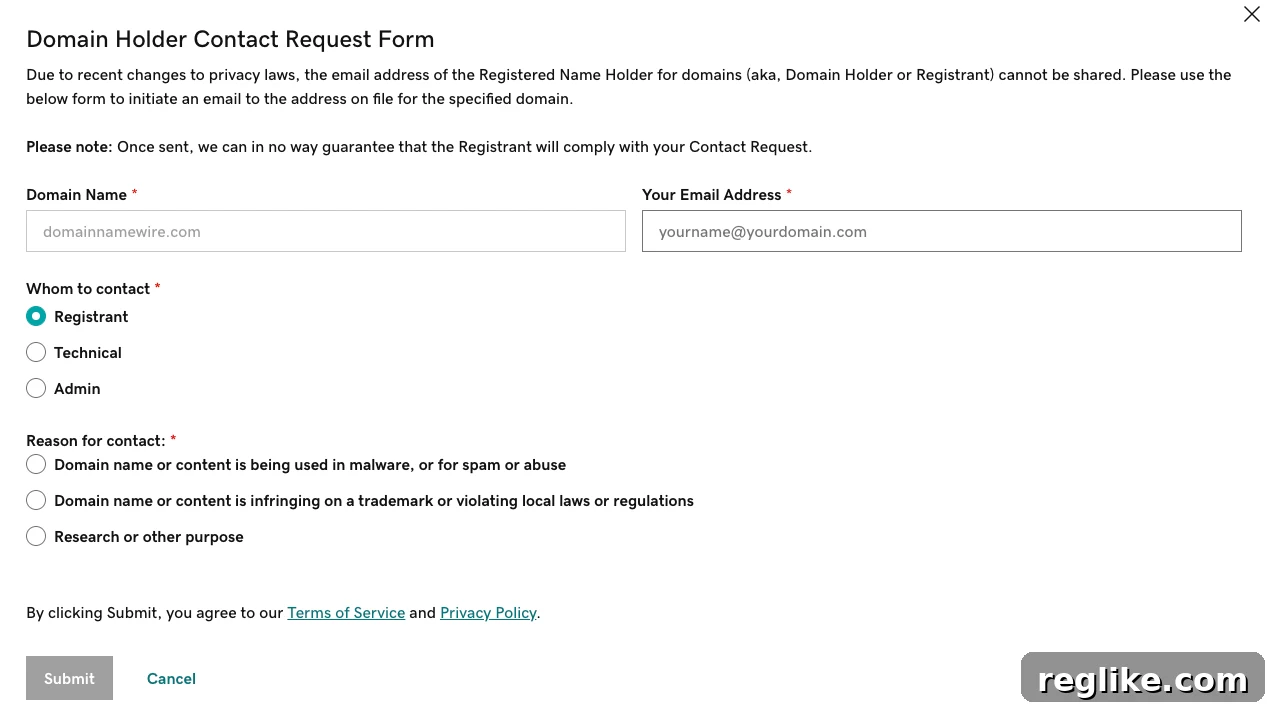
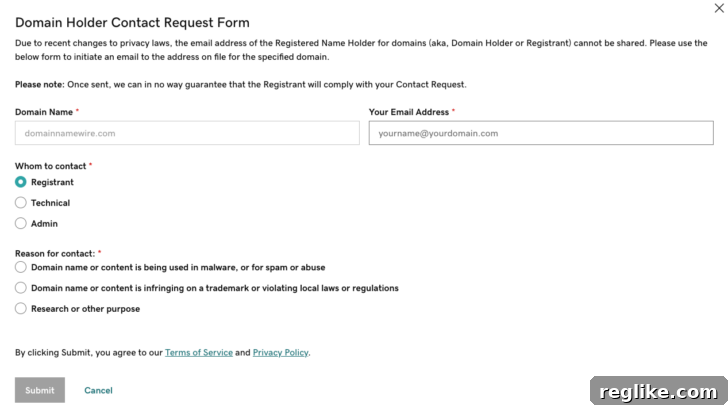
GoDaddy addresses this ICANN requirement through a web form integrated into its Whois records. This form allows individuals to input their contact information and a message, which is then forwarded to the domain name owner. The form includes pre-filled reasons for contact, streamlining the process and categorizing inquiries.
However, a critical vulnerability exists within GoDaddy’s implementation: the sender’s email address is never verified. This lack of verification means anyone can enter any email address into the form, effectively impersonating another person or entity. This security gap has serious implications, allowing malicious actors to send misleading or fraudulent messages under the guise of a trusted source.
The potential for abuse is significant. Imagine receiving a message seemingly from a competitor, legal representative, or even a close friend, only to discover that the message originated from an entirely different source with malicious intent. This loophole undermines the trust in online communication and can lead to confusion, misinformation, and even legal complications.
John Berryhill, a prominent figure in the internet legal community, raised concerns about this issue at a recent Internet Commerce Association meeting. His presentation highlighted the potential for abuse and emphasized the need for GoDaddy to address this security flaw. Following this discussion, an illustrative example of the problem emerged.
On the morning following the ICA meeting, a message arrived in an inbox, claiming to be from Elliot Silver, the respected author of DomainInvesting.com. The message stated: “Your domain name or the content on your website may be infringing on a trademark and/or violating local laws or regulations. It is important that you respond at the earliest.” The recipient, suspecting a prank, immediately contacted Elliot Silver.
The suspicion proved correct. Upon contacting Elliot Silver, it was revealed that he had received a similar message purporting to be from the recipient. This confirmed that the GoDaddy contact form was indeed being exploited for impersonation purposes, and that it was not an isolated incident.
The ease with which this impersonation can be carried out is alarming. A simple internet search can reveal email addresses, and these addresses can then be used to populate the GoDaddy contact form. The recipient of the message has no way to verify the authenticity of the sender, making them vulnerable to deception.
Fortunately, a straightforward and widely used solution exists to address this vulnerability: email verification via a confirmation link. This process, common in account signups and online forms, involves sending an email to the address provided, requiring the user to click a link to confirm their ownership of the email address.
Implementing email verification would add a crucial layer of security to the GoDaddy contact form. It would prevent individuals from using fake or impersonated email addresses, significantly reducing the risk of abuse and misinformation. The process is relatively simple to implement and would not significantly impact the user experience.
The absence of email verification in GoDaddy’s contact form raises questions about their commitment to security and user protection. While the form is intended to facilitate legitimate communication, its current implementation creates a significant vulnerability that can be easily exploited. GoDaddy has a responsibility to address this flaw and implement measures to prevent impersonation and protect its users from potential harm.
The impact of this vulnerability extends beyond individual users. It can also affect businesses and organizations that rely on accurate and trustworthy communication. Imagine a competitor using the GoDaddy contact form to spread false information about a company, or a malicious actor impersonating a legal representative to send threatening messages. The consequences can be damaging and far-reaching.
While the example cited involved a humorous exchange between colleagues, the potential for more serious abuse is undeniable. The vulnerability could be used for phishing attacks, spreading malware, or even engaging in illegal activities. GoDaddy must take swift action to mitigate this risk and ensure the integrity of its contact form.
The solution is clear: implement email verification. This simple step would significantly enhance the security of the GoDaddy contact form and protect users from impersonation and potential harm. GoDaddy should prioritize this issue and take immediate action to address this vulnerability.
Of course, it is possible that the instance described is not widespread, and is the exception rather than the rule. Perhaps, indeed, this is a corner case issue when a domain attorney has too much time. However, even the chance of abuse should be enough of a reason for GoDaddy to consider the easy fix.
The lack of email verification on the GoDaddy contact form is not just a minor oversight; it’s a significant security vulnerability that can be easily exploited for malicious purposes. By implementing a simple email verification system, GoDaddy can significantly improve the security of its platform and protect its users from impersonation and potential harm. It is time for GoDaddy to prioritize this issue and take the necessary steps to ensure the integrity of its domain owner contact form.
This vulnerability underscores the importance of due diligence in online communication. Always verify the authenticity of messages before taking action, and be wary of unsolicited emails, especially those requesting personal information or containing threats. The internet can be a valuable tool, but it is also a breeding ground for scams and malicious activity. By staying informed and taking precautions, you can protect yourself from becoming a victim.
In conclusion, GoDaddy’s unverified email contact form represents a significant security flaw that demands immediate attention. By implementing email verification, GoDaddy can mitigate the risk of impersonation and protect its users from potential harm. This simple step would greatly enhance the security and trustworthiness of its platform, ensuring that the contact form serves its intended purpose of facilitating legitimate communication between domain owners and the wider internet community.