
Google’s recent experiment with displaying only the domain name in Chrome’s address bar has concluded, with the full URL emerging victorious, at least for the foreseeable future. This decision marks a temporary win for web transparency and user control, as browser developers continue to grapple with the challenge of simplifying web navigation without compromising crucial security information.
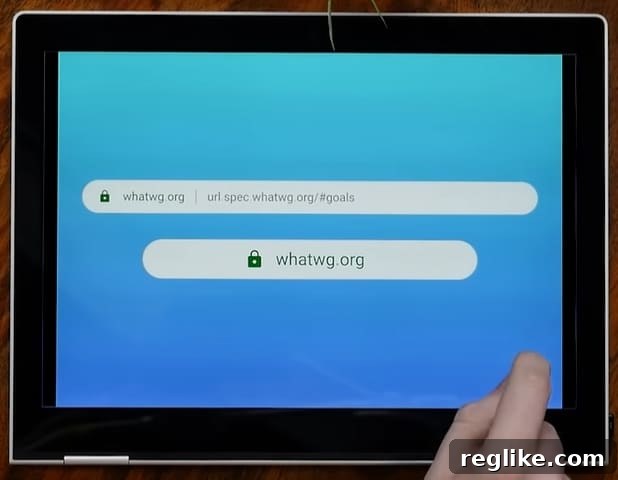
The Chrome Experiment: Simplifying URLs for Enhanced User Security
For a significant period, Google conducted an intriguing experiment within its widely used Chrome browser, designed to reshape how users perceived web addresses. The core of this test involved presenting only a truncated version of the Uniform Resource Locator (URL) in the address bar to a segment of Chrome users. Instead of the typical, comprehensive string that includes subdomains, specific file paths, and various query parameters, certain users would only see the second-level domain (SLD) – essentially, the main part of the website’s identity. For instance, a complex URL like https://blog.example.com/category/article-title?id=123 would simply appear as example.com.
The primary rationale underpinning this controversial experiment was deeply rooted in enhancing online security and fostering greater user awareness. Google’s hypothesis was that by removing the perceived ‘clutter’ of a full URL, users would naturally direct their attention to the most critical and identifying part of the web address: the main domain name. This heightened focus, Google theorized, would empower users to more effectively distinguish legitimate websites from potentially malicious ones, particularly those engaged in sophisticated phishing scams. Phishing attacks frequently leverage confusingly similar subdomains, lengthy and deceptive paths, or subtle misspellings to trick unsuspecting visitors into divulging sensitive information. By streamlining the visible URL, Google aimed to provide a clearer, more immediate indicator of a site’s true origin.
The company believed that the inherent complexity and technical jargon often present in full URLs could overwhelm average internet users, making it challenging for them to accurately parse and verify a site’s authenticity. By simplifying the presentation to just the domain, Google aspired to reduce this cognitive load, enabling users to make quicker, more informed judgments about whether they were truly on the intended website, thereby theoretically mitigating their vulnerability to prevalent online fraud and identity theft.
The Outcome: No Meaningful Impact and a Return to Full Transparency
Despite the well-intentioned objectives and significant resources invested in the experiment, the results did not align with Google’s initial expectations. As comprehensively reported by Android Police, Google has now officially concluded this particular test, opting to revert Chrome’s default behavior to its long-standing standard: displaying the complete and unabridged web address. The official reason provided for this significant reversal was a distinct lack of “meaningful impact.”
This outcome carries substantial implications, suggesting that the mere act of truncating the URL did not demonstrably improve user security awareness or significantly alter user behavior in the beneficial ways Google had anticipated. It implies that users either did not find the simplified domain-only view to be a more effective tool for security assessment, or, perhaps, the removal of vital contextual information inadvertently hampered their ability to navigate and verify online content with confidence. The threshold for “meaningful impact” in such widespread experiments, especially those touching upon fundamental user interaction with the web, is typically very stringent, requiring clear, quantifiable improvements in user safety or experience.
The decision to terminate the experiment underscores the delicate and often challenging balance that browser developers must meticulously maintain. On one hand, there is a compelling drive to simplify the user experience and make the web more accessible. On the other, there is an equally critical imperative to provide sufficient, verifiable information for users to make informed and secure decisions in an increasingly complex digital landscape. While the ambition to cultivate a safer internet is undoubtedly laudable, removing foundational information, even with the best intentions, can sometimes lead to unforeseen negative consequences or simply fail to address the deeper, underlying causes of user vulnerability to online threats.
The Enduring Importance of Full URLs: Context, Control, and Security
The return of the full URL to Chrome’s address bar has been largely met with approval and relief by a broad spectrum of the web community. This includes power users, web developers, cybersecurity professionals, and advocates for open web transparency. The comprehensive URL serves an array of critical functions that extend far beyond simple navigation:
- Comprehensive Security Verification: Beyond just the core domain, the full URL empowers users to immediately verify the presence of HTTPS (signifying a secure, encrypted connection), scrutinize subdomains which can indicate distinct sections or services of a website, and detect potentially suspicious or obfuscated file paths that could be precursors to phishing attempts, malware downloads, or other malicious activities.
- Rich Content Context: URLs are frequently designed to provide invaluable context about a specific page’s content, its hierarchical position within a larger website, and any unique parameters that might customize or personalize the page view. This detailed context is indispensable for users to fully comprehend the information presented and to accurately share precise, unambiguous links with others.
- Indispensable for Debugging and Development: For web developers, system administrators, and IT professionals, the full URL is an absolutely indispensable tool. It is crucial for effectively diagnosing and resolving technical issues, meticulously tracking user journeys across a site, and gaining a comprehensive understanding of how complex web applications are structured and interact.
- Foundational for SEO and Digital Marketing: Thoughtfully structured, descriptive, and clean URLs are a cornerstone of effective search engine optimization (SEO). They significantly aid search engines in accurately comprehending a page’s content and relevance, which in turn can boost click-through rates by offering users a clear, informative preview of the linked page. Digital marketers also heavily rely on full URLs for precise tracking, detailed analytics, and efficient campaign management.
- User Trust and Familiarity: Decades of internet usage have conditioned users to expect, interpret, and rely on full URLs as a fundamental element of their online experience. Drastically altering this bedrock aspect of browser interaction can disrupt deeply ingrained habits and potentially erode user trust if the changes are not universally beneficial, intuitive, or clearly communicated.
The browser’s address bar is far more than a mere input field for navigation; it functions as a central nexus of information and a paramount security indicator. Truncating this vital component, even with the most noble intentions, invariably removes layers of critical data that countless users, ranging from casual browsers to seasoned experts, depend upon daily for secure and informed web interaction.
Google’s Broader Perspective: “URLs Kind of Suck” and the Path Forward
While the full URL has undeniably claimed victory in this particular skirmish, it is essential to acknowledge that Google’s overarching perspective on URLs remains largely unaltered. The tech giant has publicly articulated its candid sentiment that “URLs kind of suck.” This strong and provocative statement reflects a deeper, more fundamental philosophical challenge for Google: how to continuously evolve and modernize the foundational mechanisms of the web to be more intuitive, inherently secure, and supremely user-friendly in an increasingly intricate and often perilous online ecosystem.
Google’s dissatisfaction with the current state of URLs stems from several perceived inherent shortcomings:
- Overwhelming Complexity: URLs can frequently be excessively long, cryptic, and incredibly challenging for the average person to effortlessly read, accurately understand, or easily recall. This intrinsic complexity often renders them prime targets for sophisticated phishing schemes and various other malicious online activities.
- Inherent Security Vulnerabilities: The intricate and often convoluted structure of URLs can be ingeniously exploited by malicious actors to construct deceptive links that, at first glance, appear entirely legitimate but ultimately redirect users to harmful, fraudulent websites. The clever manipulation of subdomains, the use of internationalized domain names (IDNs) for visual deception, and excessively lengthy, confusing paths are all common tactics employed to trick unsuspecting users.
- Lack of Human Readability: A significant proportion of URLs are primarily engineered for machine processing rather than intuitive human comprehension. They are often replete with technical parameters, arbitrary codes, and strings of characters that offer little to no immediate meaning or context to the end user.
- Legacy System Constraints: URLs, as a core technology, originated in the nascent stages of the internet. Google, as a preeminent innovator and driver of web standards, consistently seeks opportunities to modernize, refine, and significantly improve upon existing protocols to enhance the overall web browsing experience for everyone.
This enduring dissatisfaction unequivocally signals that while one specific experiment has concluded, users should reasonably anticipate and prepare for further “assaults” or significant modifications to how URLs are presented and interacted with in the future. Google, alongside other leading browser developers and web standard bodies, is highly likely to continue exploring and implementing diverse approaches to simplify, augment, or even fundamentally reimagine the mechanisms through which web addresses are conveyed and website identity is established and perceived.
Navigating the Future: Web Identity, Security, and User Experience
What might these forthcoming “assaults” on traditional URL presentation entail? They could range from subtle, incremental adjustments to the browser’s user interface to more radical and transformative shifts in how a website’s identity and trustworthiness are effectively communicated. Past concepts and ongoing research and development efforts include:
- Enhanced Origin Chips: The development and prominent display of clearer, more intuitively understandable indicators of a site’s origin, designed to be far less susceptible to spoofing or deceptive tactics than a raw URL string.
- Integrated Certificate Information: Embedding more readily accessible and easily digestible information about a website’s security certificate directly within the browser’s interface, allowing users to quickly verify site authenticity.
- Contextual Security Information: Leveraging advanced machine learning algorithms to furnish users with real-time contextual warnings or additional reputation-based information about a site, extending far beyond what the URL alone can possibly convey.
- Simplified Sharing Mechanisms: Developing and implementing more streamlined and user-friendly methods for sharing online content that do not solely rely on the cumbersome process of copying and pasting potentially long and intricate URLs.
- Advancements in WebAuthn and Passwordless Authentication: A significant industry-wide pivot towards stronger, more seamless authentication methods that dramatically reduce or eliminate reliance on traditional passwords, thereby indirectly lessening the burden on users to meticulously inspect URLs for login pages.
The overarching and constant goal driving these innovations is unequivocally to bolster user security and elevate the overall browsing experience. However, any proposed changes must be meticulously evaluated and thoughtfully implemented to avoid inadvertently removing critical information or, worse, inadvertently creating novel vectors for deception and online fraud. The enduring challenge lies in forging a universally understandable, secure, and intuitive method to represent website identity in the rapidly accelerating and ever-evolving digital landscape.
Practical Recommendations for Users and Webmasters
For the immediate future, the full URL remains your most reliable and primary tool for confidently navigating and verifying web content. Here are some essential recommendations for both everyday internet users and dedicated web professionals:
- For Internet Users:
- Diligently Check the Full URL: Before committing to any sensitive action, such as entering personal data or financial information, always take a moment to carefully inspect the complete URL to ensure it precisely matches the expected and legitimate domain.
- Prioritize HTTPS: Consistently verify that your connection to a website is secure. This is indicated by the presence of “https://” at the beginning of the URL and typically accompanied by a prominent padlock icon in the address bar.
- Be Wary of Typos and Suspicious Subdomains: Maintain a vigilant eye for even slight misspellings in domain names or the presence of unusual, unexpected subdomains, as these are often tell-tale signs of a phishing attempt or a fraudulent website.
- Utilize Reliable Sources: Cultivate a habit of bookmarking frequently visited and trusted websites, and always rely on reputable search engines for discovering new content.
- For Webmasters and SEO Professionals:
- Craft Clean, Descriptive URLs: Design your website’s URLs to be inherently human-readable, incorporating relevant keywords where natural, and structuring them to clearly reflect your site’s content hierarchy. This practice profoundly benefits both your users and search engine visibility.
- Enforce HTTPS Universally: Ensure that every single page on your website is served exclusively over HTTPS. This is paramount for safeguarding user data, building user trust, and meeting modern SEO best practices.
- Proactively Monitor for Phishing Attacks: Be vigilant and proactive in monitoring the web for potential phishing sites that attempt to mimic your brand or website. Develop a rapid response plan to take swift action in having these fraudulent sites removed.
- Stay Continuously Informed: Actively keep abreast of the latest browser developments, evolving web standards, and Google’s ongoing initiatives aimed at enhancing web navigation, security protocols, and user experience.
Conclusion: The Ongoing Evolution of Web Trust and Navigation
The temporary yet significant triumph of the full URL in Chrome’s address bar underscores a crucial contemporary reality: for now, the perceived benefits of user transparency and the provision of comprehensive contextual information continue to outweigh the aspirations for extreme simplification. Google’s recent experiment, though ultimately reversed, serves as a poignant reminder of a fundamental and enduring tension in modern web design and development: the compelling desire to make the internet more accessible, intuitive, and inherently secure versus the non-negotiable imperative to equip users with complete and accurate contextual information, empowering them to make informed and secure decisions in an increasingly complex digital landscape.
While this particular “battle” for URL presentation has been won, the broader “war” for a truly intuitive, unequivocally secure, and seamlessly user-friendly web is far from over. It is entirely reasonable to expect Google and other industry leaders to persist in their innovation and experimentation with various methodologies for displaying web addresses and conveying the critical identity and trustworthiness of websites. The ultimate, shared goal remains the creation of a web environment that is both effortlessly simple to navigate and unequivocally safe for all users – an ambitious journey that will undoubtedly encompass many more iterations, spirited discussions, and transformative evolutions of foundational elements like the humble, yet profoundly powerful, URL.