
Unlock Instant Actions: How Google’s .new Domain is Revolutionizing Online Workflows
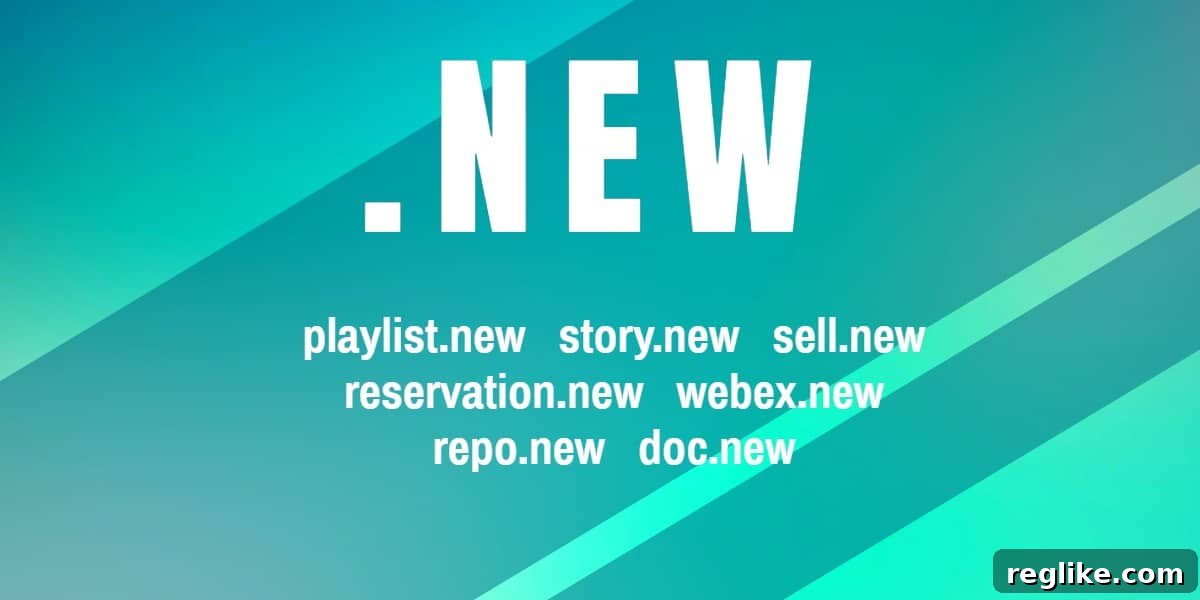
In an era where speed and efficiency define digital interaction, Google is spearheading a significant evolution in how we interact with the web. The company is strategically opening up its innovative .new top-level domain (TLD) to third-party entities, transforming simple domain entries into powerful command shortcuts. This initiative is set to redefine user experience by facilitating “action generation” directly from the browser’s address bar.
For over a year, Google has demonstrated the intrinsic utility of the .new TLD through its own services. A prime example is typing doc.new, which instantly creates a new Google Doc, bypassing multiple clicks and menu navigations. This seamless functionality quickly garnered appreciation for its sheer convenience and efficiency. Now, the vision expands far beyond Google’s ecosystem, promising a more streamlined and intuitive internet for everyone.
The Dawn of Action-Oriented Domains: Beyond Simple Navigation
Traditionally, domain names have served primarily as addresses to navigate to websites. You type in a URL, and you land on a webpage. The .new TLD, however, introduces a paradigm shift. It transforms a passive navigation act into an active command, enabling users to initiate specific tasks or workflows with remarkable speed and simplicity. This innovative approach recognizes the user’s intent to “do something” rather than just “go somewhere,” pushing the boundaries of what a domain name can achieve.
This initiative represents one of the most forward-thinking applications of a new top-level domain we’ve seen. It not only highlights the enduring power of the browser’s address bar as the most direct gateway to online services but also underscores a broader industry trend towards minimizing friction in digital interactions. By allowing third parties to leverage this powerful mechanism, Google is essentially creating a new layer of web interaction that prioritizes immediate utility and user productivity.
Unlocking New Possibilities: Third-Party Integration and Real-World Examples
The decision to open the .new TLD to third-party developers and businesses marks a pivotal moment for digital innovation. Companies can now register .new domains, provided they are used to initiate a specific action or workflow. This opens up a vast array of possibilities for simplifying common online tasks across diverse platforms and services. Imagine bypassing login screens, navigating complex menus, or searching for specific functions – all with a single, memorable, and intuitive domain entry.
Several prominent companies have already embraced this revolutionary concept, demonstrating its versatile application:
- Playlist.new: Music enthusiasts can instantly create a new playlist on Spotify, ready to add their favorite tracks without needing to navigate through the app or website. This direct action greatly enhances the user experience for active music curation.
- Story.new: Aspiring writers and content creators can dive straight into composing a new article on Medium, eliminating any steps that might break their creative flow. It’s a direct portal to publishing.
- Sell.new: For those looking to declutter or monetize items, typing
sell.newon eBay can initiate a listing process, streamlining the journey from deciding to sell to creating a draft listing. This is invaluable for e-commerce activities. - Reservation.new: Planning a meal out becomes significantly easier. Users can directly access OpenTable’s reservation system, often pre-populating with their location to help them find and book tables at top restaurants nearby. Convenience for dining experiences is paramount.
- Webex.new: In the realm of professional communication, Cisco Webex offers a seamless solution. Typing
webex.newprovides an easy, fast, and secure way to start a personal meeting room from any browser, enhancing productivity for remote teams and virtual collaborations. - Repo.new: Developers and programmers benefit immensely from this. Typing
repo.newinstantly opens a new repository or gist on GitHub, accelerating the start of new coding projects and fostering innovation within the development community.
These examples illustrate the broad applicability and profound impact of action-oriented .new domains. From entertainment to e-commerce, content creation to professional collaboration and software development, the .new TLD is poised to become an indispensable tool for efficiency across countless online activities.
Benefits for Users and Businesses: A Win-Win Innovation
The widespread adoption of .new domains offers compelling advantages for both end-users and the businesses deploying them.
For Users: Unprecedented Convenience and Speed
- Instant Gratification: Users can initiate tasks immediately, cutting down on clicks, load times, and menu navigation.
- Simplified Workflows: Complex processes are distilled into a single, memorable command, reducing cognitive load and potential for error.
- Enhanced Productivity: By streamlining common actions, users save valuable time, allowing them to focus more on the task itself rather than the process of getting started.
- Intuitive Experience: The domains are designed to be logical and easy to remember, aligning directly with the desired action.
For Businesses: A Strategic Edge in Digital Engagement
- Direct Engagement: Businesses can offer a direct path for users to engage with their core services, bypassing potential distractions.
- Improved User Onboarding: New users can quickly discover and utilize key features, reducing friction in their initial interactions with a service.
- Enhanced Brand Visibility: A memorable .new domain reinforces brand identity and association with specific actions, making the service more prominent in users’ minds.
- Innovative Marketing Tool: These domains provide a fresh, compelling way to promote specific features or calls to action in marketing campaigns.
- Competitive Differentiation: Companies leveraging .new domains demonstrate a commitment to user experience and innovation, potentially attracting and retaining more customers.
Navigating the Registration Process for .new Domains
Google has outlined a clear process for companies interested in securing a .new domain, ensuring a structured and fair rollout. The company conducted the ICANN-mandated sunrise period specifically for trademark holders, which ran through January 14. This crucial phase allowed businesses to protect their existing brand identities by registering corresponding .new domains, even if they didn’t immediately activate an action or workflow.
Following the sunrise period, general availability for .new domain registrations commenced on December 2. Companies eager to innovate with action-generating domains can now apply. However, a key requirement for compliance is that applicants must create and activate an action or workflow associated with their registered .new domain within 100 days of its receipt. This stipulation ensures that the TLD’s core purpose – enabling immediate actions – is upheld, preventing speculative registrations and promoting genuine utility.
Addressing the “Mental Model” Challenge: New Habits for a New Web
While the .new TLD offers undeniable advantages, its adoption also presents a minor, yet notable, psychological hurdle. As one common observation highlights, many users, accustomed to a different mental model, frequently type new.doc instead of the correct doc.new when attempting to create a new Google Document. This subtle inversion reflects established habits and the way users have traditionally constructed commands or file names.
Overcoming this “backwards” problem will require a combination of user education, intuitive naming conventions, and consistent marketing efforts. Businesses registering .new domains should prioritize names that naturally align with the action and are easy for users to remember in the correct sequence. For instance, email.new is inherently more intuitive than new.email for creating a new email. As users become more familiar with this new interaction paradigm, these mental adjustments are likely to become second nature, much like adopting new keyboard shortcuts or touch gestures.
The Future Landscape of Domain Names and Online Interaction
The introduction and expansion of the .new TLD could be a harbinger of a broader transformation in the domain name landscape. It challenges the traditional view of domains as mere addresses, positioning them as functional interfaces. This innovation may inspire other TLDs to explore action-oriented applications, leading to a more dynamic and efficient internet.
The .new TLD reinforces the idea that the simplest path to accomplishing a task is often the most effective. It empowers users by giving them direct control over their online experiences and provides businesses with a powerful new tool to enhance engagement and streamline their services. As the digital world continues to evolve, initiatives like the .new domain remind us that even fundamental internet components, like domain names, still hold immense potential for innovation and improving our daily online lives.
Leveraging .new for Digital Innovation
For forward-thinking businesses, registering a .new domain is more than just securing a new web address; it’s an investment in a modern, user-centric approach to online interaction. It offers a unique opportunity to stand out in a crowded digital space by providing unparalleled convenience. Businesses are encouraged to explore how a .new domain can simplify access to their most valuable features, from starting a project to initiating a sale or booking a service.
In conclusion, Google’s opening of the .new domain for third-party action generation represents a significant leap forward in web usability. It’s a testament to the ongoing pursuit of efficiency and directness in our digital lives. By turning domain names into actionable commands, the .new TLD is set to revolutionize how we interact with online services, making the internet a more intuitive, productive, and truly action-oriented environment for everyone.