
The timing of these two domain registrations suggests significant momentum with driverless taxis and the broader autonomous vehicle industry.
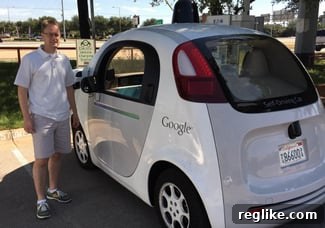
In a subtle yet telling move, Google, a pioneer in autonomous driving technology through its Waymo subsidiary, recently secured two highly relevant domain names: Driverless.app and DriverlessCar.app. These registrations in the specialized .app extension signal more than just routine digital housekeeping; they underscore an accelerating pace in its driverless car initiatives and hint at an expansive vision for the future of driverless taxis and self-driving services. While neither domain currently resolves to a live website, their acquisition by a company at the forefront of this revolution speaks volumes about strategic foresight and potential upcoming developments in the realm of autonomous mobility.
Google’s Strategic Domain Play: More Than Just a Name
The act of registering domain names might seem trivial, but for a technology giant like Google, every such move is meticulously calculated and holds considerable strategic weight. The choice of the .app top-level domain (TLD) for these new acquisitions is particularly insightful. Google itself owns and operates the .app TLD, which was specifically designed to provide a secure and recognizable online home for applications and digital services. This ownership gives Google a unique advantage, allowing them to secure premium, generic terms that perfectly align with their long-term strategic goals for autonomous vehicles.
Registering “Driverless.app” and “DriverlessCar.app” isn’t merely about brand protection in the nascent autonomous vehicle market; it’s about claiming a foundational digital identity for future offerings. These domains are poised to potentially pave the way for a more generalized and widely accessible autonomous vehicle platform, possibly extending beyond the existing Waymo branding. Such direct and universally understood names are crucial digital real estate in the rapidly evolving landscape of self-driving technology. By securing them, Google is positioning itself to capture broad user interest and establish clear, intuitive digital touchpoints for anyone searching for driverless car services or information.
This strategic foresight ensures that as the public’s understanding and adoption of autonomous driving grow, Google will own the most memorable and intuitive online addresses related to the technology. It hints at a future where autonomous transportation is not just a niche service in a few cities but a more pervasive and widely available option, with Google at its digital core. The generic nature of these domain names, as opposed to a more specific “Waymo-branded” domain, suggests an ambition to become synonymous with driverless technology itself, further solidifying its leadership position in this transformative industry.
Waymo’s Journey: From Project Chauffeur to Robotaxi Leader
To fully appreciate the significance of these domain registrations, it’s essential to understand Waymo’s impressive trajectory in the autonomous driving space. Google’s journey into self-driving technology began over a decade ago with Project Chauffeur, a visionary initiative aimed at fundamentally transforming personal and public transportation. This ambitious project, driven by pioneering research and engineering, evolved into Waymo in 2016. As a dedicated company under the Alphabet umbrella, Waymo was tasked with the singular mission of bringing safe and efficient self-driving technology to the world.
Waymo has since emerged as a global leader in autonomous vehicle technology, accumulating billions of miles in real-world and simulated driving scenarios. This extensive experience has been instrumental in refining its sophisticated autonomous driving system, known as the Waymo Driver. This system represents the pinnacle of AI and robotics, enabling vehicles to navigate complex environments with an unparalleled level of safety and precision. The continuous accumulation of data and experience allows the Waymo Driver to learn and adapt, consistently improving its capabilities and setting new benchmarks for autonomous operations.
A significant milestone in Waymo’s journey was the launch of the Waymo One app, which facilitates its pioneering driverless taxi fleet operations. Initially launched in limited areas of Phoenix, Arizona, Waymo One has since expanded its service area, including bustling locales like Downtown Phoenix and Sky Harbor International Airport. Through this innovative robotaxi service, everyday passengers can summon fully autonomous vehicles for rides, experiencing the future of mobility firsthand. The Waymo One app provides a seamless user experience, from booking a ride and tracking the vehicle’s arrival to enjoying a safe and comfortable journey without a human driver present. This commercial deployment marked a pivotal moment, transitioning autonomous driving from a futuristic concept to a tangible, on-demand service for the public.
The technology underpinning Waymo’s success is a complex fusion of advanced sensors, artificial intelligence, and sophisticated software. Its vehicles are equipped with an array of state-of-the-art LiDAR, radar, and high-resolution cameras that provide a comprehensive 360-degree view of their surroundings, even in challenging weather and lighting conditions. This wealth of sensor data is processed by powerful on-board computers running Waymo’s proprietary AI algorithms. These algorithms enable the vehicle to accurately perceive its environment, predict the behavior of other road users, and plan its movements safely and efficiently. The integration of machine learning ensures that the Waymo Driver is constantly learning from every mile driven, both physically on public roads and in extensive simulations, ensuring an ever-higher standard of safety, reliability, and operational efficiency.
Is a Wider Rollout for Driverless Taxis on the Horizon?
The registration of “Driverless.app” and “DriverlessCar.app” by Google prompts an intriguing and highly anticipated question: Does this signal an impending wider rollout of Waymo’s services, or perhaps even a new strategic direction for Google’s broader autonomous ventures? While Waymo One is operational and steadily expanding its footprint within Phoenix, the generic and universally applicable nature of these new domains suggests ambitions that could extend significantly beyond the current “Waymo One” branding and its existing geographical scope. It hints at a future where autonomous transportation is not just a localized service but a more pervasive and widely available option across numerous regions.
Industry observers and enthusiasts have long speculated about Waymo’s expansion plans beyond its initial launch city. The company has conducted extensive testing in various major urban centers across the United States, including San Francisco, Los Angeles, and Austin, among others. These rigorous testing programs suggest that these locations could be prime candidates for future commercial deployments of Waymo’s robotaxi service. Securing generic domains like “Driverless.app” now could be a preemptive and strategic move, preparing the digital infrastructure for a multi-city launch or even a national presence. Imagine a single “Driverless.app” that allows users to seamlessly access Waymo services in any city where they are available, streamlining the user experience and consolidating Google’s brand presence in the autonomous mobility sector under a unified digital umbrella.
Furthermore, these strategically acquired domains might foreshadow new and diverse types of autonomous services beyond just ride-hailing. Could “Driverless.app” become a central hub for autonomous logistics, local delivery services, or even a platform for licensing Waymo’s cutting-edge technology to other automotive manufacturers and service providers? The broad scope and universal appeal of the domain names allow for immense flexibility in future product offerings and business models. It would not be surprising if Google, with its vast ecosystem of services and technological capabilities, envisions a future where “driverless” technology integrates seamlessly into various aspects of daily life, from personal transportation to urban last-mile delivery and beyond. The registration of these highly coveted domains could very well be the first public indication of such an overarching and ambitious strategy to dominate the autonomous future.
The Evolving Landscape and Future of Autonomous Vehicles
The autonomous vehicle industry is on the cusp of a revolutionary transformation, promising profound and far-reaching impacts on urban planning, personal mobility, and the global economy. Driverless taxis, spearheaded by pioneering companies like Waymo, are merely the vanguard of this seismic shift. The widespread adoption of self-driving cars is projected to dramatically enhance road safety by virtually eliminating human error, which remains the leading cause of traffic accidents worldwide. This technological leap also promises to significantly alleviate traffic congestion in urban areas, reduce the demand for extensive parking infrastructure, and provide unprecedented mobility independence for elderly individuals, those with disabilities, and non-drivers.
From an environmental perspective, a future fleet of optimized, often electric, autonomous vehicles could substantially lower carbon emissions and improve air quality in congested urban environments. This transition represents a significant step towards more sustainable and efficient transportation systems globally. However, the path to widespread adoption is not without its complex challenges. Regulatory frameworks for autonomous vehicles are still very much in their nascent stages, evolving slowly and varying significantly from state to state and country to country, creating a patchwork of legal landscapes. Public perception and trust also remain crucial hurdles; convincing a skeptical public that driverless cars are unequivocally safe and reliable requires consistent, flawless performance and transparent communication from developers.
Ethical dilemmas, such as programming vehicles to make complex decisions in unavoidable accident scenarios, continue to be debated rigorously by ethicists, engineers, and policymakers. Furthermore, the economic impact, particularly concerning potential job displacement in the traditional transportation sector (e.g., taxi drivers, truck drivers), is another complex socio-economic issue that policymakers and industries must address proactively and compassionately to ensure a just transition. Despite these multifaceted complexities, the momentum driving the autonomous vehicle industry forward is undeniable and relentless.
Major players like Cruise (General Motors’ autonomous driving unit), Zoox (acquired by Amazon), and Mobileye (an Intel company) are investing heavily in research, development, and deployment, each bringing their unique technological approaches and strategic visions to the market. Tesla, with its ambitious FSD (Full Self-Driving) beta program, continues to push the boundaries of vision-only autonomy, relying predominantly on cameras rather than LiDAR. This fiercely competitive landscape fosters rapid innovation, constantly driving technological advancements and accelerating the journey toward achieving fully autonomous operations. The global race to achieve Level 5 autonomy—where a vehicle can operate completely independently under all driving conditions and without human intervention—is intense, and every new development, including strategic domain registrations, marks another significant step forward in this journey.
The precise timeline for the widespread adoption and ubiquitous deployment of driverless taxis and personal autonomous vehicles remains a subject of ongoing discussion and varying predictions among industry experts. While fully ubiquitous deployment across all regions might still be a decade or more away, the incremental and significant progress being made by leaders like Waymo suggests a steady, determined march towards that transformative future. Initial deployments will likely continue to be concentrated in geofenced urban areas, gradually expanding their operational design domains as the underlying technology matures, regulatory frameworks adapt to new realities, and public confidence in these systems steadily grows. The registration of “Driverless.app” and “DriverlessCar.app” by Google is a clear testament to this unwavering commitment, signaling that the company is not only preparing for the future of transportation but is actively shaping its fundamental digital identity and pathways.
Conclusion: A Glimpse into Tomorrow’s Mobility
Google’s recent acquisition of Driverless.app and DriverlessCar.app is far more than a routine administrative task in the digital realm. It represents a profound strategic move that reflects the company’s deep confidence in the future of autonomous vehicles and strongly hints at an expanded vision for how these transformative technologies will seamlessly integrate into our daily lives. As Waymo continues to refine its industry-leading Waymo Driver technology and steadily broaden its operational footprint across various cities, these generic, yet powerful, domain names position Google to be at the absolute forefront of the public’s mind whenever they contemplate or search for “driverless” technology. Whether signaling a massive geographical rollout, the introduction of entirely new service offerings, or a foundational shift in its overarching branding strategy for autonomous mobility, these strategic domain registrations unequivocally underscore Google’s unwavering and long-term commitment to pioneering and leading the era of driverless mobility. The road ahead for autonomous vehicles is undeniably exciting and filled with immense potential, and Google, through its subsidiary Waymo, is clearly investing heavily in shaping not only the technology but also the crucial digital pathways that will define that groundbreaking journey.