
Google’s Landmark Patent: Revolutionizing Local Search with Enhanced Business Information
Google has significantly shaped the way we access information, and its advancements in local search have been particularly transformative. A pivotal moment in this evolution was the awarding of U.S. Patent 7,624,101, officially titled “Enhanced Search Results.” This patent underscores Google’s commitment to delivering highly relevant and actionable local information directly within its search results pages. It codifies the method by which search queries for businesses or services in a particular area yield comprehensive details, including phone numbers, physical addresses, and integrated map views, making it easier than ever for users to connect with local establishments.
The Dawn of Actionable Local Search Results
Before the widespread implementation of such features, finding a local business often required multiple steps: searching, clicking through to a website, then navigating that site to find contact details. This multi-step process could be cumbersome and time-consuming. Google’s patent addressed this friction point head-on. By presenting critical business information—such as a direct phone number, precise street address, and an embedded map for directions—right at the top of the search results page, Google dramatically streamlined the user experience. This innovation wasn’t just about showing more data; it was about providing immediate utility, enabling users to call, visit, or locate a business with unprecedented ease. This functionality has become ubiquitous, making it hard to imagine a time when such enriched results weren’t standard practice.
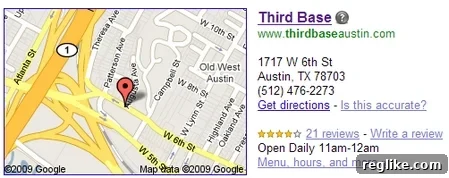
The visual representation of these enhanced results, often appearing as a prominent knowledge panel or a local pack near the top of the search engine results page (SERP), instantly grabs user attention. This prominent display highlights the most pertinent information about local businesses, whether you’re searching for a nearby restaurant, a specific retail store, or professional services. It’s a testament to Google’s continuous effort to anticipate user needs and deliver information in the most accessible and efficient format possible. This design choice not only improves user satisfaction but also significantly boosts the visibility of local businesses that effectively optimize their online presence.
The Technical Ingenuity Behind Enhanced Results
The patent delves into the technical methodologies Google employs to gather and verify this crucial contact information. One primary approach involves systems designed to capture phone and address data directly from the target website itself. This direct extraction ensures the information is current and accurate, reflecting what the business itself publishes. However, the patent outlines more sophisticated mechanisms for robustness and verification. A key embodiment describes accessing the domain name’s WHOIS database. The WHOIS record, which contains registered owner contact information, can serve multiple purposes. In one scenario, the address and phone number found in the WHOIS record are used to cross-reference and verify the information extracted from the website, adding a layer of authenticity and trust to the displayed search results.
Furthermore, the patent details an even more critical embodiment where the WHOIS record may act as the sole source for address and phone number information. This particular aspect highlights Google’s innovative approach to data acquisition, especially for businesses whose websites might be less structured or where contact details are not readily accessible to automated crawlers. The ability to rely on a third-party, authoritative source like WHOIS data ensures that Google can still provide valuable local information even under challenging circumstances. This strategy underscores the complexity of building a comprehensive local search index and the ingenious methods Google employs to maintain accuracy and breadth of coverage.
The Profound Impact on Users and Local Businesses
For the User: Unparalleled Convenience and Efficiency
For the average user, Google’s enhanced local search results represent a massive leap in convenience. Imagine being in an unfamiliar neighborhood and needing to find a pharmacy, or spontaneously deciding to try a new restaurant. With these results, a quick search provides immediate access to directions via an integrated map, the ability to call the business directly with a single tap, or to check their exact location without ever leaving the search results page. This immediacy saves valuable time and removes friction from daily tasks, making it simpler to make informed decisions about where to go or who to contact. The user experience is prioritized, leading to higher satisfaction and more efficient information retrieval.
For Local Businesses: Enhanced Visibility and Direct Customer Engagement
For local businesses, the implications of this patent are profound, primarily revolving around increased visibility and direct customer engagement. Appearing in the local pack or knowledge panel with verified contact information is akin to having a prime billboard on the busiest digital street. It elevates a business above competitors that might not have optimized their online presence. This direct exposure means potential customers are more likely to discover and interact with the business, leading to higher foot traffic, more phone inquiries, and ultimately, increased revenue. It levels the playing field, allowing even small businesses to compete effectively with larger chains if they manage their online identity well.
Beyond mere visibility, the inclusion of verified contact details fosters trust. When Google explicitly displays a phone number and address, it implicitly vouches for the legitimacy of the business. This trust translates into action: users are more inclined to call a number or visit an address presented so prominently and authoritatively. This feature is particularly crucial in today’s digital-first world, where the journey from search query to customer conversion needs to be as seamless as possible. Businesses that leverage this by ensuring their information is accurate across all platforms benefit significantly from Google’s commitment to delivering reliable local data.
Strategic Pillars: Google My Business and Local SEO
This patent and its underlying principles are intricately linked to other core Google initiatives, most notably Google My Business (GMB). GMB serves as the central hub for businesses to manage how they appear across Google Search and Maps, and it directly feeds into these enhanced search results. By claiming and optimizing their GMB profiles, businesses provide Google with the exact information (Name, Address, Phone – NAP) that the patent describes gathering and displaying. This symbiotic relationship ensures data accuracy and helps businesses take control of their digital footprint, making them discoverable to the millions of users relying on local search daily.
The existence and continuous refinement of these enhanced local results have fundamentally reshaped the landscape of Local Search Engine Optimization (SEO). Businesses no longer just need a website; they need a robust and consistent online presence. Key local SEO strategies directly influenced by this patent include:
- NAP Consistency: Ensuring the business name, address, and phone number are identical across all online directories, social media, and their own website. Inconsistencies can confuse Google’s algorithms and hinder display in local packs.
- Google My Business Optimization: Filling out every section of the GMB profile, including categories, services, hours, photos, and managing customer reviews.
- Local Citations: Building mentions of the business across various online platforms, reinforcing its existence and location.
- Schema Markup: Implementing structured data on websites to explicitly tell search engines what information pertains to the business’s contact details, services, and location.
Adherence to these practices is no longer optional but essential for local businesses aiming to thrive in the modern digital economy.
The Evolution of Search: From Keywords to Context
Google’s patent for enhanced local results is a microcosm of the broader evolution of search itself. Early search engines primarily focused on keyword matching and basic relevance. However, over time, search has become increasingly sophisticated, moving towards understanding context, user intent, and delivering highly personalized results. Local search is a prime example of this shift. When a user searches for “pizza near me,” Google doesn’t just look for websites with the word “pizza”; it understands the implied geographical intent and leverages its extensive database of local businesses, empowered by patents like 7,624,101, to present truly relevant, actionable options. This move from simple information retrieval to comprehensive answer provision underscores Google’s ongoing innovation.
Looking Ahead: The Future of Local Discovery
While the patent 7,624,101 laid crucial groundwork, local search continues to evolve. We can anticipate even more sophisticated integrations, potentially driven by advancements in artificial intelligence and machine learning. Voice search, for instance, heavily relies on precise local data, as users often ask questions like “Where’s the closest coffee shop open now?” Augmented reality applications could also leverage this data to overlay business information onto real-world views. The underlying principle, however, remains consistent: connecting users with the right local businesses at the right time, with minimal effort. The foundational work established by this patent will undoubtedly continue to influence these future innovations.
In conclusion, Google’s U.S. Patent 7,624,101 for “Enhanced Search Results” stands as a landmark achievement in the realm of local search. It not only formalized the technical processes for integrating essential business contact information into search results but also cemented Google’s role as a pioneer in delivering immediate, actionable value to its users. Its impact on both the convenience of finding local services for consumers and the visibility of businesses in the digital landscape cannot be overstated. This patent is a cornerstone of modern local SEO and a testament to Google’s relentless pursuit of making information universally accessible and useful.
The full patent image is not yet available, but the text is available here.