
Are Parked Domains Really Spam? Google’s Stance and the Ongoing Debate
The world of domain names is vast and complex, encompassing everything from thriving e-commerce sites to simple personal blogs. Within this ecosystem lies the concept of parked domains – domains that are registered but not actively used to host a website with original content. Instead, they often display advertisements or a simple landing page indicating that the domain is “under construction” or available for sale. Recently, a question has arisen within the SEO community: Should parked domains be considered web spam? This debate has been fueled, in part, by Google’s own classification of parked domains on their “Fighting Spam” resource page.
Google’s Classification of Parked Domains
Google’s “Fighting Spam” page is a valuable resource for website owners seeking to understand best practices and avoid penalties. It outlines various tactics that Google considers to be manipulative or deceptive, ultimately harming the user experience. Among these tactics, Google lists parked domains under the umbrella of “Types of Spam.” This classification raises eyebrows within the domaining community, as it implies that merely owning and parking a domain constitutes a violation of Google’s webmaster guidelines.
The implication is significant. If Google considers parked domains to be spam, it could negatively impact their visibility in search results, potentially devaluing the domain name and hindering any future development plans. But is this classification fair and accurate? Let’s delve deeper into the arguments surrounding this controversial topic.
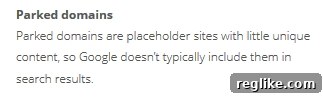
(Image illustrating Google’s classification of parked domains as spam.)
Arguments Against Classifying Parked Domains as Spam
Several arguments can be made against Google’s broad classification of parked domains as web spam. First and foremost, intent plays a crucial role in determining whether a website is truly spammy. Traditional spam techniques, such as cloaking and hidden text, are deliberately designed to manipulate search engine rankings and deceive users. However, the typical owner of a parked domain is not actively trying to trick Google or its users.
In many cases, domain parking is a legitimate business practice. Individuals or companies register domain names with the intention of developing them in the future, selling them to interested parties, or using them for a specific project that is not yet ready for launch. Parking the domain allows them to maintain ownership and potentially generate some revenue through advertising in the interim. This is a far cry from the deceptive tactics employed by spammers.
Furthermore, the current landscape of domain parking has evolved significantly. In the past, some domain parkers may have engaged in aggressive SEO techniques to drive traffic to their parked pages. However, with increased sophistication in search engine algorithms, these techniques are largely ineffective. Domain owners understand that their parked pages are unlikely to rank highly in Google, and they are not actively pursuing methods to circumvent these restrictions. The motivation is often simply to cover the registration costs of the domain, not to aggressively manipulate search results.
The Role of Google Ads in Domain Parking
A further point of contention arises from the fact that Google itself plays a significant role in the domain parking ecosystem. Many domain parking services rely on Google AdSense to display advertisements on parked pages. This creates a potential conflict of interest, as Google simultaneously labels parked domains as spam while profiting from the advertising revenue generated on those very domains. If parked pages are inherently spammy, then Google is essentially powering a substantial portion of that spam.
This raises questions about the consistency of Google’s policies. If the content displayed on parked pages is deemed unacceptable, why does Google allow AdSense ads to be served on those pages? The argument could be made that Google is simply providing a platform for advertisers to reach their target audience, regardless of the website’s overall quality. However, this stance seems contradictory when considering the company’s strong emphasis on user experience and its efforts to combat web spam.
The Nuances of Domain Parking
It’s important to acknowledge that not all parked domains are created equal. Some parked pages may offer a genuinely helpful experience to users, such as providing relevant information about the domain name or directing visitors to related websites. Others may be less useful, displaying generic advertisements that offer little value. The key lies in the intent and execution of the domain parking strategy.
A parked domain that provides clear information about the domain’s potential use or offers links to relevant resources is arguably less “spammy” than a parked domain that simply displays a page full of irrelevant advertisements. Similarly, a parked domain that is actively maintained and updated is more likely to provide a positive user experience than a domain that is left unattended for years. Therefore, a blanket classification of all parked domains as spam may be overly simplistic and inaccurate.
The Impact on the Domain Industry
The debate surrounding parked domains and web spam has significant implications for the domain industry as a whole. If Google were to actively penalize parked domains, it could negatively impact the value of domain names and discourage individuals and companies from investing in domain registration. This, in turn, could stifle innovation and limit the availability of domain names for future development.
The domain industry plays a vital role in the online ecosystem. Domain names are the foundation of the internet, providing a unique and memorable address for every website. By facilitating the registration and management of domain names, the domain industry enables businesses and individuals to establish their online presence and connect with their target audience. Therefore, it’s crucial that policies affecting the domain industry are carefully considered and implemented in a way that promotes innovation and avoids unintended consequences.
Finding a Balance: A Path Forward
Moving forward, it’s essential to find a balance between protecting users from web spam and supporting the legitimate use of parked domains. Google could refine its classification of parked domains, differentiating between those that are actively trying to manipulate search results and those that are simply awaiting development. This could involve implementing stricter guidelines for the content displayed on parked pages, requiring domain owners to provide clear and informative messaging to visitors.
Ultimately, the goal should be to ensure that parked domains provide a positive user experience and do not contribute to the spread of misinformation or deceptive practices. By working together, Google and the domain industry can create a more transparent and user-friendly online environment.
Conclusion
The question of whether parked domains are truly spam is complex and multifaceted. While some parked pages may offer little value to users, others serve a legitimate purpose and do not engage in deceptive practices. Google’s classification of parked domains as spam raises important questions about intent, consistency, and the impact on the domain industry. By fostering open dialogue and refining its policies, Google can help create a more balanced and sustainable online ecosystem that benefits both users and domain owners.