
ICANN.org Website Redesign: Elevating Internet Governance and User Experience
In the digital age, where the internet forms the cornerstone of global communication, commerce, and culture, the online presence of an organization like ICANN (Internet Corporation for Assigned Names and Numbers) is critically important. ICANN stands at the nexus of the internet, fundamentally responsible for coordinating the global Domain Name System (DNS) – the naming system that translates human-readable domain names into IP addresses. This vital role necessitates a web platform that is not only informative but also accessible, intuitive, and reflective of its global significance. For too long, ICANN.org, despite its foundational importance, has been widely acknowledged as outdated and challenging to navigate, creating barriers for its diverse international audience. Recognizing this pressing need for modernization, ICANN has diligently embarked on a comprehensive website redesign initiative. This significant undertaking began with a crucial phase of stakeholder engagement, as the organization actively solicited feedback from its global community throughout the summer, setting the foundation for a truly user-centric transformation.
A Strategic Overhaul: Insights from User Research and Expert Consultancy
The journey to revamp ICANN.org is more than a mere cosmetic update; it’s a strategic digital transformation project aimed at fundamentally enhancing how millions of users worldwide interact with the core policies and functions of internet governance. To ensure this overhaul was driven by genuine user needs and best practices in web design, ICANN partnered with an independent, specialized consultancy. This expert firm was tasked with conducting extensive user research, compiling and analyzing survey results from a broad demographic of site visitors, and performing in-depth interviews with key stakeholders and regular users. This meticulous research phase was instrumental in identifying critical pain points, understanding typical user journeys, and discerning the primary motivations behind visits to ICANN.org. The insights garnered from this robust data collection process formed the bedrock for developing a vastly improved website structure and information architecture. Early conceptual designs and initial visual mock-ups of the proposed new platform have been met with widespread optimism. These preliminary designs prominently feature and intuitively organize the most frequently sought-after sections and functionalities, signaling a clear commitment to fostering a more accessible, efficient, and user-friendly online experience for all.
Unveiling Key User Priorities: The Dominance of Domain Disputes
One of the most compelling and actionable findings gleaned from the extensive user research was the significant volume of visitors to ICANN.org specifically seeking information related to domain disputes. This critical insight highlights a prevalent and often urgent user need that the redesigned website must address with utmost clarity and efficiency. Domain disputes are complex issues, frequently involving intellectual property rights, trademark infringement, and accusations of cybersquatting—the bad-faith registration of a domain name that infringes on another’s trademark. ICANN, through its oversight of policies such as the Uniform Domain-Name Dispute-Resolution Policy (UDRP), plays a central role in establishing the framework for resolving such conflicts. For individuals and organizations entangled in these disputes, ICANN.org serves as an indispensable, authoritative resource for understanding the resolution processes, locating accredited dispute resolution providers, and accessing relevant policies and guidelines. The new website’s architecture, content strategy, and navigational pathways must therefore be meticulously crafted to guide these users seamlessly through what can often be a daunting and intricate legal landscape, providing readily available information, resources, and support services to facilitate informed decision-making.
Deep Dive into User Behavior: Top Visited Pages and Their Significance
A detailed analysis of the most frequently visited pages on ICANN.org offers invaluable insights into the core reasons users engage with the organization’s online presence. These behavioral patterns are pivotal in shaping the redesign, ensuring that the new website prioritizes and optimizes access to the information and services that matter most to its global audience. The top five pages provide a telling snapshot of user priorities and interaction patterns:
1. The Home Page: The Essential Gateway to Internet Governance
The consistent top ranking of the Home page underscores its critical function as the primary entry point for the vast majority of ICANN.org visitors. Far beyond being merely a landing page, the Home page serves as the essential navigational hub, establishing the initial impression and strategically guiding users to various depths of the site. Its redesign must focus on immediate clarity, intuitive layout, and a strategic presentation of key information, recent announcements, and calls to action. A meticulously designed Home page will effortlessly direct users to their intended destinations, whether they are seeking the latest policy updates, information on domain disputes, details about upcoming meetings, or resources for specific programs, making it an indispensable cornerstone of an effective user experience.
2. Accredited Registrars List: A Pillar of Trust and Transparency
The high volume of traffic directed to the Accredited Registrars list highlights the public’s ongoing need for verified and trustworthy information pertaining to domain name registration services. ICANN meticulously accredits domain name registrars to ensure they adhere to stringent standards of operation, consumer protection, and technical competence. This list serves as a vital resource for both individuals and businesses looking to register domain names, offering a reliable directory of legitimate and ICANN-approved providers. Its prominence in user traffic patterns indicates that users frequently seek assurance and authoritative guidance when selecting a reputable registrar, emphasizing the critical importance of maintaining an easily searchable, comprehensive, and up-to-date directory on the redesigned website.
3. About ICANN: Demystifying the Core of Internet Coordination
The “About” section consistently ranks among the most visited pages, signaling a strong and sustained user interest in comprehending ICANN’s overarching mission, its intricate organizational structure, its unique multi-stakeholder governance model, and its indispensable role within the global internet ecosystem. For many, ICANN can often appear as a complex and abstract entity. A thoughtfully crafted “About” section in the new design presents a unique opportunity to demystify ICANN’s multifaceted operations, promote enhanced transparency, and articulate its critical functions in a clear, concise, and engaging narrative. This section is paramount for building foundational trust, fostering greater understanding, and ensuring that all stakeholders fully grasp the immense scope and enduring impact of ICANN’s work.
4. New gTLD Program: Charting the Future of Domain Name Expansion
The popularity of the “New gTLD Program” page vividly reflects the significant global fascination with the dynamic expansion of the internet’s naming system beyond the traditional and well-known .com, .org, and country-code domains. This groundbreaking program introduced hundreds of innovative new generic Top-Level Domains (gTLDs), such as .app, .blog, .tech, and numerous geographic and brand-specific extensions, representing a monumental paradigm shift in how digital identities are constructed and perceived online. Users frequenting this section are typically seeking comprehensive information on application processes, ongoing policy developments, the current status of new gTLDs, and potential opportunities for innovation and growth within the evolving domain name space. The redesigned platform must therefore provide richly detailed, easily navigable, and digestible content tailored for both aspiring gTLD applicants and those simply curious about this continuously unfolding frontier of internet identity.
5. WHOIS Data Reminder Policy (WDRP): Upholding Data Integrity and Compliance
The high volume of visits to the “WHOIS Data Reminder Policy” page, particularly highlighted by its mandatory inclusion in millions of registrar emails annually, unmistakably reveals its immense practical relevance to domain name holders across the globe. The WDRP is a crucial policy that mandates registrars to send periodic reminders to domain registrants, urging them to review and diligently update their WHOIS contact information—a publicly accessible database of domain ownership details. While often perceived primarily as a compliance requirement, accurate WHOIS data is absolutely vital for maintaining the fundamental integrity, security, and stability of the internet, facilitating essential contact in instances of technical issues, and playing a critical role in combating illicit online activities. The redesign must prioritize making information about this essential policy, its far-reaching implications, and the precise compliance requirements readily understandable and effortlessly accessible for all domain name holders, ensuring transparency and accountability in domain management.
Visualizing the Future: A Glimpse at the Revitalized ICANN.org
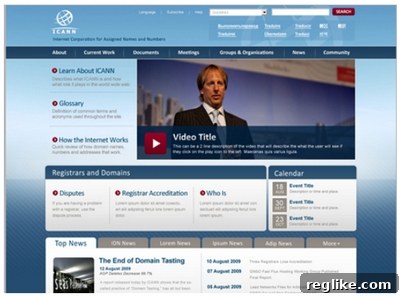
The strategic insights meticulously derived from comprehensive user research and detailed traffic analysis are now being skillfully translated into tangible and impactful design concepts. Below, we are presented with a potential implementation of ICANN’s envisioned new web site, offering a compelling and exciting glimpse into its modern, intuitive, and highly user-friendly future. This visual representation serves as a powerful testament to the planned improvements, likely showcasing a cleaner, more streamlined layout, significantly enhanced navigation menus, and a more logical and intuitive information hierarchy meticulously designed to streamline user journeys and reduce cognitive load. Such a visual milestone is profoundly crucial in the ongoing development process, as it allows key stakeholders, the global community, and internal teams to preview the proposed changes, provide further invaluable feedback, and refine the design before its final implementation. It embodies the culmination of extensive research, a deep understanding of user needs, and a steadfast commitment to user-centric design principles, all aimed at transforming ICANN.org into a truly effective, accessible, and indispensable resource for the entire global internet community.
The Broader Impact: Fostering Enhanced Global Internet Governance and Participation
The ambitious redesign of ICANN.org transcends the typical website update; it represents a pivotal and strategic project geared towards significantly enhancing global internet governance. A streamlined, highly accessible, and intuitive website will undeniably foster greater transparency, encourage more robust participation, and deepen engagement within ICANN’s unique multi-stakeholder model. It is poised to empower governments, businesses, civil society organizations, and individual internet users across the globe to more easily engage with critical policy development processes, comprehensively understand complex internet infrastructure decisions, and efficiently locate the precise information they require to navigate the intricate complexities of the domain name system. By transforming potentially complex and technical information into digestible and readily available content, the new ICANN.org will unequivocally reinforce the organization’s unwavering commitment to its global mission. This will ensure that the internet continues to thrive as a stable, secure, and unified global resource that serves everyone equitably. This significant digital overhaul promises to elevate ICANN’s online presence to rightfully match its unparalleled and crucial role at the very heart of the internet’s architectural framework, ultimately setting a new, elevated standard for online engagement and participation in the realm of global internet governance.