
Exploring Austin’s Digital Landscape: Unique Domain Name Discoveries
In the vibrant and ever-evolving city of Austin, Texas, digital footprints are left everywhere – from bustling local businesses to community organizations. Each domain name acts as a unique address in the vast expanse of the internet, serving as a critical touchpoint for brand identity and online engagement. Following up on a recent exploration of an Austin bakery creatively utilizing an internationalized domain name, my attention was once again captured by several other intriguing domain name choices observed in the wild. These examples offer valuable insights into the diverse strategies, challenges, and opportunities presented by domain name selection, particularly for local entities striving to carve out a distinctive presence in the digital realm. A well-chosen domain name is more than just a web address; it’s a powerful marketing tool, a brand identifier, and often, the first impression a potential customer or community member has of an organization.
The significance of a memorable and effective domain name cannot be overstated in today’s hyper-connected world. For businesses and organizations operating within a dynamic market like Austin, where local competition is fierce and digital visibility is paramount, the domain name serves as the cornerstone of their online strategy. It influences search engine rankings, facilitates word-of-mouth marketing, and ultimately shapes user experience. Let’s delve into these specific examples to understand the intricacies and implications of their domain name choices, and how they reflect broader trends in digital branding and online identity.
The Curious Case of Hyphenated Domains: A Closer Look at n-o-v-a.com
One particular domain that recently piqued my interest was a four-letter name surprisingly laden with three hyphens: n-o-v-a.com. This instance, spotted on a vehicle around Austin, immediately stood out due to its unusual structure. While conceptually simple—representing the word “Nova”—its execution with multiple hyphens raises significant questions regarding usability and brand communication. In the world of domain names, brevity and simplicity are often hailed as cardinal rules, and hyphens can complicate both. Traditionally, domain names are designed to be easily recalled, spoken, and typed, and excessive use of hyphens can introduce unnecessary friction into this process.
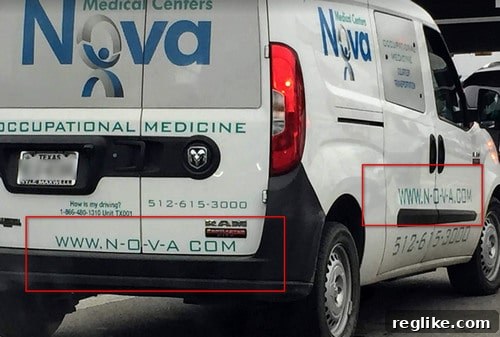
Imagine the scenario of verbally communicating this domain name. One would likely have to spell it out, “N dash O dash V dash A dot com,” which is considerably more cumbersome than simply saying “Nova dot com.” This added layer of instruction can lead to confusion, errors, and ultimately, missed opportunities for visitors to reach the intended website. From a marketing and branding perspective, a domain name should be effortless to share. The more complex it becomes to articulate, the less likely it is to be remembered or correctly accessed by potential customers or clients. This issue is particularly salient for local businesses that rely heavily on word-of-mouth referrals and offline advertising like vehicle wraps or signage.
While hyphens were once considered a mild SEO factor, potentially helping search engines understand keyword separation within a domain, their impact has significantly diminished. Modern search algorithms are sophisticated enough to parse words without relying on hyphens, and the emphasis has shifted towards user experience and natural language processing. Therefore, the primary consideration for using hyphens should always be the user. Does it enhance clarity or hinder it? In most cases, especially for short, brandable names, omitting hyphens leads to a more streamlined and user-friendly experience. This example serves as a potent reminder of the subtle yet profound impact domain name structure can have on its practical utility and brand perception.
Embracing Specificity: The Rise of .Church Domains in Austin
Moving from the complexities of hyphenation to the clarity of specificity, Austin also offers compelling examples of organizations leveraging new Generic Top-Level Domains (gTLDs) to forge stronger identities. The .church domain extension stands out as a prime illustration of how niche TLDs can empower specific communities and organizations to create highly relevant and memorable online addresses. I encountered two distinct instances of local churches in Austin wisely utilizing this domain: one via a bumper sticker on a truck and another through a promotional flyer received in the mail.
The first observation was for Upwards.church, prominently displayed on a vehicle bumper sticker. This immediately communicates the nature of the organization and its mission. Unlike a generic .com or .org which might require an extra mental step for association, Upwards.church leaves no ambiguity about its purpose. This directness is invaluable for community-focused entities like churches, where clear communication and easy accessibility are paramount for engaging with existing members and attracting new ones.

Similarly, a flyer for Dreamers.church, received through traditional mail, reinforced the growing trend among religious organizations to adopt this specialized TLD. In an age where digital real estate is increasingly crowded, finding a concise and brandable name under a conventional TLD can be challenging. New gTLDs like .church offer a refreshing alternative, allowing organizations to secure domains that perfectly align with their name and mission without resorting to convoluted or generic alternatives.

The .church TLD, managed by the registry Donuts, represents a successful venture in providing a specific digital neighborhood for a defined community. While it may not be a “runaway moneymaker” in the same vein as high-volume TLDs like .com, its strength lies in its targeted appeal and utility. With approximately 25,000 names registered in the zone, it demonstrates a healthy adoption rate within its niche. For churches, adopting a .church domain signals modernity, digital savviness, and a clear dedication to their specific community. It helps in creating an immediate connection with the target audience and can positively impact local SEO efforts by providing highly relevant keywords directly within the domain name itself. This strategic choice helps these organizations stand out in a competitive digital landscape, making their online presence easily identifiable and accessible to those seeking spiritual community in Austin.
Beyond the Examples: Why Domain Names Matter for Austin Businesses
The observations from Austin – from the complex hyphenated domain to the clear utility of .church – underscore a fundamental truth: a domain name is far more than just a technical address; it’s a cornerstone of brand identity, marketing, and customer engagement. For businesses and organizations thriving in Austin’s competitive market, the strategic selection of a domain name is a critical decision that can significantly impact their digital footprint and overall success. A well-chosen domain enhances memorability, builds credibility, and improves search engine visibility, making it an indispensable asset in any comprehensive digital marketing strategy.
Consider the impact on brand recall. When a potential customer sees a business name on signage, an advertisement, or hears it mentioned, the accompanying domain name should ideally be intuitive and easy to remember. A domain that is difficult to recall or communicate verbally, like the hyphenated example, creates an unnecessary barrier to entry. Conversely, a domain that is short, descriptive, and relevant, such as the .church domains, instantly communicates purpose and professionalism, fostering trust and encouraging engagement. This is especially true for local businesses where word-of-mouth and quick recall often drive initial customer interactions.
Moreover, domain names play a subtle yet significant role in Search Engine Optimization (SEO). While exact-match keywords in domains are less critical than they once were, a relevant and clear domain name still contributes to a strong online presence. It helps search engines understand the context of your website, and a memorable domain makes it easier for users to search for your brand directly. For Austin businesses targeting local customers, a domain name that hints at their location or industry can reinforce their local SEO efforts, making them more discoverable to residents searching for specific services or products in the area.
In essence, a domain name is the digital equivalent of a prime storefront location. It’s the first point of contact for many online interactions, and its effectiveness can determine whether a potential customer takes the next step. Therefore, entrepreneurs and marketers in Austin should view domain name selection as a strategic investment, carefully weighing factors like memorability, brand alignment, ease of communication, and SEO potential against the backdrop of their target audience and business objectives.
Navigating the Domain Landscape: Tips for Austin Entrepreneurs
Given the critical importance of a robust online presence, Austin entrepreneurs and organizations should approach domain name selection with a strategic mindset. Here are some actionable tips to ensure your digital address serves as a powerful asset for your brand:
- Prioritize Simplicity and Memorability: Aim for a domain name that is short, easy to spell, and simple to remember. Avoid jargon, complex spellings, and, as our hyphenated example showed, excessive punctuation. The easier it is for someone to recall and type your domain, the higher the likelihood of direct traffic to your site.
- Reflect Your Brand and Purpose: Your domain name should ideally align with your business name and accurately convey your mission or industry. For a church,
.churchmakes perfect sense. For a local coffee shop, a name like “AustinJava.com” immediately communicates both product and location. This brand consistency builds trust and reinforces your identity. - Consider New gTLDs Thoughtfully: While
.comremains the gold standard, new gTLDs like.tech,.restaurant,.shop, or even specific city TLDs (if available and relevant) offer unique branding opportunities. If a new gTLD perfectly encapsulates your brand or niche, it can be a distinctive choice, as seen with the.churchexamples. Evaluate if it adds clarity and specificity to your brand. - Test for Verbal Communication: Before finalizing a domain, say it out loud to several people. Ask them to spell it back or type it. This simple test can reveal potential ambiguities or difficulties in communication, ensuring your domain is user-friendly in real-world scenarios.
- Protect Your Brand: Consider registering multiple domain extensions (e.g.,
.com,.net, and a relevant new gTLD) or common misspellings of your primary domain. This strategy protects your brand from competitors or cybersquatters and ensures that users who might misremember or mistype your domain still land on your site. - Focus on Long-Term Vision: Choose a domain name that can grow with your business. Avoid overly narrow names that might restrict future expansion or diversification of your products or services. A timeless domain name will serve your brand well for years to come.
Conclusion: The Enduring Power of a Well-Chosen Domain
The streets and digital landscape of Austin offer a microcosm of the broader internet, showcasing both exemplary and cautionary tales in domain name selection. From the challenges posed by overly complex names to the strategic advantages offered by specialized new gTLDs, these local observations underscore the enduring importance of a thoughtful approach to online identity. A domain name is undeniably a critical asset for any business or organization, particularly in a vibrant local economy like Austin’s. It’s the gateway to your digital presence, a reflection of your brand, and a key determinant of your ability to connect with your audience. As the digital world continues to evolve, the principles of clarity, memorability, and brand relevance in domain name selection will remain paramount for fostering success and building a lasting online legacy.