Jewelry firm Reza tries to reverse domain name hijack Reza.com
One panelist strongly disagreed with the others.
The majority of a World Intellectual Property Organization panel has ruled (pdf) that Reza IP Holdings LLC attempted to reverse domain name hijack reza.com.
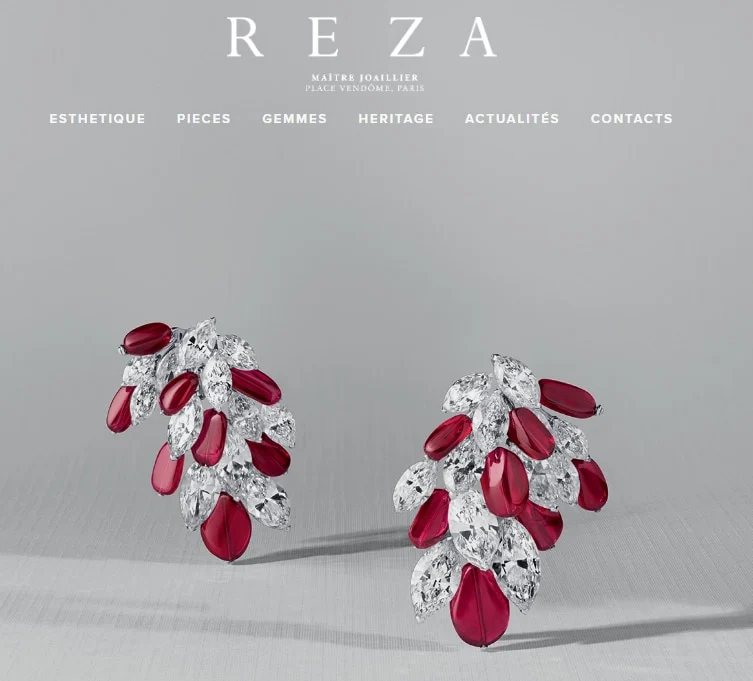
The jewelry firm, which is named following Alexandre Reza and uses the domain AlexandreReza.com, attempted to get the name from Taha Alireza, a member of a prominent Saudi family.
It sure seems like it was an insurmountable case for the Complainant to win. Consider:
– The respondent’s surname is Alireza. Reza is a popular surname in Saudi Arabia and Alireza is a combination of the names “Ali” and “Reza”, written as the two words “Ali” and “Reza” in native Arabic. His family is well known in the country; the Respondent’s grandfather Mohammed Alireza was the former Saudi Finance Minister and Ambassador to France from 1972 to 1976, his brother, the Respondent’s great uncle, served as the Saudi Ambassador to the United States from 1975 to 1979 and that the Respondent’s father, Youssef, is a founder, director and shareholder of the family enterprise the Reza Investment Firm
– The respondent’s family owns Reza Investment Co. Ltd. The respondent was in the process of selling the domain to the firm prior to the proceeding.
On these facts alone, proving that the Respondent lacks rights or legitimate interests seems impossible.
And yet, even though two panelists found this case so egregious that they determined it was reverse domain name hijacking, a third panelist ruled that the domain ought to be transferred to the complainant.
Here’s what the majority, consisting of Luca Barbero and Richard Lyon, stated regarding reverse domain name hijacking:
i) the Complainant, which is represented by counsel, ought to have appreciated the weakness of its case and the fact that the name “Reza” encompassed in the disputed domain name cannot be exclusively referable to the Complainant;
ii) the Complainant ignores a number of settled UDRP precedents, among them the requirement of evidence to support critical allegations, not recognizing that warehousing domain names is not per se improper, that response to an inquiry from a trademark owner to purchase the disputed domain name is not ordinarily improper, and that the purchase price of a domain name not exclusively referable to a trademark owner is a matter for the marketplace and not for the Panel;
iii) the Complainant has attempted to mislead the Panel regarding its anonymous inquiry to purchase the disputed domain name, as the description in the Complaint (presenting the request as addressed by the Complainant) differs materially from the correspondence annexed to the Response;
iv) the circumstances of the case show that this may be a speculative “plan B case” launched by the Complainant following the failure to purchase the disputed domain name – via an anonymous third-party email address – from the Respondent.
The majority also noted:
The Complainant is not excused by only learning of the proposed transfer to Reza Investment Firm following filing the Complaint. First, basic pre-Complaint due diligence such as a Google search would have revealed that reza is a common name and frequently used in firm names. Second, the Panel majority finds it hard to believe that an individual himself named Reza would not be aware of the ubiquity of that name. Third, the Complainant at a minimum “had an obligation under this Rule [3(b)(xiii)] to explain to the Panel why” the Respondent’s surname and firm name fell outside the safe harbor of paragraph 4(c)(ii) of the Rules. See Wall-Street.com, LLC v. Marcus Kocak / Internet Opportunity Entertainment (Sports) Limited, Sportingbet PLC, WIPO Case No. D2012-1193. The Complainant did not even address the possibility that the Respondent selected the disputed domain name since of his surname, whilst such circumstance could be indeed inferred from the registrant’s name shown in the public WhoIs records and indeed in the caption and text of the Complaint. Ignoring settled Policy precedent alone justifies a finding of abuse, see Liquid Nutrition Inc. v. liquidnutrition.com/Vertical Axis Inc., WIPO Case No. D2007-1598.
Panelist Emmanuelle Ragot found that the Respondent lacks rights or legitimate interests:
One of the Panelists, instead, finds that the Complainant has demonstrated that the Respondent lacks rights or legitimate interests in the disputed domain name as stated by paragraph 4(a)(ii) of the Policy in view of the correspondence of the disputed domain name with the Complainant’s well-known trademark REZA and the relevant amount of money requested by the Respondent to transfer the disputed domain name, which suggests a speculative intent.
So I guess it doesn’t matter that the Respondent’s surname is Ali Reza and his family owns Reza Investment Firm? The Respondent did offer to sell the domain for $250,000 when approached but did not know who the inquirer represented.
On the issue of Registration and Bad Faith, Ragot found:
One of the Panelists is of the view that the Respondent registered the disputed domain name in bad faith since the Complainant purchased reputation in its trademark, also known and used as REZA to distinguish jewelries products internationally, for years long ahead of 2016 in the jewelry sector. Indeed, in 1997, press reviews mentioned the Staff at REZA’s Paris reaction following the information of Lady Diana’s death in Paris (as she was wearing one of REZA’s rings) and the consultation of any pages counting Wikipedia relating this tragic event refers to REZA.
Therefore, this Panelist concludes that the Respondent must have had knowledge, and could not ignore, the Complainant’s rights when it registered the disputed domain name.
The Panelist also finds that the nature of the disputed domain name enhances the false impression that the disputed domain name is somehow officially related to the Complainant, as it may be perceived as used in connection with one of the Complainant’s official websites for sale, causing interrogation on the economic situation of the Complainant. Accordingly, by registering the disputed domain name, the Respondent has created a likelihood of confusion with the Complainant’s trademark, as it is likely that the disputed domain name could mislead Internet users into thinking that it is, in some way, associated with the Complainant.
The same Panelist also states that the existence of an offer for sale to the public of a domain name on the website to which it directs is an indication of bad faith on the part of the Respondent (see Bayerische Motoren Werke AG v. (This Domain is for Sale) Joshuathan Investments, Inc, WIPO Case No. D2002-0787; and Ferrari S.p.A v. Allen Ginsberg, WIPO Case No. D2002-0033) and that the offer to sell the disputed domain name for USD 250,000 is an indication that the Respondent registered the disputed domain name for the sole purpose of reselling it to a third party and obtaining financial gain within the meaning of paragraph 4(b)(i) of the Policy.
The Respondent’s counsel, John Berryhill, told me that the Wikipedia article was not submitted in evidence. John couldn’t locate this reference in a Wikipedia article regarding Lady Diana’s death, and I can’t find it either, but perhaps it was in a foreign-language edition.
As stated by her WIPO profile, Ragot is a French national practicing in Luxembourg. The Complainant’s lawyer at Dennemeyer & Associates S.A is also in Luxembourg and both studied at the same school (at different times).
I would think WIPO would review a case in which panelists had such strongly differing views.