
Joking.com Reclaimed: Long-Standing Owner Wins Domain Back Through UDRP Challenge
A landmark ruling by the National Arbitration Forum sees a valuable domain returned to its rightful owner, highlighting the ongoing battle against online theft and cybersquatting in the digital age.
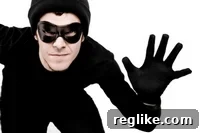
In a compelling decision that profoundly underscores the vital role of the Uniform Domain Name Dispute Resolution Policy (UDRP), a panel at the National Arbitration Forum (NAF) has mandated the immediate transfer of the prominent domain name Joking.com back to its previous, long-term owner. This significant ruling marks a decisive victory for domain name owners globally, reinforcing the robust mechanisms designed to protect intellectual property and combat malicious online activities such as domain theft and cybersquatting. The case serves as a powerful testament to the internet’s governance framework in upholding the rights of legitimate domain registrants against illicit acquisition.
The Unfolding Saga of Joking.com: From Established Ownership to Theft and Ultimate Recovery
The journey of Joking.com back to its original proprietor is more than just a legal dispute; it’s a testament to unwavering vigilance, the strategic application of legal recourse, and the inherent value placed on digital assets in today’s interconnected world. The complainant, a dedicated individual who has proudly asserted continuous ownership of the Joking.com domain since the nascent days of the internet in 1997, initiated a cybersquatting dispute after discovering his prized digital asset had been illicitly transferred earlier this year. This unauthorized seizure came as a significant shock, disrupting decades of established online presence. Compounding the gravity of the theft, the alleged perpetrator, after acquiring the domain through clandestine and unauthorized means, reportedly attempted to capitalize on the illicit gain by listing Joking.com for sale. This brazen act further solidified the complainant’s resolve to reclaim what was rightfully his, setting the stage for the UDRP challenge.
Owning a domain name for over two decades, particularly one as memorable and brandable as Joking.com, signifies not just a substantial investment of time and resources but often represents a significant part of one’s online identity, business, or personal project. The complainant’s deep-rooted connection to Joking.com, meticulously established over more than 26 years, made its illicit seizure particularly distressing and financially damaging. Such long-term ownership also provides an invaluable repository of historical data and evidence, which proved instrumental in substantiating his claims throughout the UDRP process. Records, including historical screenshots and archived content of the domain, clearly demonstrated its extensive development and continuous use over many years. While these archives sometimes revealed the presence of adult content, this detail did not detract from the overwhelming and irrefutable evidence of the complainant’s legitimate, long-standing claim and prior rights to the domain.
Unpacking Domain Theft: A Persistent and Evolving Threat in the Digital Landscape
The incident involving Joking.com sheds critical light on the increasingly sophisticated and insidious methods employed by malicious actors to unlawfully seize domain names. Domain theft, while often intertwined with cybersquatting, is a distinct form of digital piracy that typically involves unauthorized access to a domain registrar account. This access can be gained through various illicit means, including but not limited to, highly deceptive phishing scams, exploitation of compromised email accounts, brute-force password attacks, or elaborate social engineering tactics designed to trick legitimate owners or registrar staff. Once unauthorized access is gained, the thief can surreptitiously transfer the domain to another registrar or registrant, effectively hijacking the digital property and severing the rightful owner’s connection to their online presence.
In the specific context of the Joking.com case, the alleged thief, reportedly residing in Russia, made a strategic choice not to engage with the UDRP process. This lack of response, or default, is a common tactic among individuals or entities involved in illicit domain practices. By remaining silent and failing to submit a response, respondents often hope to avoid providing any self-incriminating information that could be used against them in the dispute, or they may simply acknowledge the inherent futility of attempting to defend an indefensible position. However, in UDRP disputes, a respondent’s failure to reply frequently works to the complainant’s distinct advantage, as the panel is left to decide the case based solely on the evidence presented by the complainant, usually leading to an inference of bad faith registration and use.
The Uniform Domain Name Dispute Resolution Policy (UDRP): A Cornerstone of Internet Governance
The UDRP, meticulously established and overseen by the Internet Corporation for Assigned Names and Numbers (ICANN), serves as a crucial administrative procedure for efficiently and equitably resolving disputes concerning generic top-level domain (gTLD) names. It offers an invaluable and cost-effective alternative to protracted and expensive traditional litigation, specifically targeting instances of abusive registration, most commonly known as cybersquatting. For a complainant to achieve success and secure the transfer of a domain name under the UDRP, they are required to demonstrate three key elements, each with compelling evidence:
- Identical or Confusingly Similar: The domain name in dispute must be identical or confusingly similar to a trademark or service mark in which the complainant has established rights. In unique cases of pure domain theft, where the complainant was demonstrably the original and long-standing owner, proving identicality to their previous ownership and long-standing use often suffices, even if a formal, registered trademark isn’t explicitly claimed. This is especially true given the extensive historical context and evidence of use provided, as was the case with Joking.com.
- No Rights or Legitimate Interests: The respondent, the party currently holding the disputed domain, must be shown to have no rights or legitimate interests whatsoever in respect of the domain name. This vital element is often evidenced by the absence of prior commercial use, the lack of any legitimate business associated with the domain by the respondent, and the clandestine or unauthorized nature of its acquisition.
- Registered and Used in Bad Faith: The domain name must have been registered and must be currently used in bad faith by the respondent. Indicators of bad faith are diverse and can include registering a domain primarily to sell it to the rightful trademark owner or complainant, disrupting a competitor’s legitimate business, or, as vividly illustrated in the Joking.com case, acquiring the domain through illicit means and then attempting to profit from its subsequent sale.
The National Arbitration Forum (NAF) stands as one of the preeminent ICANN-approved dispute resolution providers for UDRP cases. Their panels are comprised of highly respected and independent legal experts with extensive, specialized experience in domain name law and internet governance. The NAF’s comprehensive decision in the Joking.com case, which is publicly available for review, provides a detailed and transparent account of how the evidence meticulously presented by the complainant successfully met all three aforementioned UDRP criteria, unequivocally leading to the rightful recovery and transfer of the domain.
The Enduring Value of Short, Memorable Domains and the Absolute Imperative of Security
Joking.com, as a short, memorable, highly descriptive, and inherently brandable domain, holds significant intrinsic and extrinsic value in the competitive digital marketplace. Such premium domains are often highly coveted for their undeniable ease of recall, their robust branding potential, and their inherent ability to attract substantial organic traffic, making them powerful assets for any online venture. The audacious theft and subsequent attempted sale of Joking.com powerfully underscore both the monetary and strategic value these digital assets possess, simultaneously rendering them prime and lucrative targets for sophisticated malicious actors.
This pivotal case serves as an unequivocal and stark reminder for all domain owners about the paramount importance of implementing and maintaining robust domain security practices. To effectively prevent falling victim to similar, distressing schemes, domain owners must proactively adopt and rigorously adhere to several critical measures:
- Enable Two-Factor Authentication (2FA) Everywhere: This indispensable security layer adds a crucial second verification step to registrar accounts, making it exponentially harder for unauthorized individuals to gain illicit access, even if they somehow obtain your password.
- Utilize Strong, Unique Passwords: Absolutely avoid common, easily guessable passwords. Instead, leverage reputable password managers to generate and securely store complex, truly unique credentials for every single online service and domain registrar account.
- Implement Registrar Lock (Transfer Lock): This vital feature acts as a preventative barrier, effectively preventing unauthorized transfers of a domain name by requiring an additional, explicit step to unlock it before any transfer request can be processed.
- Regularly Monitor Domain Status and WHOIS Records: Maintain a vigilant watch on your domain’s registration details, expiry dates, and any changes in ownership or contact information. Many reputable registrars offer sophisticated monitoring services or automated alerts to notify you of any suspicious activity.
- Exercise Extreme Caution with Phishing Attempts: Always verify the legitimacy of the sender of any emails requesting account information or urging clicks on suspicious links, especially those related to your domain or registrar. Assume all unsolicited requests are potential phishing attempts.
- Keep Contact Information Updated: Ensure that the WHOIS contact information associated with your domain is consistently accurate and current. This information is frequently used for crucial notifications and dispute resolution processes.
- Consider Domain Name Privacy Services: These services can mask your personal contact information in the public WHOIS database, reducing your exposure to spammers and potential social engineering attacks.
Impact and Future Implications for Domain Owners and the Digital Ecosystem
The successful reclamation of Joking.com through a robust UDRP challenge sends an unequivocally clear and powerful message across the digital landscape: the existing internet governance framework is not only equipped but highly effective in protecting legitimate domain owners against both outright theft and insidious cybersquatting. For the original owner, this decisive ruling means the rightful restoration of a significant online asset, offering the potential to resume its development or utilize it as they deem fit, completely free from the shadow of illicit ownership and the distress it caused.
For the broader domain community, this case reinforces profound confidence in the UDRP system as a viable, efficient, and ultimately effective means of dispute resolution. It also serves as a potent cautionary tale, urging all domain owners and stakeholders to significantly increase their vigilance and proactively implement stringent security measures to safeguard their valuable digital real estate. As the digital landscape continues its relentless evolution, the ongoing battle against domain theft, abusive registrations, and intellectual property infringement will undoubtedly persist, making robust policies like the UDRP and diligent, informed owner practices more critically important than ever before for the health and integrity of the internet.